What Calgary’s Olympic past can show us about our future
In fractured times, we can come together.

Support independent Calgary journalism!
Sign Me Up!The Sprawl connects Calgarians with their city through in-depth, curiosity-driven journalism. But we can't do it alone. If you value our work, support The Sprawl so we can keep digging into municipal issues in Calgary!
Calgary has come a long way since 1988, when the city hosted the Winter Olympics. The motto for those Games? “Come Together in Calgary.”
At the time, this was a city of just over 650,000. Much has changed. Our population has more than doubled and become much more diverse. People move here from across Canada and the wider world. And today we live much of our lives “online”—a word that would have invited blank stares in the ’80s.
In other ways, little has changed. The TIME Person of the Year in 1988 was “The Endangered Earth.” A provincial separatist party in the ’80s was clamouring for a “Republic of Alberta.” And Calgary was trying to sort out who it was.
The Olympics helped with that. To host, Calgary had to articulate, and enact, a story about itself and the nation—one that emphasized volunteerism, hospitality and community spirit. In an alternate timeline, we’d be doing this again right now if we had bid on, and won, the 2026 Games.
Calgarians chose otherwise in a 2018 plebiscite, with 56% of voters saying “no” to a bid—a debate The Sprawl covered extensively at the time. Some of our very first Sprawlcast episodes, eight years ago, were about whether or not Calgary should pursue an Olympic bid for 2026.
To host, Calgary had to articulate, and enact, a story about itself and the nation — one that emphasized volunteerism, hospitality and community spirit.
So Calgarians will watch Milano Cortina from afar. Meanwhile, Calgary just had a downplayed 150th anniversary in 2025. Civic leaders told us it was not an occasion to celebrate. And we didn’t.
This raises numerous questions.
What is Calgary’s collective story today? Do we have a shared story we can be proud of? And in a pluralist society at a time of digital fragmentation, when we are increasingly living in our own algorithmically-determined information worlds, is it possible to find one?
One thing is for sure: Solitary scrolling won’t get us there.
I was struck, on New Year’s Eve, by something Calgary comedian and actor Andrew Phung said on CBC-TV. There he was, freezing his ass off in downtown Edmonton, minutes before midnight, when Ian Hanomansing asked him what he hopes for in 2026.
“I think that people are realizing that personal, physical connections—being together—is where it’s at,” replied Phung. “Putting away devices, spending time with one another, having conversations is what we need to be doing.”
I keep hearing people express that same desire—to be free from the tyranny of small screens. There is a deep craving right now for the physical, the tactile and the analog. A yearning to gather. To embrace “friction.” To make something with one’s hands.
To turn attention away from the life-sucking digital machine, which alienates us in so many ways, and give it to what is more human.
That 1988 motto—“come together”—is as resonant as ever. Even more, perhaps, than it was four decades ago.
I think that people are realizing that personal, physical connections — being together — is where it’s at.
In this edition of The Sprawl, we’ll be exploring how hosting the Olympics (and not hosting) has shaped Calgary. We’ll also look at that age-old question, already under discussion, of whether or not Calgary should pursue a future Games.
Mayor Jeromy Farkas told me this week he’s interested in 2038, the next Winter Olympics potentially up for grabs after Utah 2034. More on that to come.
But we also want to respond to that creative yearning I described. We want to bring people together and have a little fun during these Games.
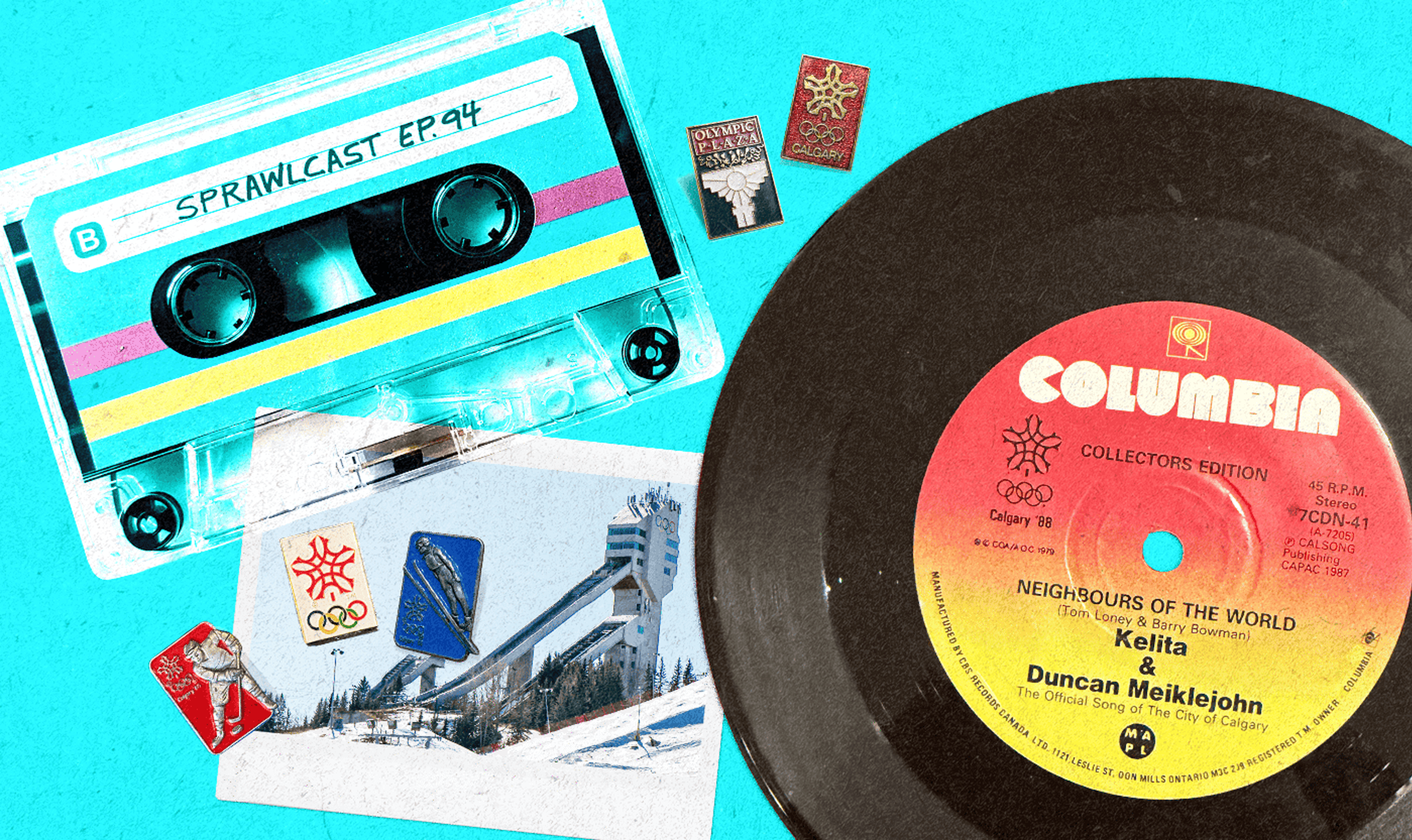
And so we're going to be doing some analog-themed pop-ups in February with letterpress printing, zine making, cassette recording, button making and more. These will be family-friendly celebrations of Calgary’s Olympic history and a chance to come together and make something by hand.
We're calling it Analog Week!
The Sprawl has been experimenting with analog media for years—print editions, zines and even a mobile printing press.
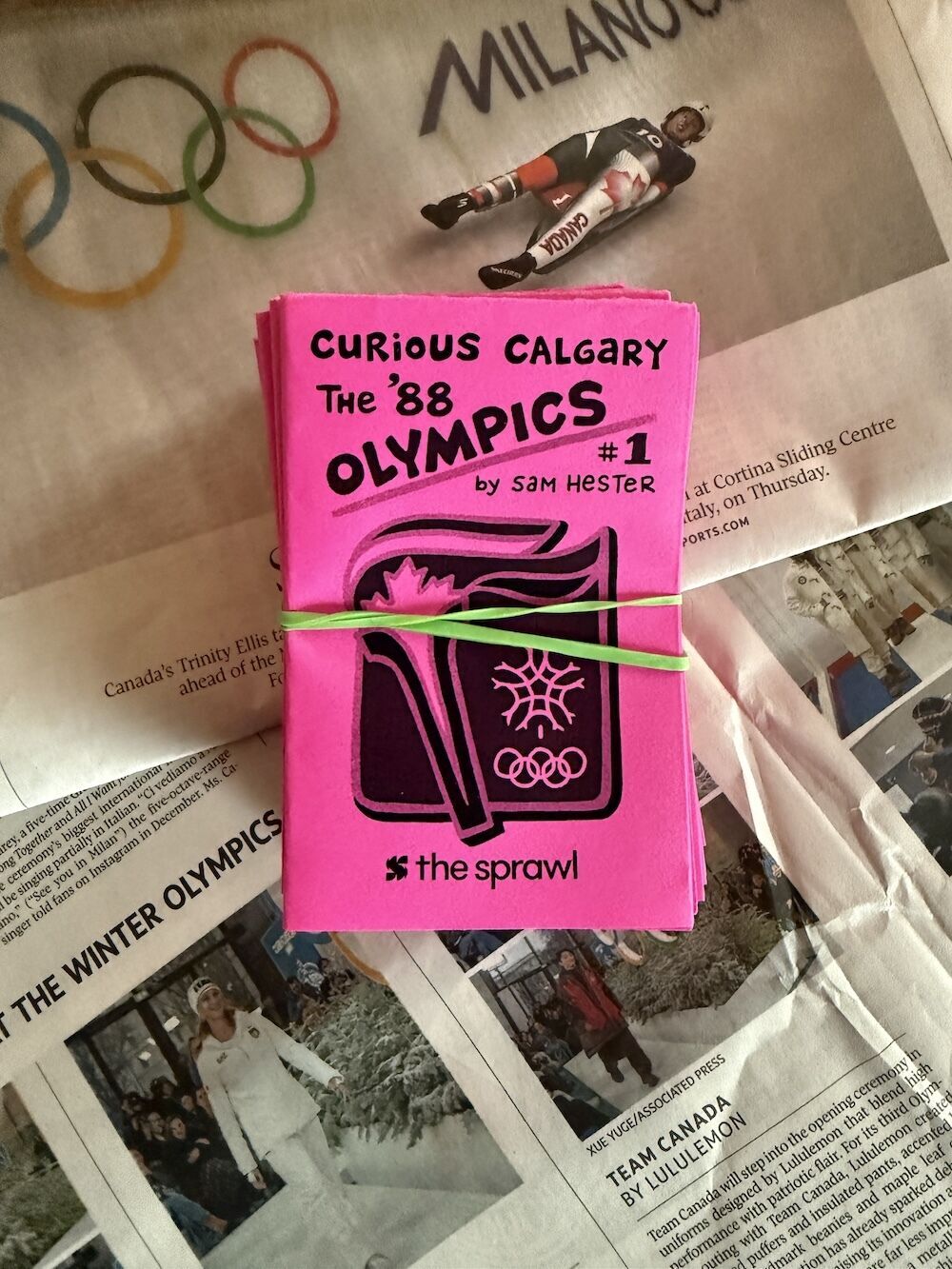
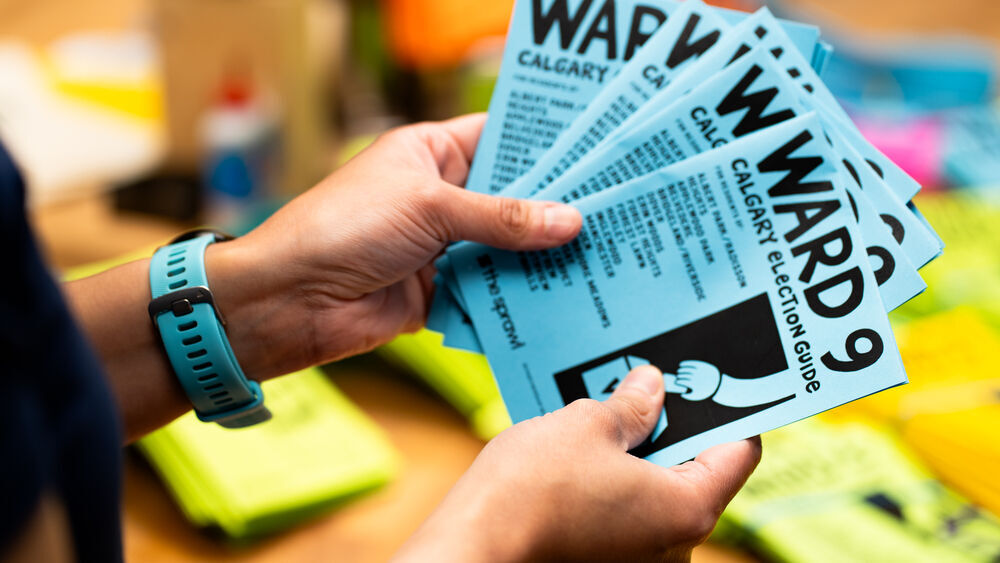
For this edition, Sam Hester kicks us off with a new Curious Calgary comic about her artistic contribution to the ’88 Games. You can read her comic online, but you can also print and fold it at home as a zine. I planted some of these around town yesterday, which is always good fun.
Thanks for reading and stay tuned for more coverage—and for further details on Analog Week!
Jeremy Klaszus is founder and editor of The Sprawl.
Support independent Calgary journalism!
Sign Me Up!The Sprawl connects Calgarians with their city through in-depth, curiosity-driven journalism. But we can't do it alone. If you value our work, support The Sprawl so we can keep digging into municipal issues in Calgary!