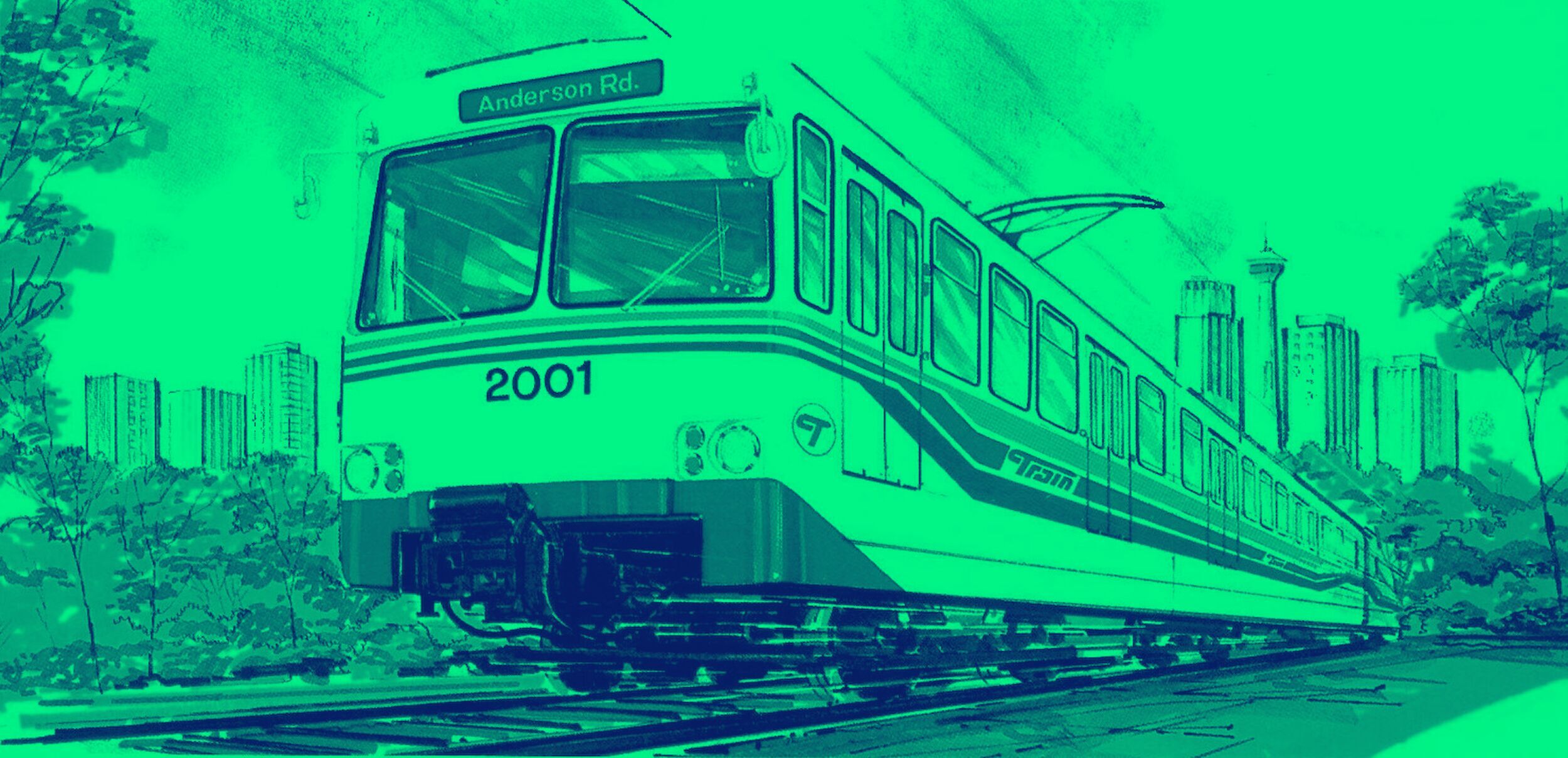
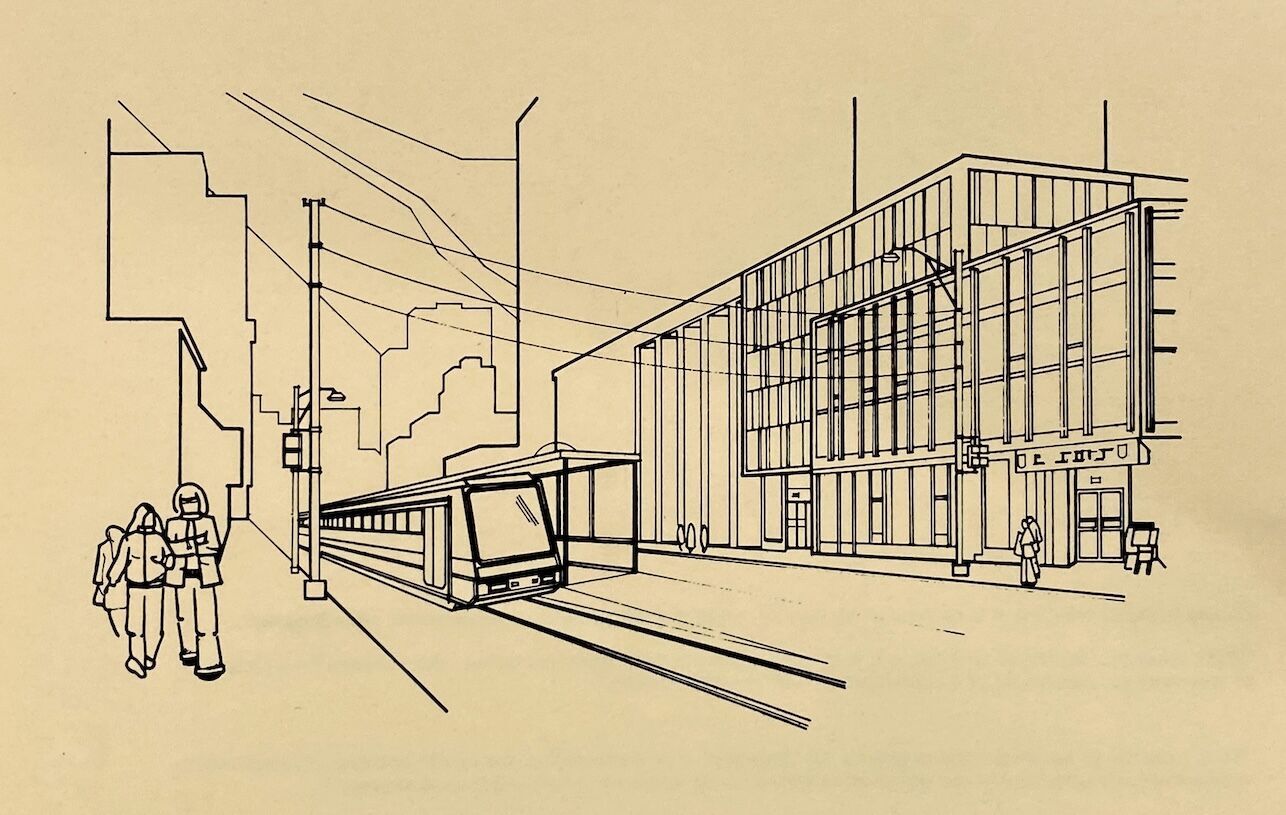
Artist's rendering of the CTrain, circa 1980.
The forgotten story behind Calgary’s CTrain free fare zone
Why do we have it in the first place?

Three decades.
That’s how long Calgarians went without riding the rails for urban transit. Calgary's last streetcar ran in 1950. The CTrain opened in 1981.
During the 31 years in between, the car was king, in Calgary as elsewhere in North America. And at first, the future seemed limitless. But as downtown Calgary became increasingly gridlocked, city hall endeavoured to replace what it had ripped out: rail.
In the late 1970s, Calgary Transit was gearing up to introduce light-rail transit (LRT) and needed to sell Calgarians on a new iteration of an old travel mode.
What better way to do that than by making it free to try?
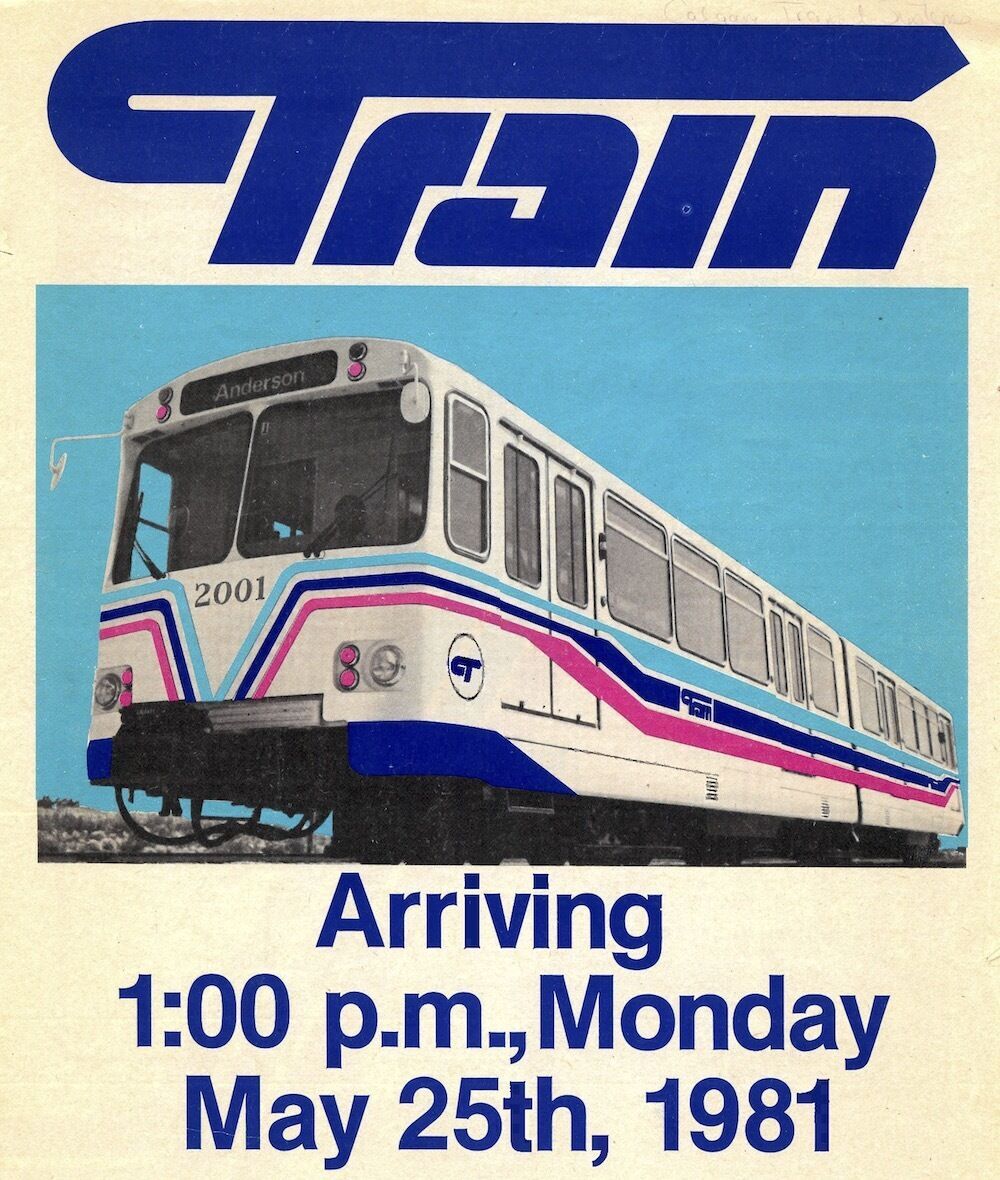
That was then. Today, 45 years later, the CTrain free fare zone, which runs along 7th Avenue downtown, is under scrutiny.
On February 24, 2026, city council directed admin to review the zone, consult with Calgarians and report back with the implications of reforming the zone and possibly “establishing downtown as a fare paid zone.”
This comes after council nearly nixed the zone in a narrow 8-7 vote during December 2025 budget deliberations.
Amid all the debate, one question has remained murky. Not many cities offer free LRT downtown.
Why do we?
Calgary’s post-war love for the automobile
After the last streetcar stopped running 1950, to “take transit” in Calgary meant riding the bus.
Where streets once had streetcar rails, many now had wires criss-crossing overhead for electric trolley buses that ran until 1975, when diesel buses fully took over.
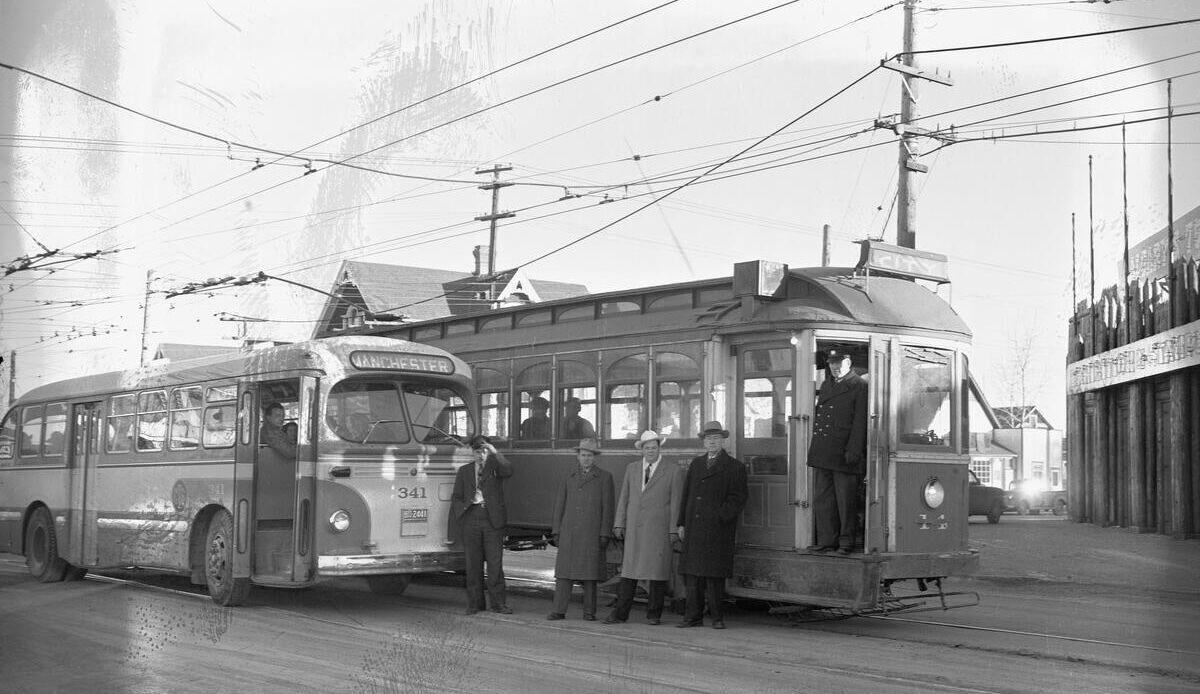
“The salesmen did a pretty good job of convincing us that the bus was the transit of the future,” city transportation director Bill Kuyt, who championed LRT alongside Mayor Rod Sykes in the 1970s, told the Calgary Herald in 1980.
But most Calgarians preferred to drive their own cars.
Fuel was cheap. So was downtown parking. “Almost half the land in downtown Calgary is currently devoted to the automobile,” noted one consultant report from 1967, entitled “Transit for Calgary’s Future.”
“Accelerated reliance upon the auto as the primary mode of travel will stimulate a ‘scatteration’ of urban development increasing the cost of all municipal services,” warned the report.
The solution? Rapid transit. Options contemplated in the 1960s included a monorail or subway running along 7th Avenue.
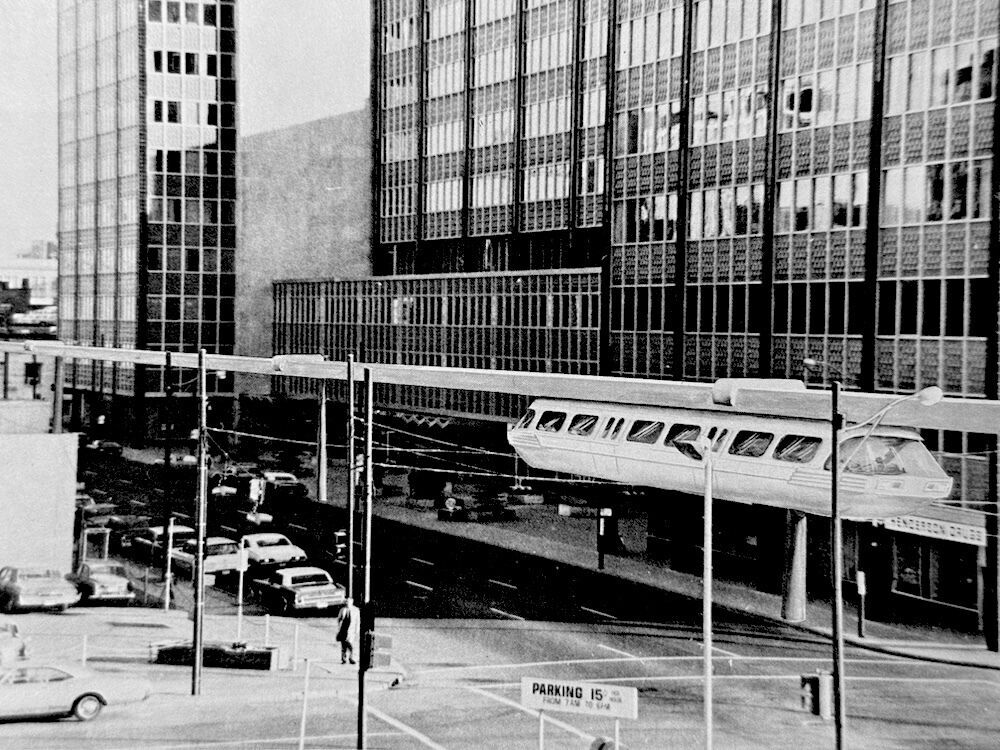
The warning about urban sprawl proved prescient (and continues to, in new and staggering ways). But most of those costs seemed far off. City hall was in no hurry.
The first portion of Deerfoot Trail opened in 1971, when Calgary’s population was about 400,000. By 1981, with low-density communities proliferating on the city's edges, it had grown to nearly 600,000.
And with so many people driving into the core for work, downtown became a traffic nightmare.
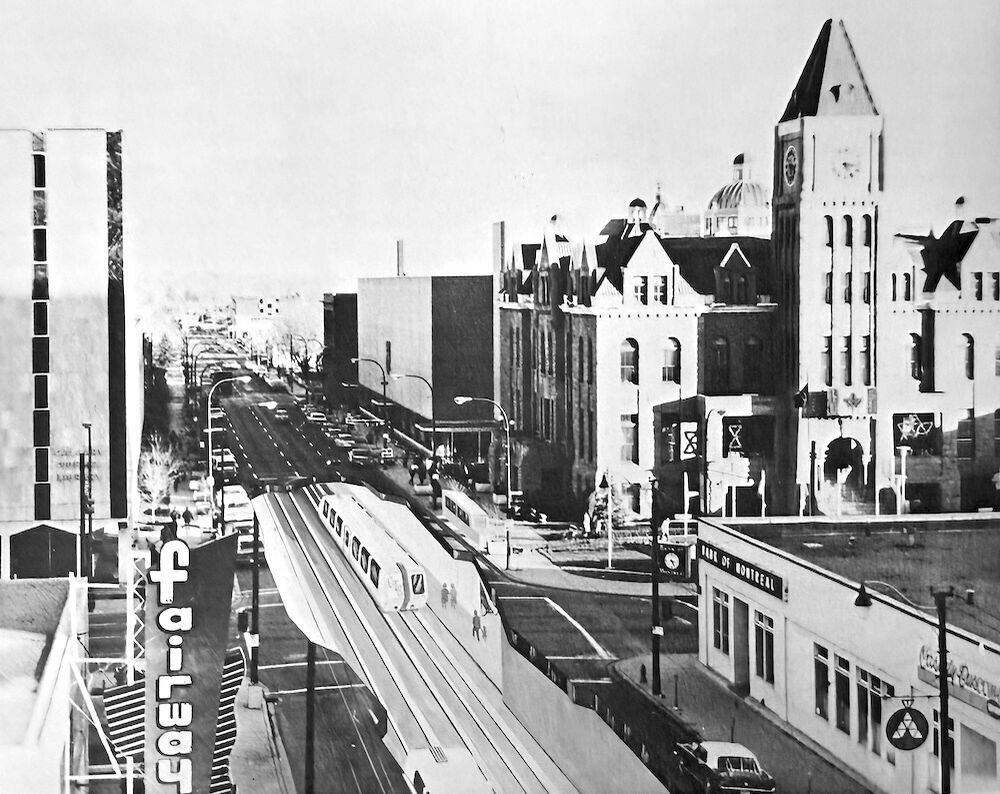
Calgary Transit introduced “Blue Arrow” express buses in 1972. But as the decade wore on, the buses were often stuck in traffic like everyone else.
Transit service was underwhelming, as was ridership.
One solution, the dedicated bus lane, was of little help in wooing Calgarians onto transit. It had “outlived its usefulness,” the city’s transit union stated in a 1978 letter to city council.
And simply adding more buses onto roads wouldn’t help either: “This certainly is not the solution... They will only add to the pre-existing traffic congestion.”
What Calgary really needed, the union said, was LRT. “We need to plan now for these predicted traffic problems of the future, so that our children will have a better system to cope with the problems that we have created.”
Those problems, even then, were increasingly evident.
“Our people have become obsessed with what they believe to be our inalienable rights to live, work and travel as we please without any regard to the rights of others or to the cost either to ourselves, our resources or our environment,” Alderman Harry Huish wrote in a letter to other council members in 1977.
“Because of this we mostly use 3,000-pound machines to carry one 150-pound person to work or to get a loaf of bread at great expense.”
Huish saw what was coming. “The right to clog city streets with air-polluting vehicles carrying one person, the right of paying high taxes for freeways to replace homes, all of these so-called rights create enormous costs.”
Council needed to get on with LRT, he wrote: “We will either face the issue squarely and start building a mass transit system powered by an energy other than petroleum products, or face the age of scarcity without being prepared.”
‘A cheering prospect’: The free fare zone
Huish wrote his missive after the 1977 municipal election, in which LRT was an election issue. Council had already approved the LRT line in May, before the election. But skepticism in the city ran deep.
Many, like Alderman Virnetta Anderson, saw the potential. “The benefits gained from LRT will be worth the cost,” she told the Herald that October.
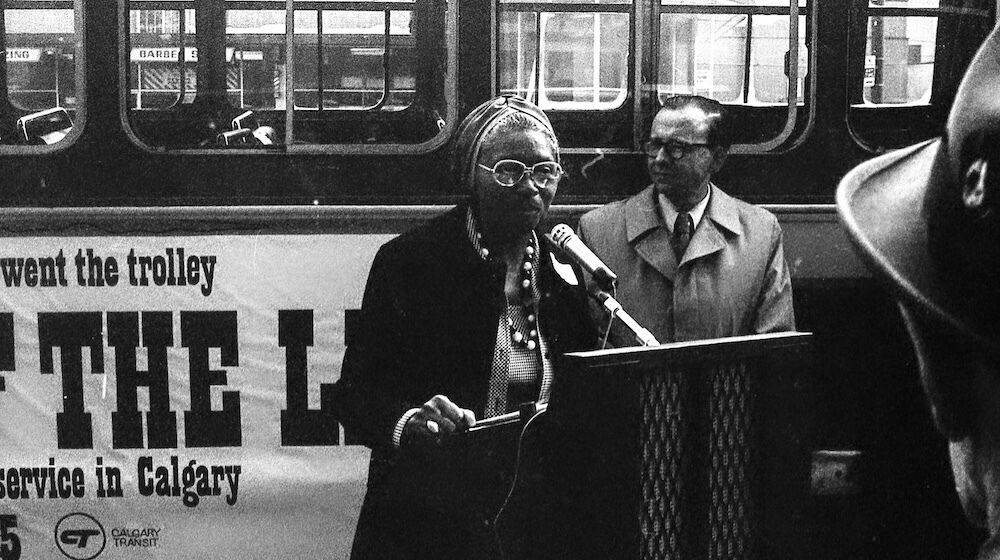
But Anderson lost the 1977 election and much of the new council—including the new mayor, Ross Alger—was skeptical. Alger and other councillors were keen on revisiting the LRT project.
Eventually they got on board but everyone was very aware that LRT would be a culture shift for Calgarians. A headline in the Albertan from April 1978 summed up a common view: LRT WON’T SOLVE TRAFFIC WOES.
Calgarians, wrote columnist Les Buhasz, would not be enticed from the convenience of their own vehicles. He predicted that most “will still be driving their cars and seething in daily traffic jams in the year 2000, long after the first foot of LRT track is laid and the entire system is well on the road to obsolescence.”
City hall needed a way to win over the skeptics.
Enter the free fare zone.
When city transportation director Bill Kuyt pitched the free fare idea to city council in 1978, he was “beaming and obviously enthusiastic,” the Albertan reported. It would be a way to familiarize downtown workers and shoppers with the new train service while also boosting business downtown.
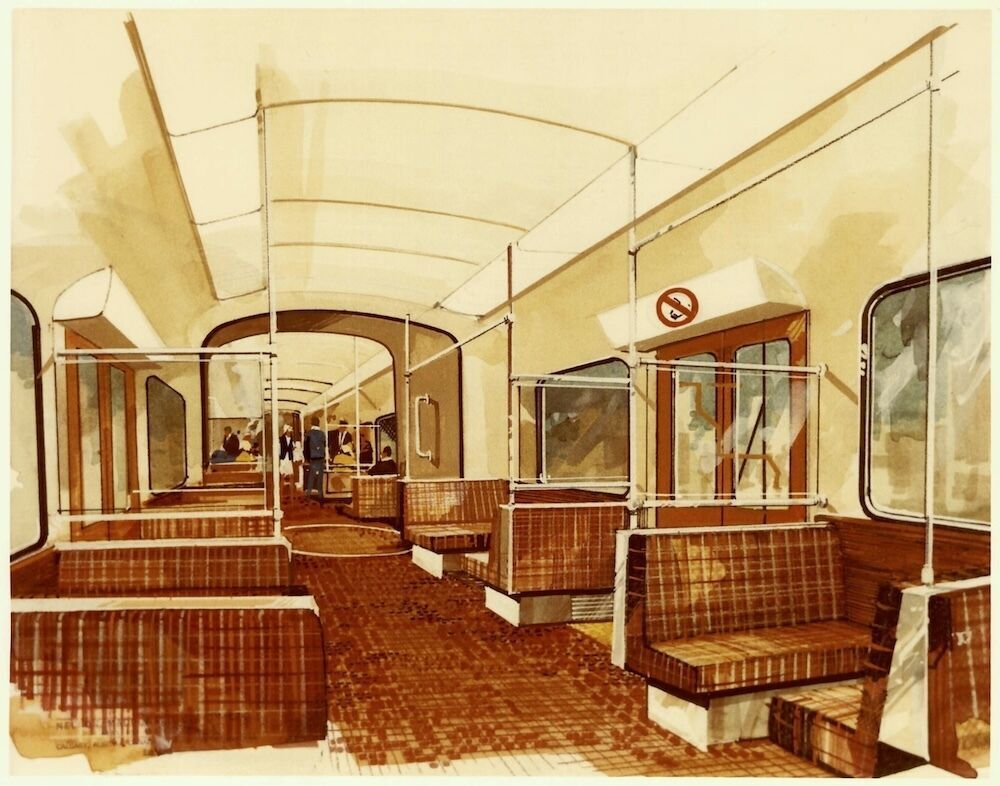
The dilemma Calgary Transit faced at the time was one that’s still debated today: Should Calgary have an “open” or “closed” fare system for the LRT?
A closed system, like Toronto has, gives more control. But it requires more equipment and, depending on the model, staffing.
An open system, like Calgary and Edmonton have, is vastly cheaper. It doesn’t require need turnstiles or booths with attendants. It’s a self-serve honour system.
“They aren’t checked as they enter the trains,” explained city LRT manager Oliver Bowen to the Albertan in October 1979. “But we’ll have a security force of seven to eight people who randomly ride the system to check for people cheating.”
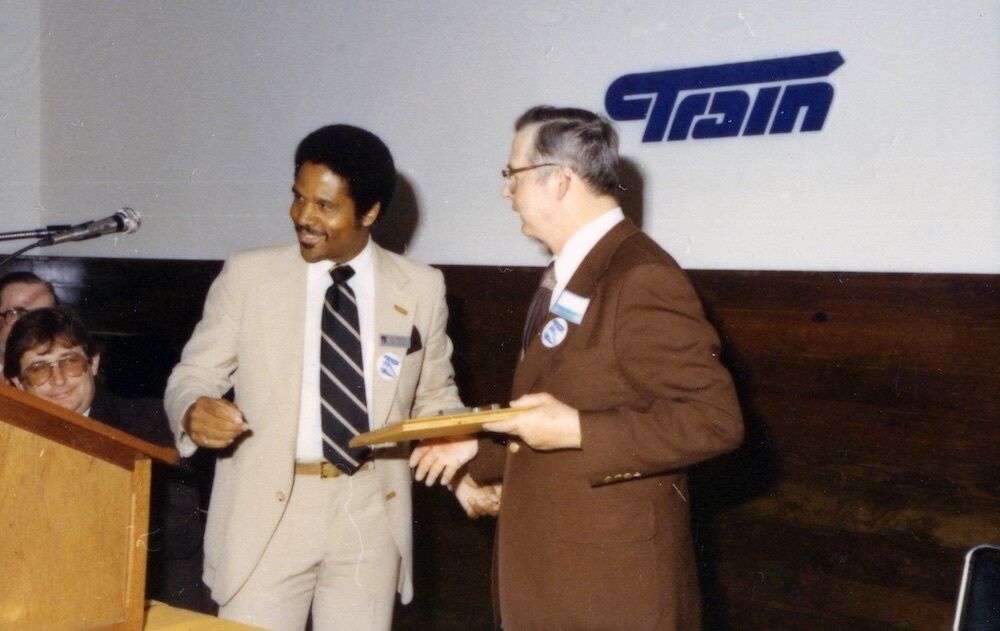
The honour system had proven successful in Europe. At the time, city staff said the fare evasion rate in Europe was around 3%. (Today Calgary Transit estimates it at 11% across the entire system.)
There was another factor in Calgary. “The lack of space on 7th Avenue for ticket agents’ booths and turnstiles makes conventional fare collection difficult,” stated a 1979 report.
Following Edmonton’s lead, city hall chose the open fare system, but with a twist: free rides if you start and end your trip on 7th Avenue.
The Herald’s editorial board applauded. “It sounds too good to be true but the city appears to have a something-for-nothing plan that won’t cost taxpayers a bundle,” the paper stated on September 12, 1978, calling free LRT downtown “a cheering prospect.”
‘The bonus bus’ rolls into downtown
After years of delay in building rapid transit, city hall didn’t waste any time on introducing free fare transit on 7th Avenue.
In 1979, to familiarize Calgarians with the idea of free transit downtown, city hall took a downtown bus shuttle and made it free for six months. At the time, Vancouver had a free downtown shuttle that was seen as a success.
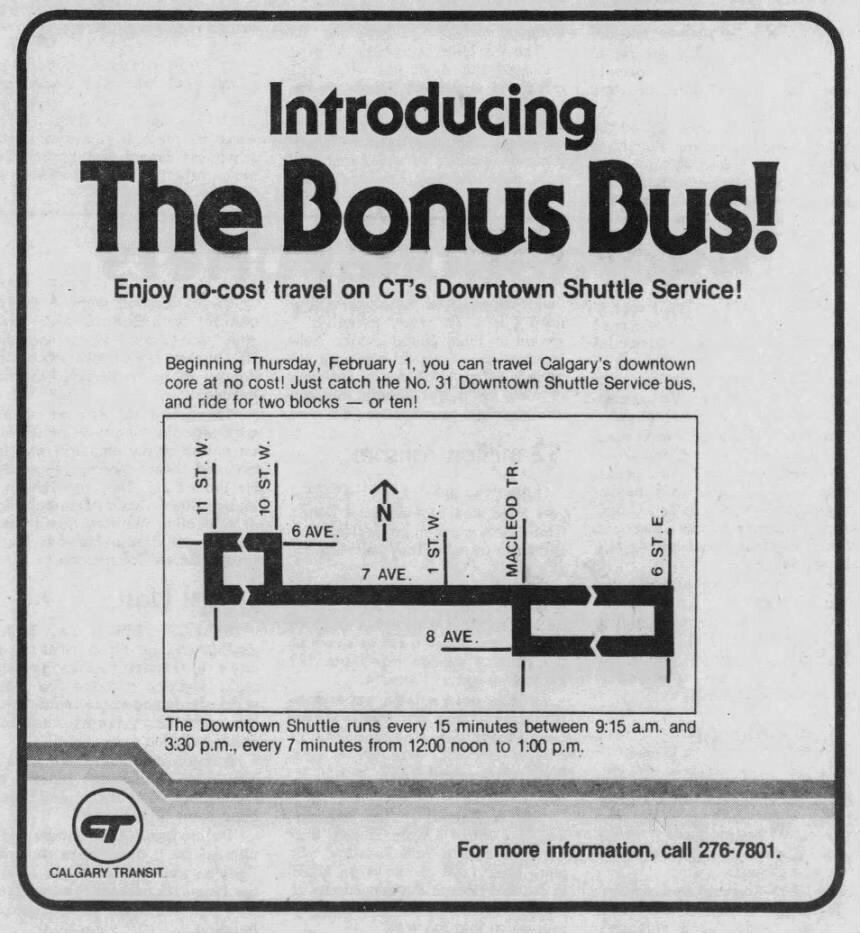
Calgary’s “bonus bus” didn’t happen without some debate.
Alderman Pat Donnelly was originally supportive of the pilot but withdrew her support after raising concerns that indigent Calgarians who sought shelter in the old Central Library might use the free shuttle service for the same purpose.
“Donnelly said she changed her mind because the opportunity for a free ride might be abused ‘by those people in the library,’” the Herald reported on January 23, 1979. Ald. Brian Lee countered that “a system (of service) shouldn’t be based on fear of abuse.”
The pilot was a success. Ridership on the downtown shuttle went up by more than 50%. City council decided to keep it free.
Donnelly said she changed her mind because the opportunity for a free ride might be abused ‘by those people in the library.’
After the first leg of the CTrain opened in May 1981—a “glorified streetcar,” some observed—the free fare zone quickly became a perk of city life in Calgary. And the CTrain, far from being obsolete, became one of the most successful and most-used LRT systems in North America as it was continually expanded.
A decade after the CTrain opened, Calgary Transit did a fare system review. “The fare-free use of LRT downtown is still beneficial in reducing downtown traffic and encouraging use of downtown businesses,” stated the 1991 report.
The recommendation at that time was simple: keep it.
‘Writing on the wall’: End of line?
Forty-five years after the CTrain opened with the free fare zone baked in, city council is poised to decide later this year about whether to keep it or not.
“This is opportunity for arguably a safe injection site for the downtown core,” Councillor Andre Chabot said in December 2025, when he moved to cut the zone during budget deliberations. “We see a lot of homeless people getting onto the train, and once they're on, they utilize it as their method to, I guess, be monitored while they do some of their drugs.”
“And this emanates out into the surrounding areas.”
Council voted 8-7 against eliminating the zone but, on February 24, unanimously supported the current review.
“We need to understand exactly how the free fare zone impacts Calgarians,” said Ward 6 Councillor John Pantazopoulos, adding that he voted against nixing the free fare zone in December because “council simply did not have the data needed to judge whether it was good, bad or ineffective.”
This review, Pantazopoulos says, will provide that information.
“Things have changed since 1979,” said Councillor Andrew Yule, who co-sponsored the review motion with Pantazopoulos. “And we definitely need more data.”
“This has been a subsidy to our transit system. And as a council, I encourage us to be very intentional about the subsidies that we put into our system.”
Councillor Myke Atkinson believes TD Bank’s sponsorship of the free fare zone in 2022 made it politically vulnerable. For the first time in over four decades, the free fare zone was associated with sponsorship dollars.
“When we saw the TD sponsorship come in, as an advocate for fare-free transit, I saw this as a writing on the wall,” said Atkinson.
In 2025, TD pulled out of the sponsorship deal two years early. “It gives a bad excuse on why to revisit this,” said Atkinson. “‘Oh, we were funding it through this sponsorship.’ We had never funded it through a sponsorship [before 2022].”
“In the past, it had always been understood as an economic driver—as a way to build up downtown, as a way to make downtown have less congestion, less cars on the road. It has all these benefits that we've understood since the beginning of the free fare zone.”
Admin is to report back to council on this before July 2026.
Jeremy Klaszus is founder and editor of The Sprawl. Hear more on the March 11 episode of CBC's This is Calgary podcast, where Klaszus was interviewed about the free fare zone's backstory.
Support independent journalism—help us get 90 new members!
Sign Me Up!To celebrate The Sprawl’s 9th anniversary, we’re aiming to get 90 new members by the end of September. If you value in-depth, curiosity-driven journalism, support our work so we can keep digging into municipal issues in Calgary!