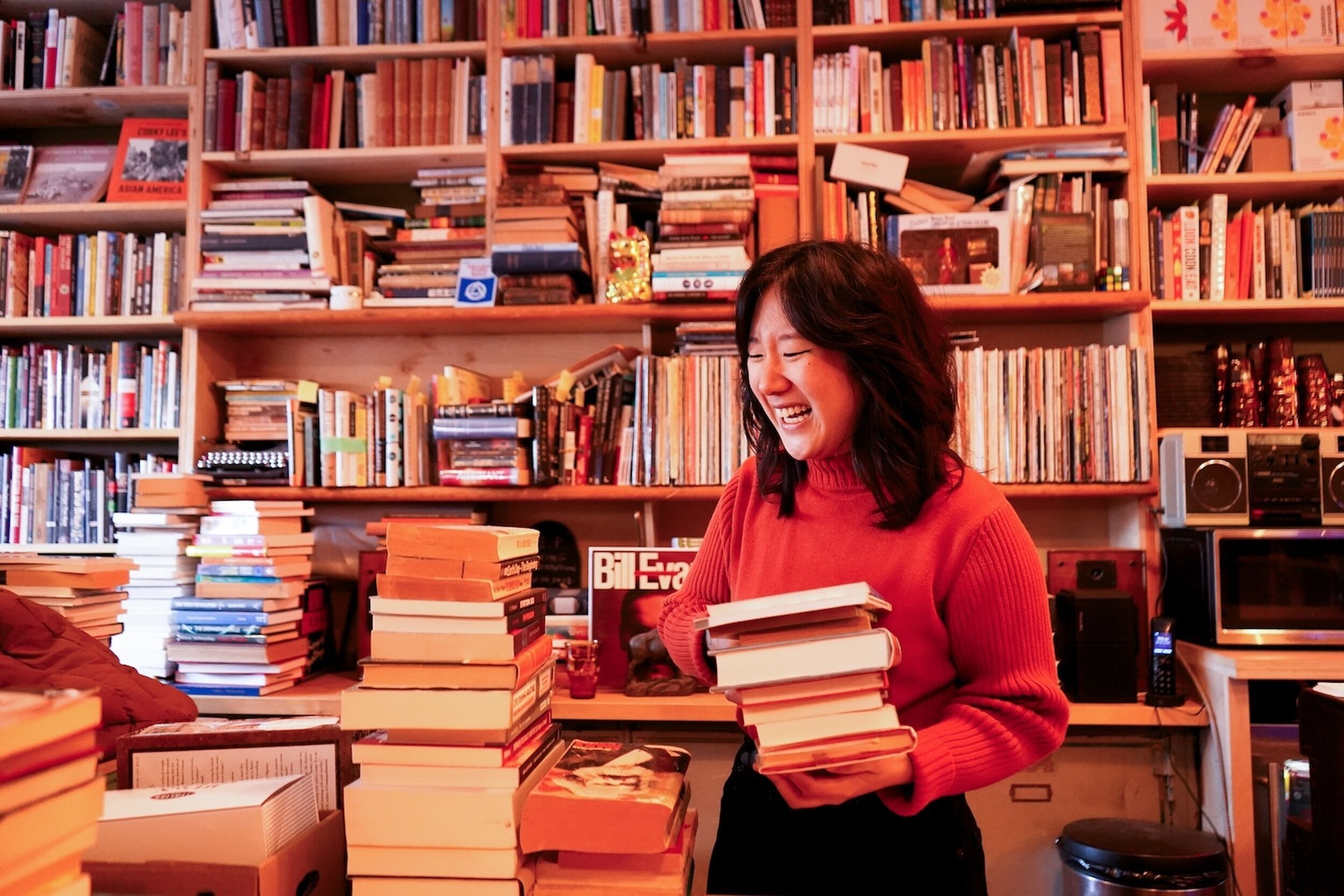
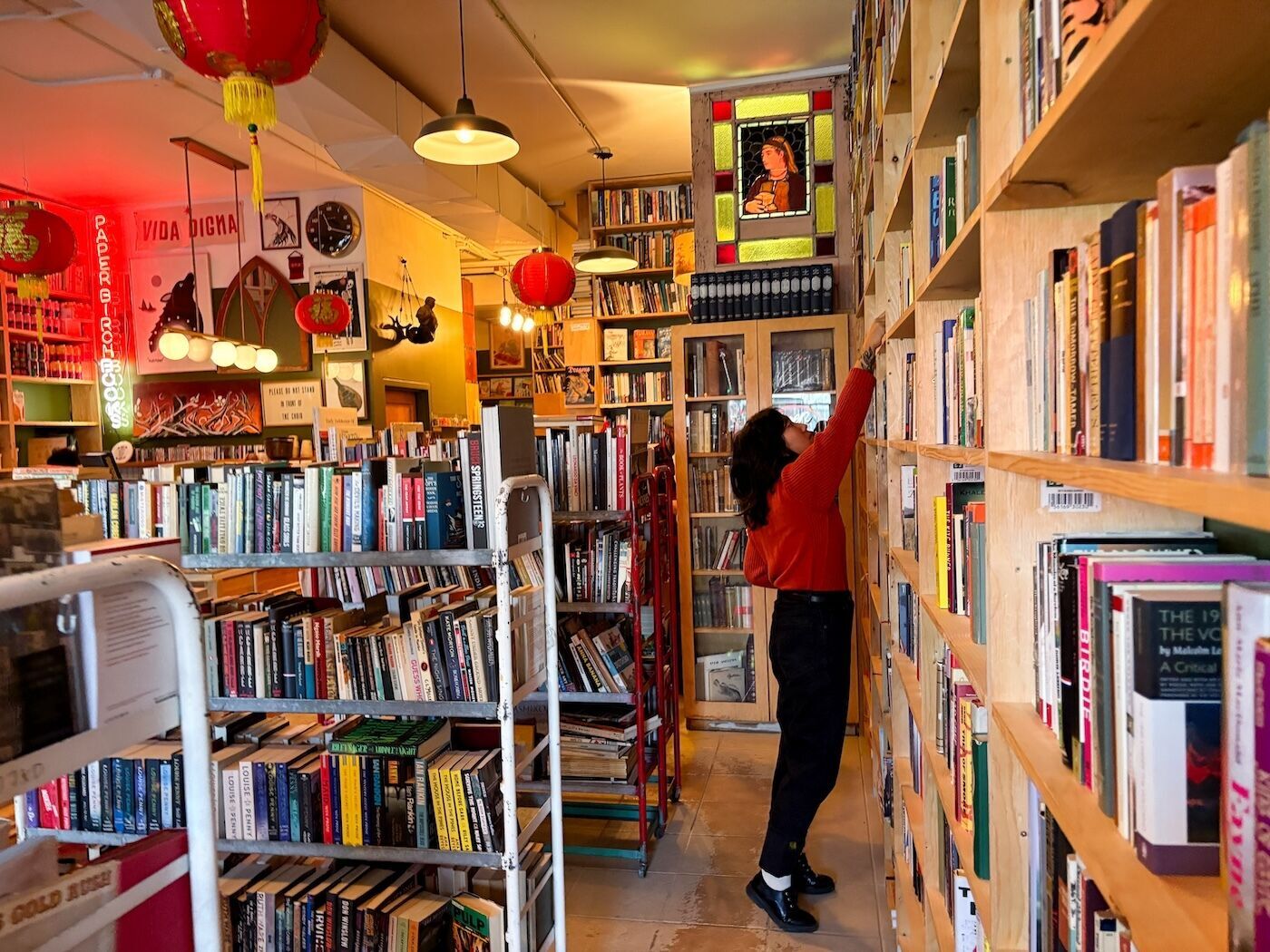
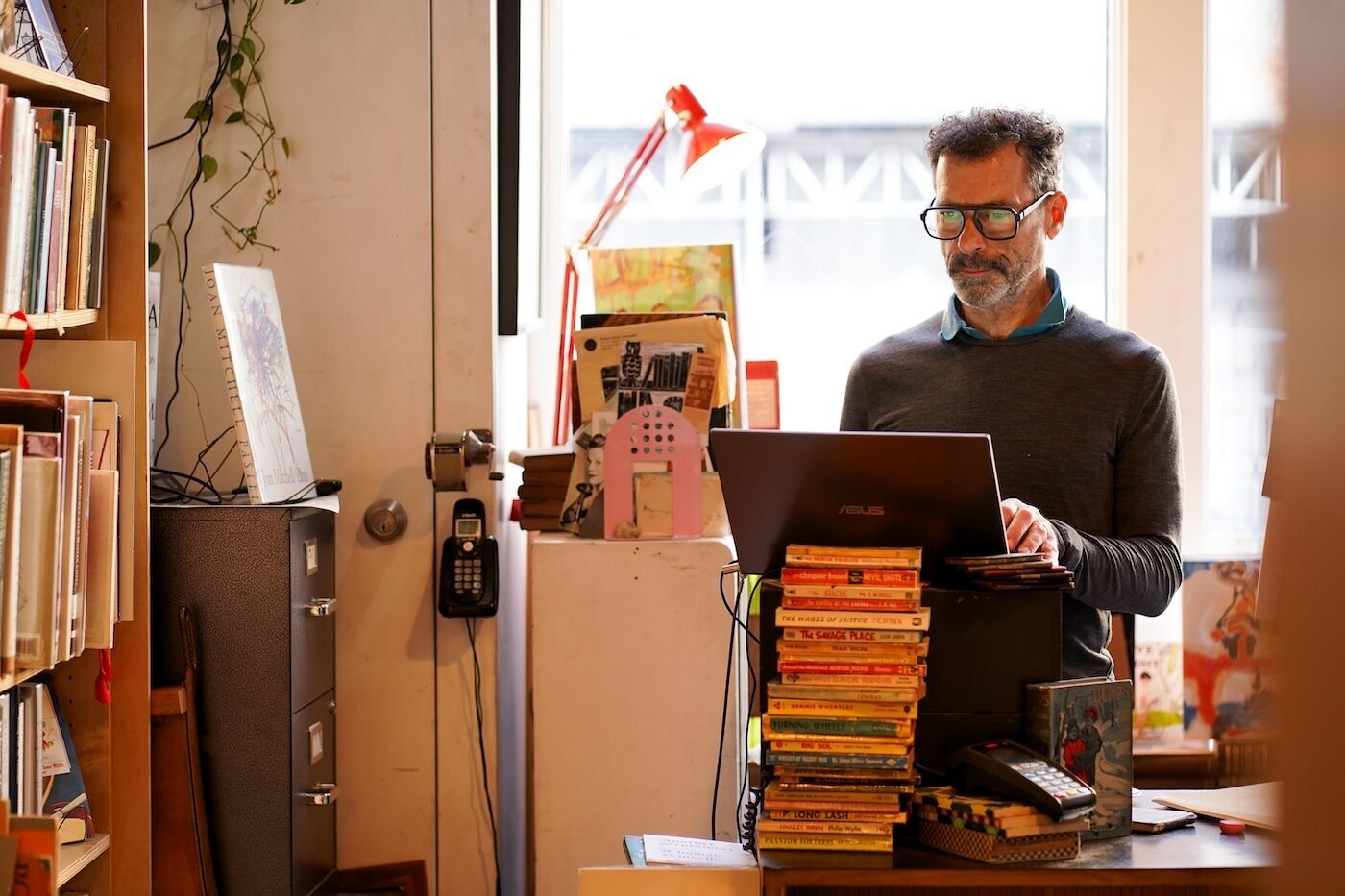
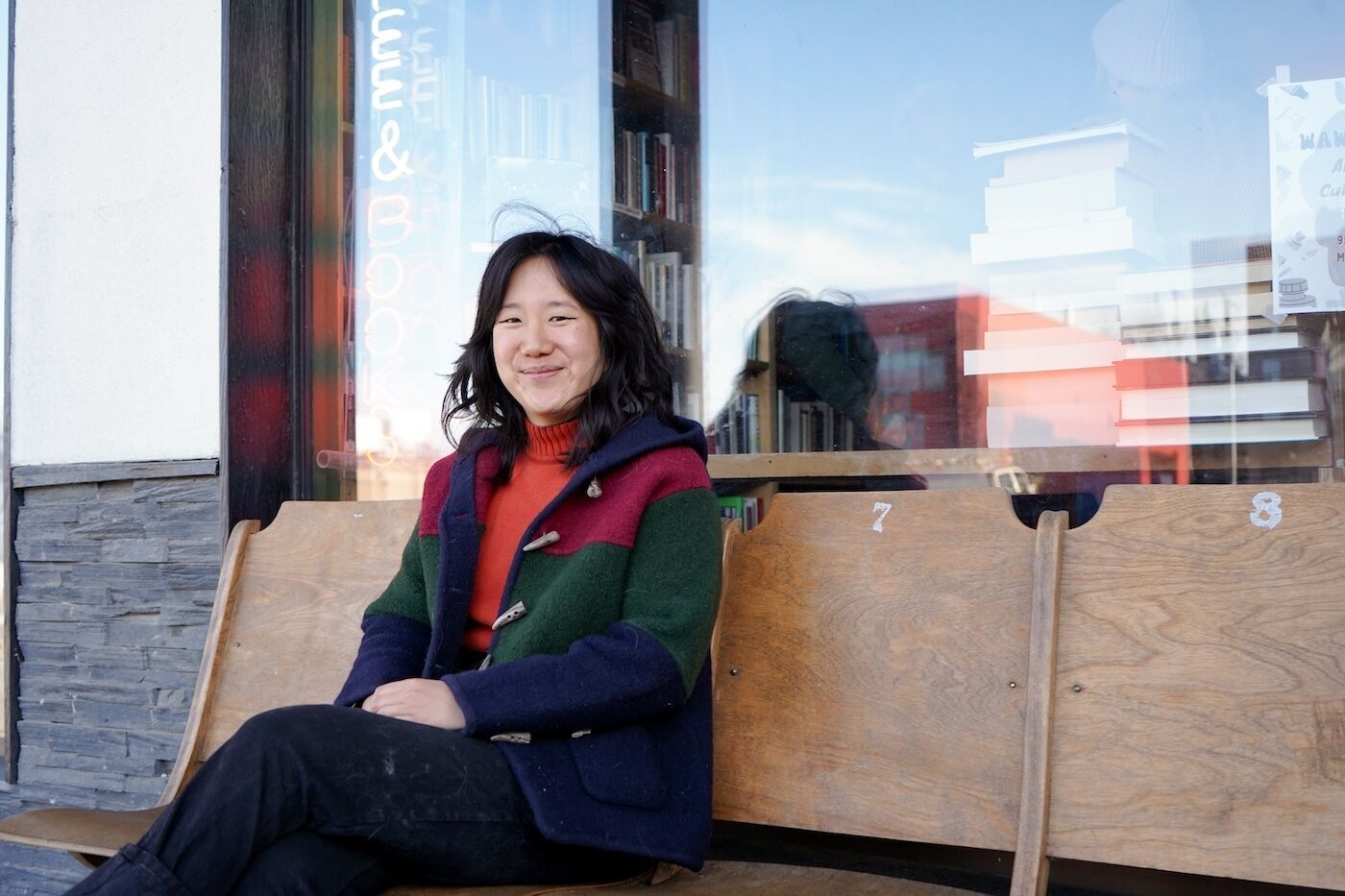
Céline Chuang of Paper Birch Books in Edmonton. Photo: Asad Chishti
The paper chase: How 4 Calgarians made their cities better with bookstores
All grew up here — but only one stayed.

Sprawlcast is Calgary’s in-depth municipal podcast. Made in collaboration with CJSW 90.9 FM, it’s a show for curious Calgarians who want a deeper understanding of the city they call home.
A lightly-edited transcript of this episode is below, for those who would rather read than listen. You can hear this episode wherever you listen to podcasts. Make sure to subscribe so you get new episodes as soon as they drop!
This story features four Western Canadian bookshop owners who all grew up in Calgary—but didn’t all stay here.
If you value The Sprawl’s independent journalism, support our work so we can do more stories like this one!
Don Stewart (MacLeod’s Books, Vancouver, est. 1964)
I didn’t know what I was going to do with my life. I had wanted to be an archeologist from the time I discovered a book on archeology at the age of six at our local library, and got extremely excited. And I didn’t know that I would become a paper archeologist, which is what I became.
Céline Chuang (Paper Birch Books, Edmonton, est. 2022)
The feeling of paper of a certain age, and how that feels when you turn the page... There’s a lot of tactile and material elements of loving and buying books.
Rodney Clarke (The Paper Hound Bookshop, Vancouver, est. 2013)
You open up a bookstore and people want to support you right away. They make all sorts of assumptions—good assumptions—about who you are and your character and what your goals are and what you’re trying to do.
David Sidjak (Sigla Books, Calgary, est. 2015)
Books are disappearing so fast, and especially those more obscure things that were never common to begin with. I buy them both because they’re interesting, and because they’re endangered.
Don Stewart (MacLeod’s Books)
Hi, I’m Don Stewart. I’m the owner of MacLeod’s Books since 1973. But originally I come from Calgary, where I was born in 1951. And my formative years were in Calgary, up to the point where I was working in a couple of used bookshops, before leaving at the age of 20 to travel in Latin America before I ended up moving to Vancouver.
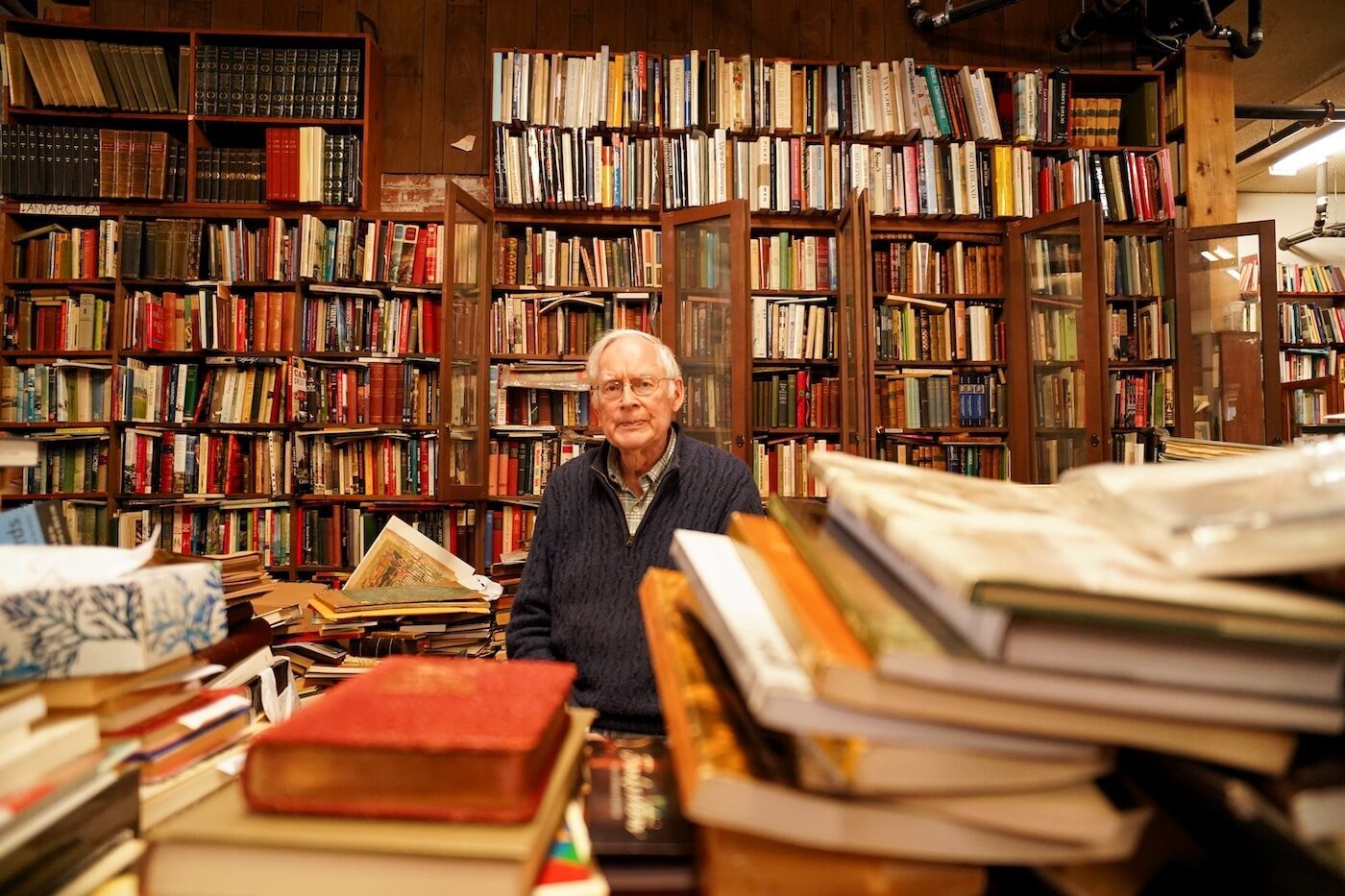
The Calgary I grew up in was still very much a small city. When I was born there, it had a population of 125,000. It was before the oil boom really hit and Calgary became terribly Americanized, which happened when I was a teenager. The locals were kind of drowned by incomers who were going into oil industry offices, and there was a huge building boom in downtown Calgary.
I remember the original sandstone downtown and the bits of book culture from that time, because my parents were very much readers. My father had, during the war, bought a lot of books in London when he was on leave. So I grew up with signed limited Aldous Huxley editions, or James Joyce, or Nabokov first edition of Lolita—that kind of thing. And I was someone who was always very attracted to books.
Céline Chuang (Paper Birch Books)
My name is Céline Chuang. I’m the co-owner of Paper Birch Books. I live here in inner-city Edmonton.
Paper Birch Books is a mostly used independent little bookstore in McCauley, Edmonton, which is near downtown, near Chinatown. Our selection is more literary than popular, I would say, and it’s kind of based around what I call the lefty and the literary and the curious. So interesting elements of print culture. We like multiple editions of different books. We have a lot of pocket paperbacks. Sometimes we have ephemera. And so it’s really a love letter to print culture, which is something that I’m kind of obsessed with.
There is that element of the hunt, the finding of something special. And we already love to do that for ourselves.
It also has different sections and a different selection of books than any used bookstore we had seen yet in Edmonton, myself and my partner. And so we really wanted to open the kind of bookstore that we like to go to—so we could just be there all the time, and then other people could come and hang out with us.
I really love the idea too of completing the canon, which is from this anti-racist creative workshop facilitator, Felicia Rose Chavez. And the idea is the traditional canon excludes certain voices. And so when we select books to keep in the store, we choose those that are considered classics—but also the underrated or under-told voices and stories as well. Both historical and contemporary writers.
I think for almost as long as I’ve been conscious, I’ve really loved books and reading. I did a lot of writing too, coming up with my own stories and artwork. And I loved the world of different books, disappearing into them completely. As a kid, I was very imaginative, and read a lot of fantasy novels like Lord of the Rings and Narnia and all of those ones.
I’m trying to remember now the first time I went into a used bookstore. I don’t know if I can pinpoint the first time. I know that my mom took me to some used bookstores in Calgary, which is where I’m from. And I really loved going through the shelves and looking at things—also thrift stores, which kind of have a similar finding-a-treasure feeling, and book sales or garage sales. She would take me to those places, and I think that’s maybe the earliest seeds of becoming someone who would then go on to find those treasures for other people in my own bookstore.
Don Stewart (MacLeod’s Books)
I remember the moment I started reading. I was four years old. I had asked my sister to read me a book. She got up in the middle of this to go to the bathroom, and didn’t come back. And when she did come back, I was reading the book out loud, so she called in my parents. It was one of those dramatic moments that fixed a memory.
I, like most kids, was very interested in comic books, particularly the Classics Illustrated comics. And later on in The Hardy Boys. Everyone in my school collected The Hardy Boys, and we used to exchange for ones we didn’t have. So I started going around to used bookshops at a very young age, because I was looking for those comic books or Hardy Boys or whatever.
Which is how I discovered Jaffe’s downtown, an amazing old-fashioned bookshop. It had a rather narrow entrance with a very high counter. A couple of older Jewish gentlemen were running it, one of whom had a very high voice.
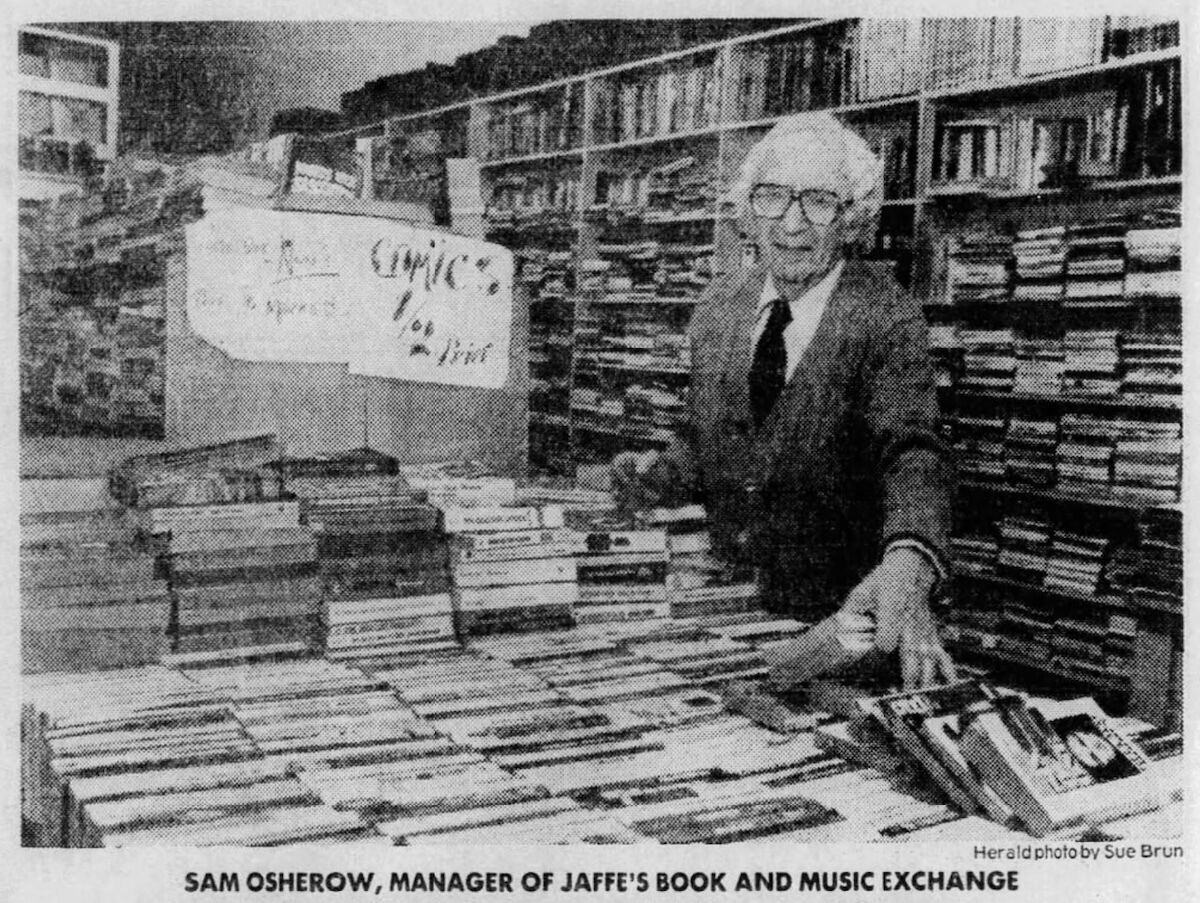
But if you got into the back, you could go downstairs, and there were tunnels going the full length of the block underneath all the buildings. And the tunnels were full of books, because Jaffe’s had been one of the big repositories of books in Calgary, starting in the late ’30s.
But unfortunately, its owner had had a stroke that incapacitated him, so he was unable to be in the business. And his assistants continued to run it for as long as they possibly could.
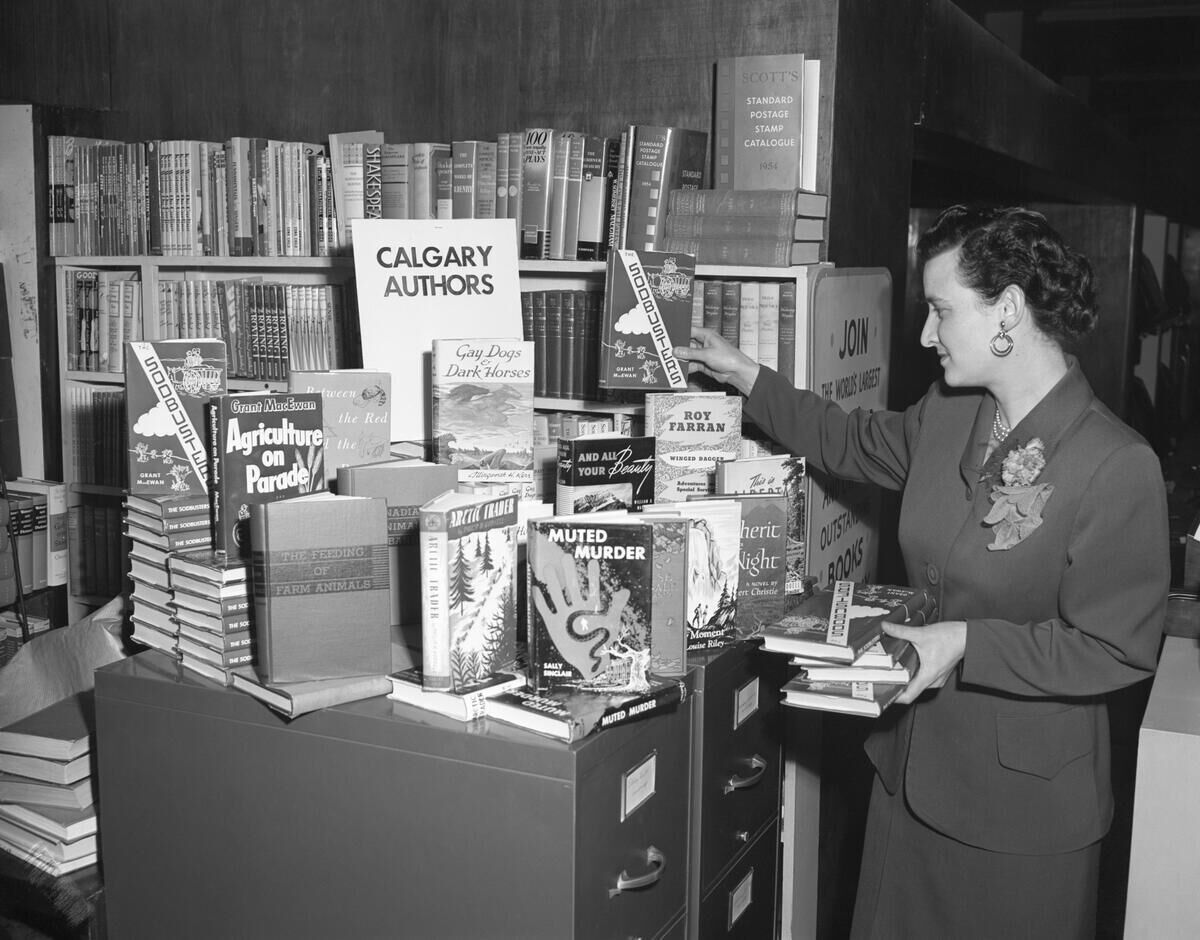
Another shop downtown was Evelyn De Mille Books, and she was located right next to my father’s office. So I was in there quite often, and she was a very nice lady—very helpful. It was a small shop but a good one. Lots of personal service.
Rodney Clarke (The Paper Hound)
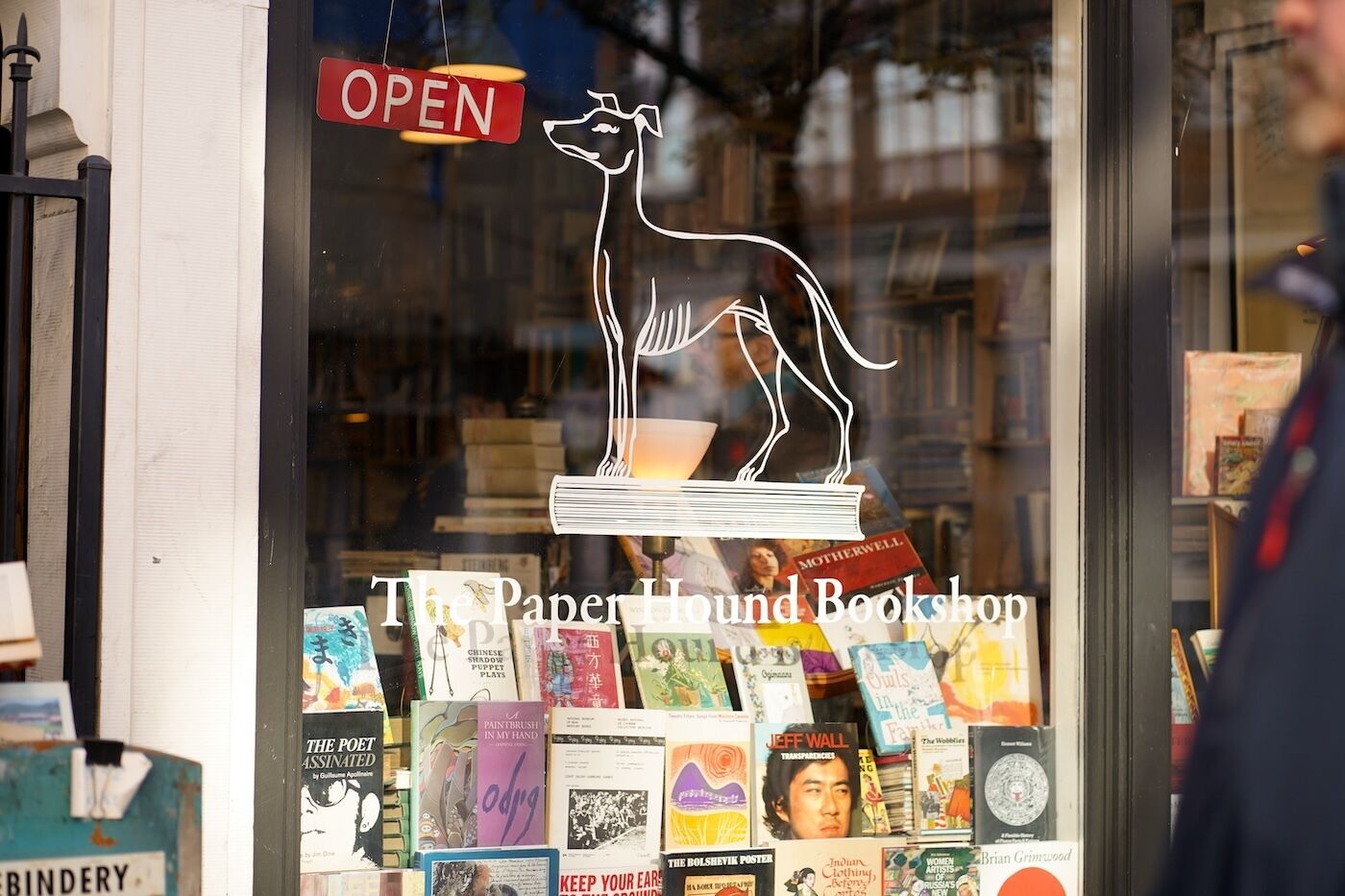
I’m Rodney Clarke, co-owner of The Paper Hound Bookshop in Vancouver on West Pender Street. We opened in 2013. Our strongest focus is poetry, literature, philosophy, design, I would say. Period children’s books, period cookbooks…
My parents bought a house in University Heights in 1964 and we moved in 1976, so I lived in Calgary for about 12 years until I was about 15.
Bookstores would be the bookstores in the mall. The Coles, the Classics. I went to the Market Mall. My parents would buy me books at Kmart. Big Little Books—The Fantastic Four and stuff like that. But mostly it was Classics and Coles and W.H. Smith, I’m guessing, were the names of the shops we went into. They were in malls, and they were franchises.
I never really thought about it too much. I didn’t think there were really any other kind of bookstores than a chain bookstore.
I went to the Market Mall. My parents would buy me books at Kmart. Big Little Books — The Fantastic Four and stuff like that.
Céline Chuang (Paper Birch Books)
So one of them, which was just the closest one to us, was the Fair’s Fair in the Silver Springs area of northwest Calgary. That was the neighbourhood or the area of the city where I grew up, so I spent a lot of time there.
It’s a smaller one, but I remember loving the idea that there was a space just for used books. Because if we went to a thrift store or garage sale, I would find the books and then look at those. But I’m like, “Oh, this place has just used books. That’s cool!” I remember ambitiously telling my mom I wanted to read War and Peace. So she bought me it. I didn’t read it. [laughs] But I loved the idea of reading it!
Don Stewart (MacLeod’s Books)
And I remember in about 1958—so I would have been 7—my parents for my birthday said, “We’re going to surprise you.” And I was in a bad mood for some reason. Anyway, we drove downtown, went into Evelyn De Mille, and there was Pierre Berton, who had had a children’s edition of his book on the Yukon come out. I guess this would make it 1959 or ’60. Might have been as late as 1960 because the original book came out in ’58.
Anyway, he signed it to me, and there was a photograph taken of him and me. And it was quite thrilling to meet a Canadian author, because we used to watch him on TV every week. Front Page Challenge was the show that he and others were running.
Rodney Clarke (The Paper Hound)
I didn’t even know what an independent bookstore was. The first independent bookstore I ever was in was Mary Scorer Books in Winnipeg, in the Village—the Osborne Village. That’s when I realized there were other types of bookstores. Maybe I was like 17 or something.
Don Stewart (MacLeod’s Books)
There were other shops that opened in Calgary later on. There was Bob’s Books up on Capitol Hill. And Bob was a very nice guy. He was running a primarily paperback exchange, but other good books could turn up there at any time.
And then there was the Hillhurst Book Store, right by the Kensington bridge. And that is the shop I ended up getting a job in when I quit University of Calgary just after the War Measures Act and the FLQ crisis in 1970. I didn’t like the reaction of the university community to what was going on—the loss of civil liberties, that kind of thing.
I had been a writer for The Gauntlet newspaper. And so on the day that the War Measures Act was declared, I went to the library, researched it, and then I went around to all my classes and tried to bring it up as a discussion point, and was just met by a wall of silence. So I never went back to my classes. I ended up departing, which was a very smart move, because as a partially-unemployed kid working doing janitorial work, I had a lot of time to read. I was reading usually a book a day and self-educating.
Céline Chuang (Paper Birch Books)
I think another place that was hugely informative to becoming a book lover was the local library. So that was the one near Crowfoot in Calgary. They redid it at one point and added a lot more window seating. So you could find books and you could just sit by the window in the sun and look at books for as long as you wanted. And I remember that was one of my favourite places.
Don Stewart (MacLeod’s Books)
I had this janitorial job, got a holiday, was just going to take a week to hitchhike out to Vancouver, which I’d done many times. I met a few young women from Boston, went to San Francisco with them, and by the time I came back, I didn’t have a job. So I was supposed to be looking for work, but I was hanging out in a record store looking at records when a friend came in and said, “Oh, I just turned down a job at Hillhurst Book Store.” And I was in there every week looking at books.
So I went rushing down to Hillhurst, got the job, and within a week, I knew it was my vocation—that it’s what I should do. And I’ve done it ever since.
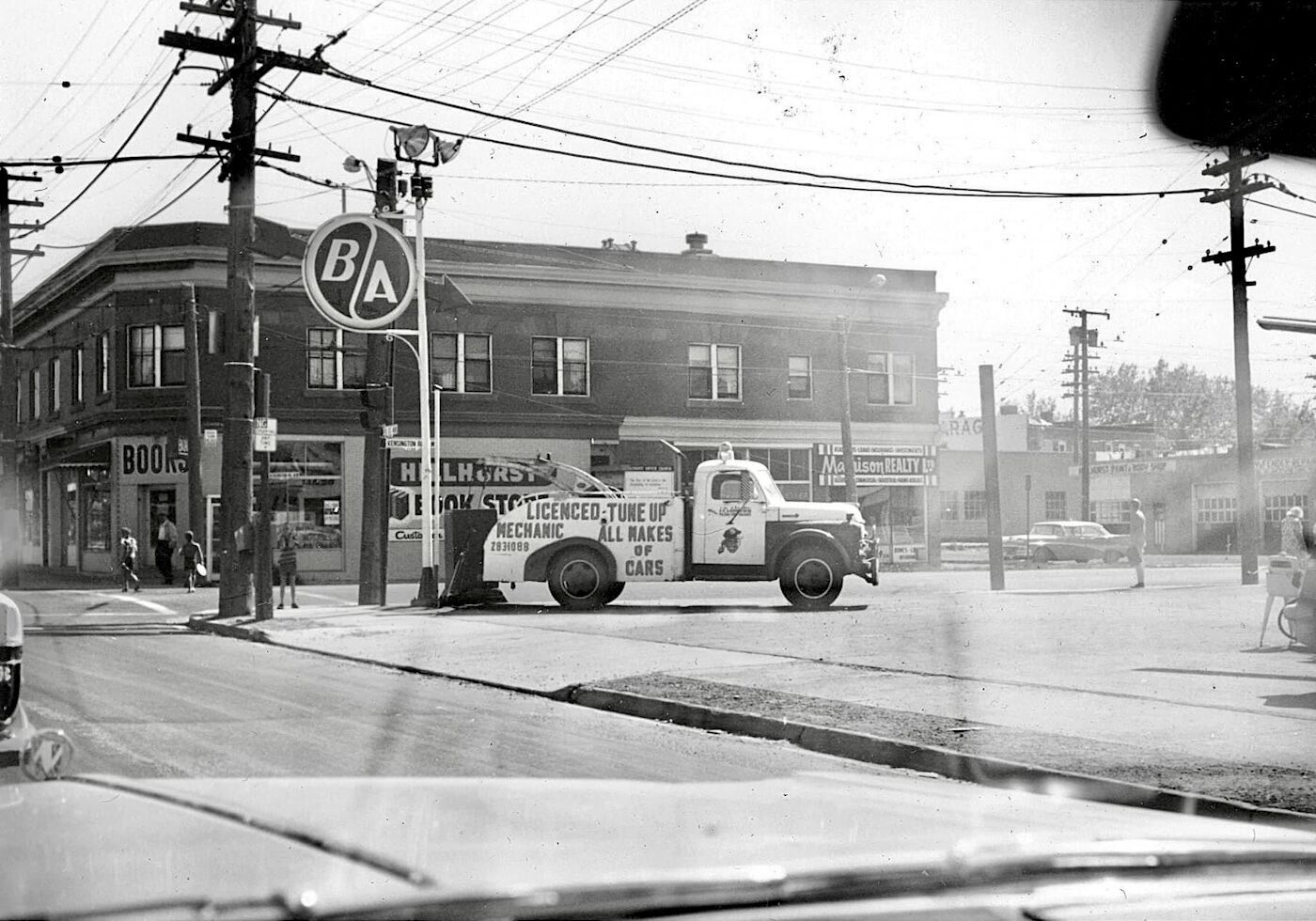
I went rushing down to Hillhurst, got the job, and within a week, I knew it was my vocation — that it’s what I should do.
The problem with Calgary in those days was it was a kind of shut down and button-up collar society that didn’t really value its history. And there were a couple of incidents that had really soured me on Calgary. There was, by the Elboya bridge—just a block north of there was an old hotel. It had been a stopping place between Calgary and heading south. The building wasn’t in great shape, but there was no attempt to save it. It was one of the oldest buildings in Calgary at that point. I think it dated from the late 1870s.
And this knocking down of great parts of downtown—all the old sandstone buildings. The cities that have preserved their original buildings have made themselves meccas for tourists and visitors. But in Calgary, there was no consciousness about that. The attitudes of people were just it was all about money and not really all that much about culture.
My parents were members of the Alberta Historical Society and friends of Hugh Dempsey, and we used to go to the Glenbow Foundation. I really loved their preservation of history. Later on, during the summers, I worked at the Riveredge Foundation, which was the private museum of Eric Harvie, who had set up the Glenbow before he gave it to the province of Alberta.
There were attempts to preserve some of the architectural bits. I remember we were sent out to try and preserve some columns on a house that was across the street from the Belcher statue in Central Park. We had a few people on the crew who knew what they were doing, and we did a very careful removal of these columns, because the house was going to come down. And it was a wonderful house. But in Calgary, money was all that mattered.
Céline Chuang (Paper Birch Books)
I think growing up in the suburbs of Calgary, I felt like I really wanted to live somewhere where you could walk places, you could encounter strangers, you could kind of live more of an overlapping life with others. And Calgary didn’t feel like it was possible in that way.
I really felt a sense of creativity and inspiration when I was surrounded by people and interacting with other people in a more densely-populated, densely-planned city. And so I went to study graphic design in Vancouver after my undergrad in Calgary, which was in English literature.
And the graphic design program actually made me appreciate and love print even more. Because I kind of understood more about the world of how to design for print and everything that goes into the process of making something like a print magazine. So I would amass these collections of little print publications I would find around Vancouver, whether they were free or not—just from different stores that I loved. So I think definitely, in going to Vancouver, I fed my love for print culture.
Growing up in the suburbs of Calgary, I felt like I really wanted to live somewhere where you could walk places, you could encounter strangers.
David Sidjak (Sigla Books)
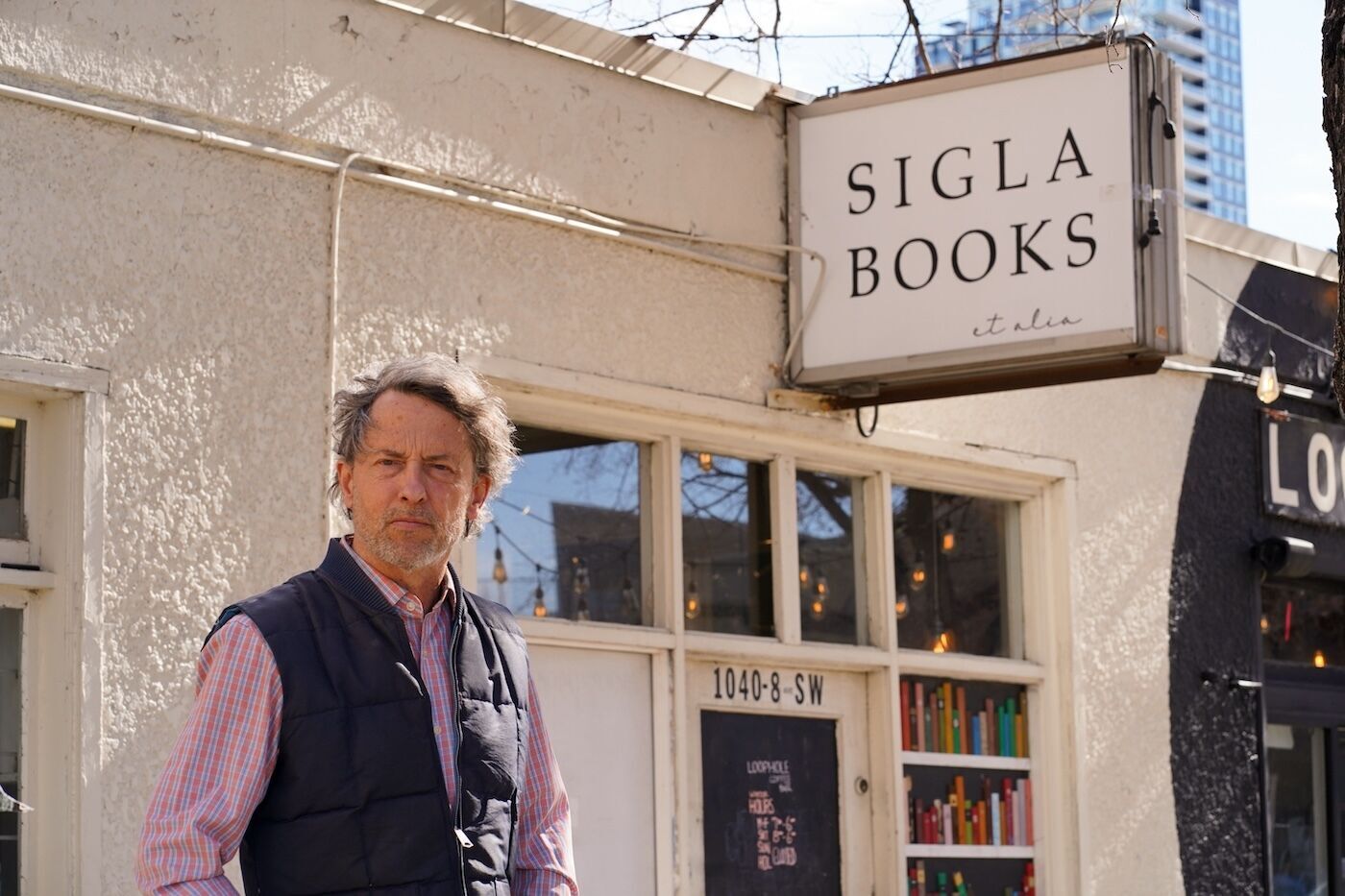
My name is David Sidjak, the owner and operator of Sigla Books. I started my shop downtown Calgary in 2015. Moved here at the west end of downtown Calgary in 2017 and have been here since.
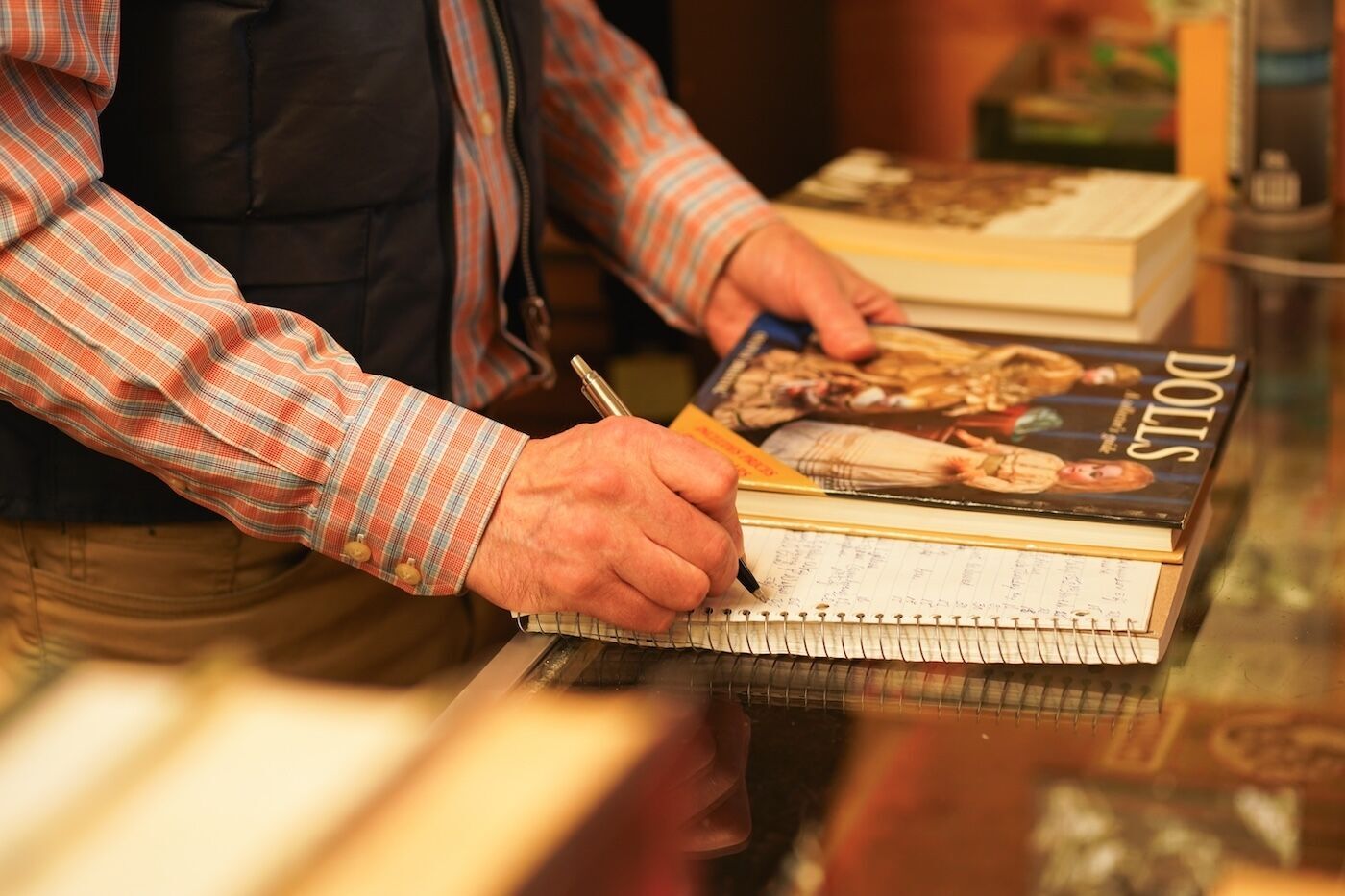
I like to stock in my shop a lot of semi-forgotten authors and titles. And in a lot of cases, these are books that are only 30, 40, 50 years old. In some cases, much more than that. But they’re already being forgotten. And so, as I’ve said a thousand times before, it’s probably not a really good business decision to focus so much on the odd, obscure and the choice. Especially the obscure. It is, I guess, out of a certain perversity on my part—a real motivator to find, to discover, to learn about, and then to some extent, to publicize, just by putting these things on my shelves.
I was born in Toronto to Western parents and we were here by the time I was four and a half. And it’s been home base since then. I went to the University of Alberta in Edmonton, and have lived and traveled elsewhere, but as I said, this is home.
I was a fairly late bloomer in a lot of ways, and was not much of a reader as a young person. Certainly as a teenager, I was not. I didn’t do well in school. But starting in Grade 11, I discovered books—but still didn’t really get into the whole book culture for a few years after that, into my twenties sometime.
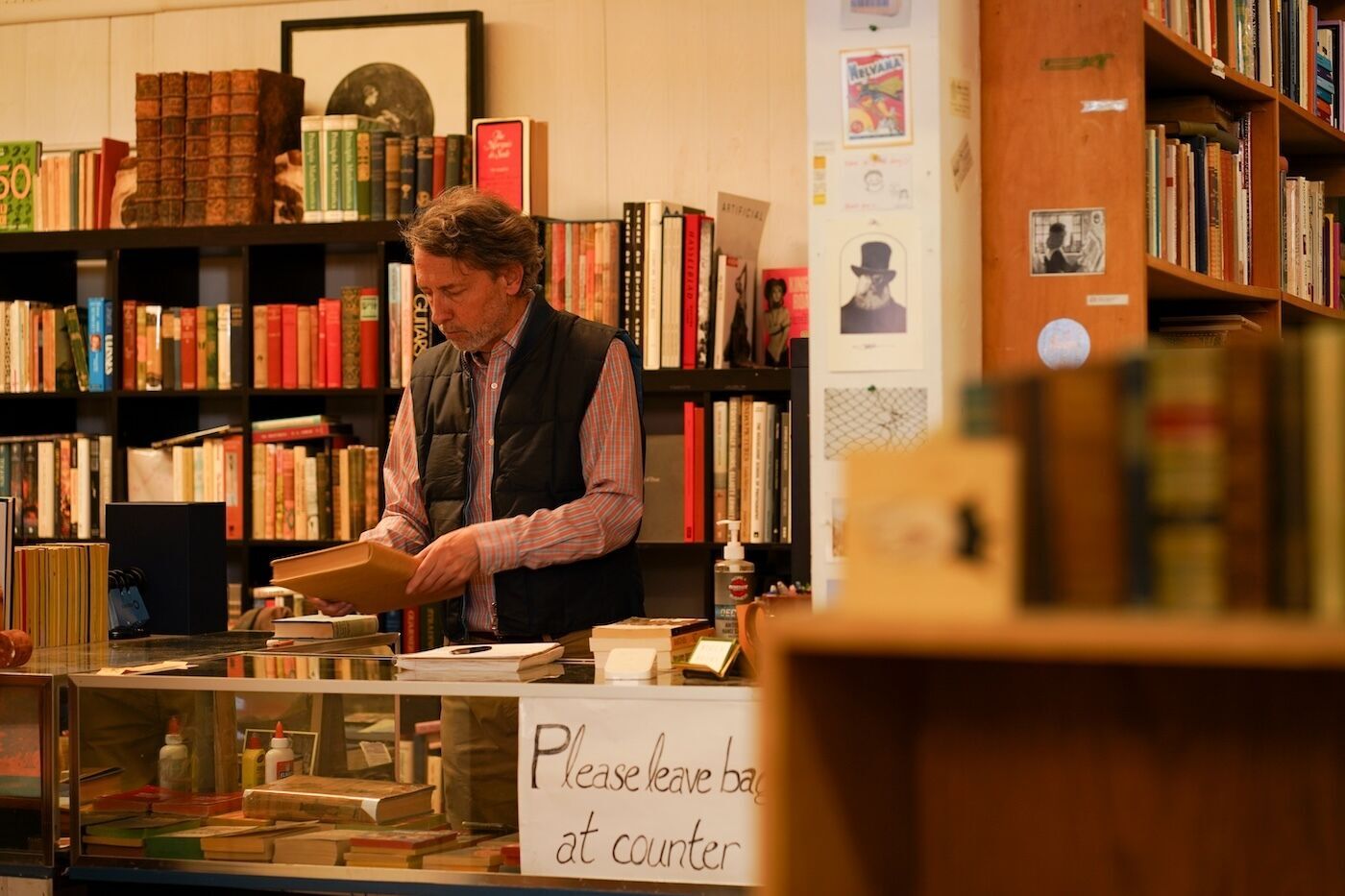
I like to stock in my shop a lot of semi-forgotten authors and titles.
Rodney Clarke (The Paper Hound)
I just wanted to get a job in a used bookstore. It was my goal to get a job in a bookstore. We moved out here to Vancouver in 1980 and by ’81 I had a job in a new bookstore.
David Sidjak (Sigla Books)
I worked at one Calgary bookstore starting in the early 1990s. Older Calgarians will maybe remember it: The Booke Shoppe. Spelled the Old English way, with an E at the end of “book” and a double P E at the end of “shop.” It was on 16 Avenue N.W.—long gone. And then I met Tom Williams there and went to work for him in about ’95. I worked for him on three separate occasions for probably about 10 years, finishing up in 2013 when his shop was wiped out by the Calgary flood.
Rodney Clarke (The Paper Hound)
I wasn’t that goal oriented. I didn’t know what I wanted to “do with my life.” And I loved reading, and I just liked the environment. I just wanted to be around books, and there wasn’t much more to it than that.
Don Stewart (MacLeod’s Books)
I had been working in Hillhurst. I had a real affinity for books, and I had a very good memory, and I had lots of interests in all kinds of areas. I was pretty much like a pig in shit, if you want to know.
There was one very peculiar incident where I was in the back having my lunch, and someone brought in a box of books. And the owner was going through them, and I suddenly knew this book that I had really wanted was in this box. I’m one room away with a wall in between, right? But I’m hearing, through an open door, the discussion. And as soon as the transaction was over, the owner turned around and handed me that book.
He said he had felt me right on him as he was handling the book, so he knew which book it was. It was a Solzhenitsyn book, One Day in the Life of Ivan Denisovich. So I had an affinity, and I became a pretty good scout over the years. I would run my eye along a shelf, and before I knew it a book would be in my hand. It was a hand-eye thing that was so fast that the brain was working to catch up.
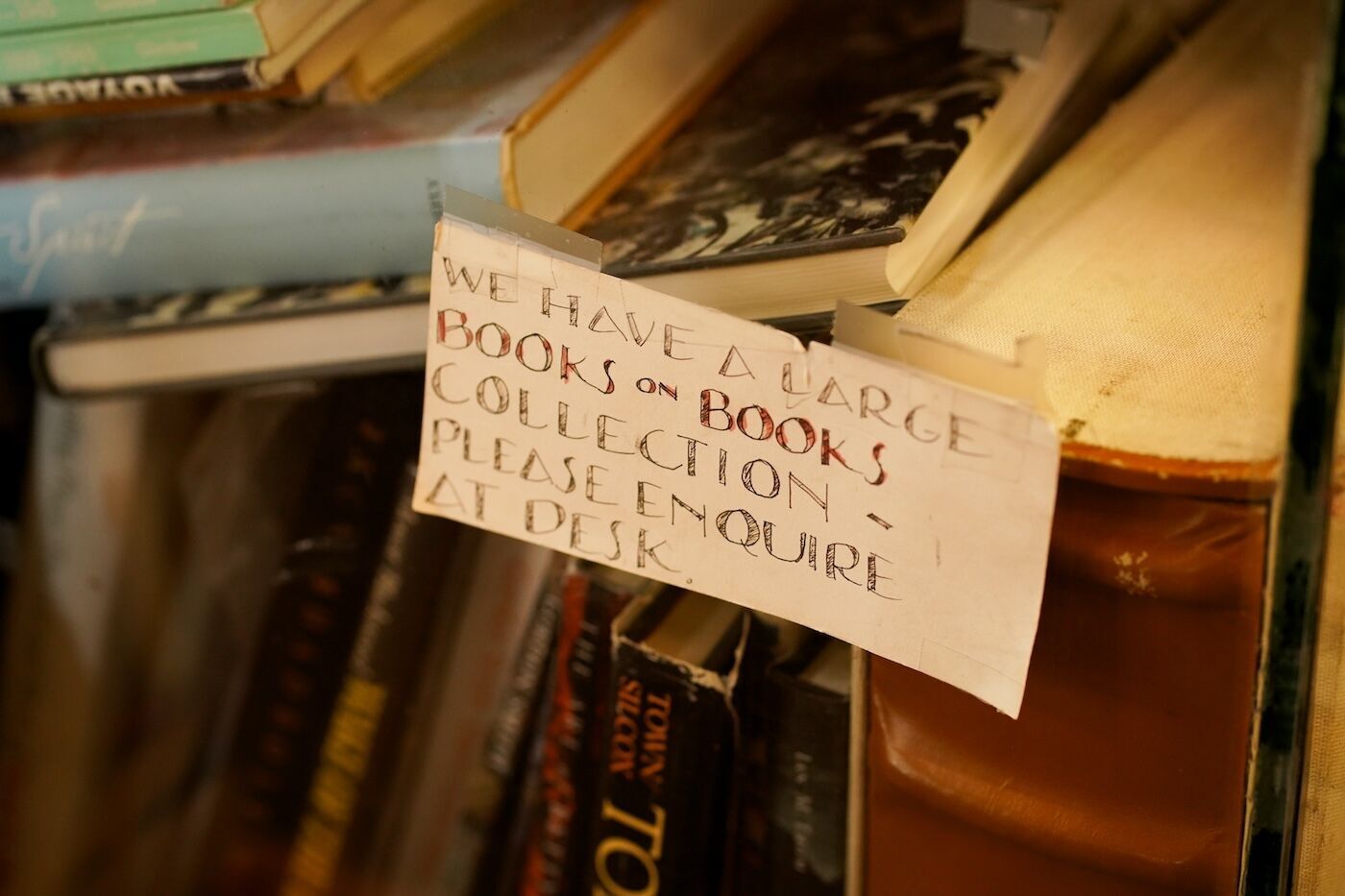
I would run my eye along a shelf, and before I knew it a book would be in my hand. It was a hand-eye thing.
Céline Chuang (Paper Birch Books)
Yeah, it’s a really fun kind of world that a lot of people aren’t part of at all. So they enter a bookstore and they interact with it as customers. And that’s a really valuable and lovely part of a bookstore ecosystem. But the scouts that come in with their books to sell to the bookstore are often part of that bookstore ecosystem people don’t see. They’re not really visible. But that’s how we got in.
That story definitely ties into my partner Benjamin’s story. He was more of a secret book lover in the inside and a sports kid on the outside—he’s the one that started doing the bookselling.
He started out doing book scouting. That’s what it’s called in the used book world. So he would go around to places like thrift stores or garage sales, or just places where people sell used books at low prices, and he would pick up books that he thought were worth selling to a bookstore. I don’t remember what started that for him, but he really loved it. And he started selling to Don at MacLeod’s and a little bit to, I think, Patricia at Massy Books in Vancouver as well.
Once he got me into it, I was like, “This is actually really fun.” Because there is that element of the hunt, the finding of something special. And we already love to do that for ourselves, so it’s kind of an extension of that. And you make a tiny bit of money as well, off of the book, and then the bookstore makes a little bit more when they sell the book. So he got me into that.
Eventually we started setting some aside that we were finding—and thinking, “You know, maybe one day down the road—maybe maybe five years, maybe 10 years—we could have our own bookstore. And we’ll just start a little collection.” Because in order to open, we’d have to have a significant amount on the shelves already. And that was maybe a little bit before COVID, when we were living in a basement suite in East Vancouver.
Everything was stashed into different what Ben would call squirrel holes or squirrel’s nests. And at one point he emptied out his closet and just filled it with books and then had his clothes in garbage bags. So that was the state we were living in.
Through that, because the bookstores you were selling to, or the bookstores you would often encounter… Don at MacLeod’s and Kim at Paper Hound were the two people that we probably talked to the most. They were very open, generous people. And they were kind enough to be willing to explain and further expand on things when we had questions, or as we learned as we went. And so it kind of organically had elements of an informal mentorship, which we really appreciate.
But during COVID—Ben’s from Edmonton, and we realized that we needed more housing stability. Our family was in Alberta, and so we decided to move back here. And in Edmonton, the rent is much cheaper commercially, especially in the inner city where we wanted to live. So we thought, okay, maybe this is actually doable for us.
I think Edmonton was the perfect place to become a new home for me, because I ended up kind of liking it more than Calgary. It's a lot more working class, and there's really interesting organizing and social justice histories here. Politically, it votes more left than Calgary does, which aligned with my values. I felt like you could encounter way more characters in Edmonton than in Vancouver or Calgary.
And yet the land was familiar. The smell of grass in the summer, the wild berries, the saskatoons and all the things that I remember from growing up in Calgary and getting to know the land. And forming a really important and even sacred relationship was one of the reasons I wanted to come back, I think, to the land that I remembered a little bit. And that helped with feeling a sense of home and belonging.
Don Stewart (MacLeod’s Books)
I wanted to go off to Latin America to Allende’s Chile. And so I left the job I had been working in Hillhurst and then in a second store that the owner had. He and I had various clashes over things, and he had fired me at least twice and then had to rehire me, and it was really time to leave. So even though there was a new owner and I helped train him, I was ready to go.
On that trip, I one morning woke up and had the idea: When I go back to Canada, what I’m going to do is move to Vancouver and open a bookshop.
I took over an existing bookshop. MacLeod’s Books had been founded in 1964 and the owner had sold it in 1970 and gone to the Sunshine Coast to become a land pirate, i.e. real estate. And then he sold it to an American, Van Andruss, who had tired of it. He had enjoyed it but he wanted to do something different. So when he sold it to me, he went off to Lillooet, founded with others an intentional community, and he’s still there. He’s an environmental writer. He’s had the kind of life he wanted to lead doing that.
Those were very different days. Rents were cheap. Everyone felt they had a lot more freedom to do what they wanted to do—to move around. People were moving all over the country and back and forth across the border.
MacLeod’s started out one block east of here in a small space that’s now a restaurant, and I was there for a number of years, and then moved it to a shop on Hastings Street. But unfortunately, someone went after one of our neighbors in an arson attack, and the entire building was destroyed. I lost at that point 11 years’ work so I had to start again.
The only thing that survived from that fire—I was lowered on a rope into the ruins to a room where I had had a lot of stuff, and all I found was a letter by Peter Verigin, the leader of the Doukhobors, who was later assassinated, blown up on a train. And the Doukhobors were very happy when they heard I’d saved that letter. They thought it was symbolic.
I got started again in this location and have been here for the last 40 years.
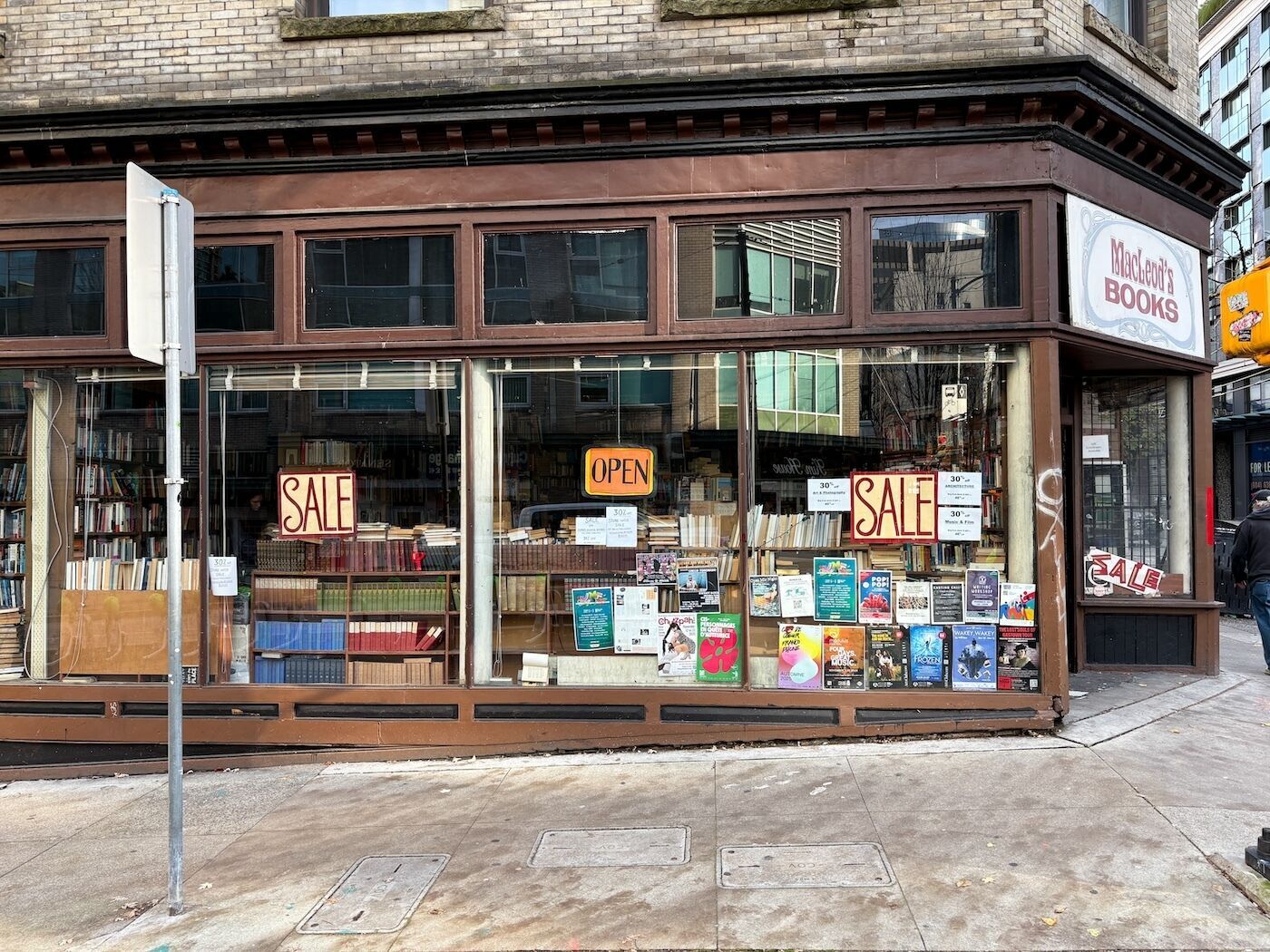
Those were very different days. Rents were cheap. Everyone felt they had a lot more freedom to do what they wanted to do — to move around.
David Sidjak (Sigla Books)
As I mentioned, I worked at The Booke Shoppe. And there were some 40 second-hand to rare bookstores in Calgary at the time. So I frequented those. I was becoming increasingly interested in reading and starting to get some notion of book culture and bibliography and rarity—and starting to build up a little bit of my own library.
But it really wasn’t until I met Tom, the late Tom Williams and went to work for him, and would sit there listening to his his tales about the early days of bookselling... The original owner of MacLeod’s Books in Vancouver having been Don MacLeod, long deceased, a retired Navy man who was a real character with a stogie sticking out of his mouth at all times. Well, Tom was harking back to some of his formative influences. Bernard Amtmann in Montreal. And a still-living contemporary of Tom’s, David Mason in Toronto. And so many others with his travels around the world.
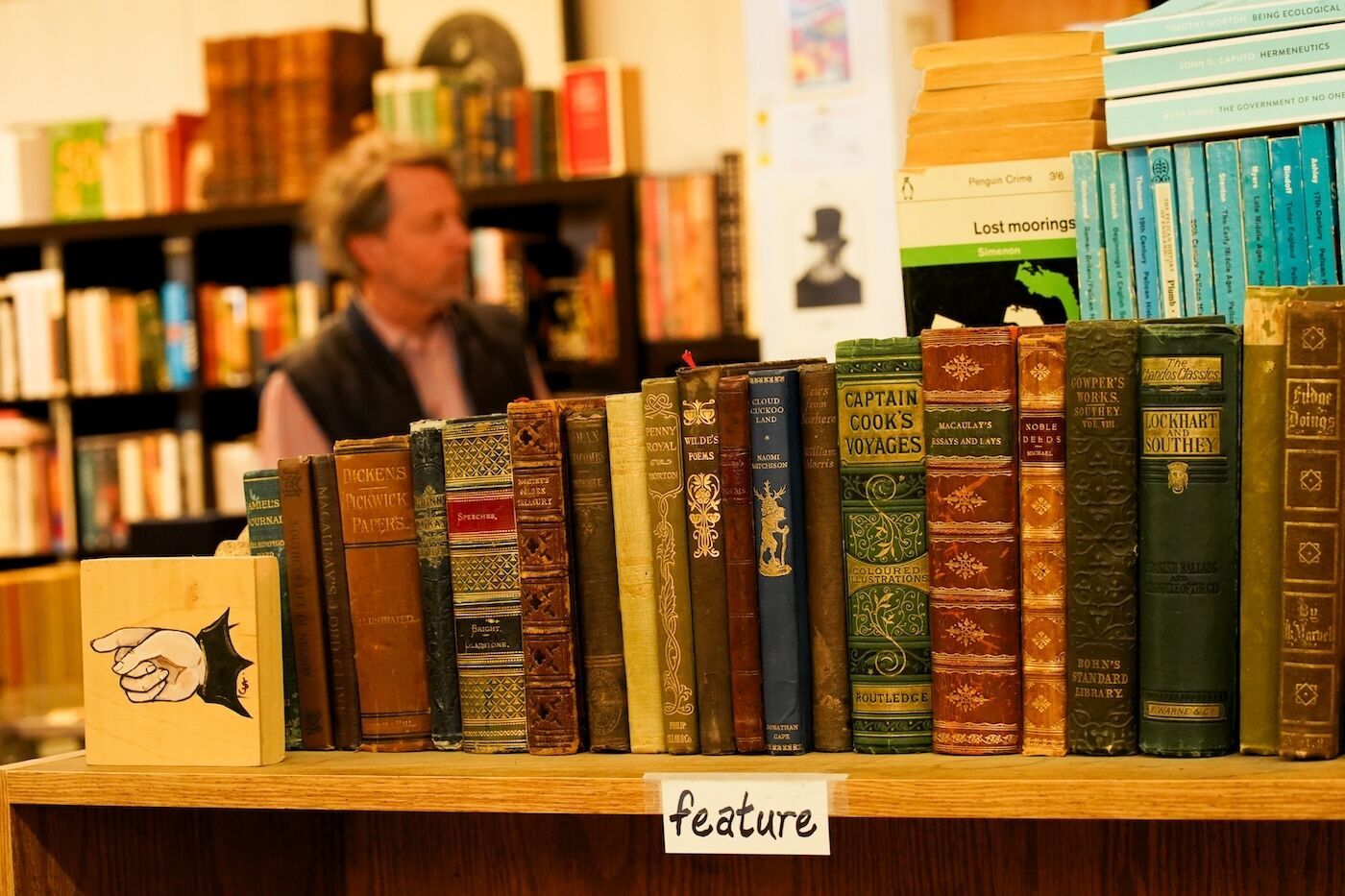
There were some 40 second-hand to rare bookstores in Calgary at the time [in the 1990s]. So I frequented those.
But his real interest, especially in his later years, was local history and Canadiana—but especially the Western provinces, and very especially the ephemera. His greatest thrill was finding something that he had never seen before, no matter how slight, and then discovering that it was not listed in Bruce Peel’s Western Canadian Bibliography. And he developed a relationship with Bruce and was constantly sending off photocopies of the title pages of these things and shipping off huge boxes to Peel at the University of Alberta.
Don Stewart (MacLeod’s Books)
From the time period of early Alberta, there are some great biblio-mysteries. And one of them is that the first edition of Songs of a Sourdough by Robert Service—more copies were ordered to a bookshop in Medicine Hat than anywhere else in the country. And no one knows why. But they, for some reason, had an immense demand of hundreds of copies. And whenever I think of Medicine Hat, I wonder: Are there going to be any first editions of that book surfacing? No one’s found one yet. But they were there at one point, and there had to be a reason.
Céline Chuang (Paper Birch Books)
It’s very fun to talk about how the different editions or the different copies of books reflect their history or their story. We have a signed James Baldwin, which is pretty amazing to me, because he’s one of my favorite writers. That one, not your average person can walk in and buy because of the value of the book. But it’s really cool to think of having a book that James Baldwin sat down and wrote his signature in. Or different first editions of different books. It’s really cool to see what they look like when they first entered the world, and the artwork that the book had.
David Sidjak (Sigla Books)
I just sopped up book culture and book knowledge from Tom, very appropriately, at this time, at the end of the millennium—as things were starting to change so fast.
Rodney Clarke (The Paper Hound)
The conversation that was happening around the time of the turn of the century, where the new platforms were taking over… and the internet… and there was all this discussion of the death of the book and all this kind of nonsense. That was a strange time. But what it did was it started a conversation about things that are important for people.
And it’s kind of like that Joni Mitchell song: “You don’t know what you’ve got ‘til it’s gone.” And that’s the case with bookstores. So when bookstores started closing, people noticed that. When they started reopening again, maybe 15 or 20 years later, people wanted to support that.
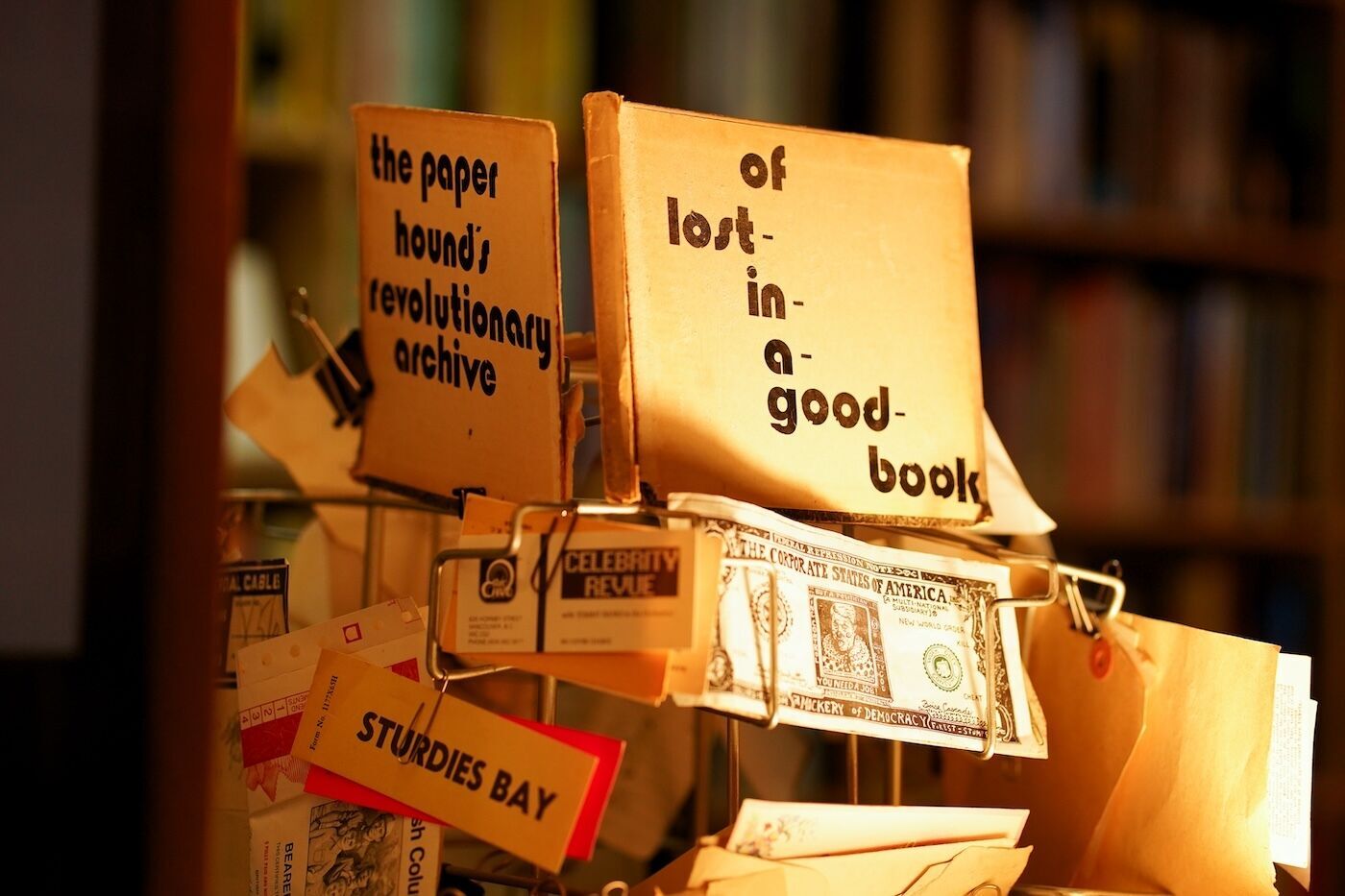
It’s kind of like that Joni Mitchell song: ‘You don’t know what you’ve got ’til it’s gone.’ And that’s the case with bookstores.
Céline Chuang (Paper Birch Books)
People will come in and kind of be surprised that we can even be here. That we exist, and that we’re opening our doors every day—“I thought print was dying!” But honestly, the reception to our bookstore has been very warm and enthusiastic since we opened. I think people are actually really hungry for analog, ad-free forms of reading and of experiencing print and of just spending time, whether on their own or with someone else. I think they find it very calming. And spaces like that are becoming more and more rare.
Don Stewart (MacLeod’s Books)
They’re like mini community centres, particularly if they have survived for a long time. People come to this shop, when they’re entering Vancouver, to reorient themselves. Because there have been so many changes downtown here that they they tell me that they don’t recognize the place anymore, other than the mountains to the north.
Various bookshops have readings. We haven’t done that for some years because we’re kind of crowded with stock—and frankly, at the end of every day, we’re exhausted because we’re seeing so many people during the day. But the bookshops that have readings or gatherings help weave cultural connections.
Céline Chuang (Paper Birch Books)
We’ve recently started hosting some music shows. We’ve had some classical shows, and then we’ve had a jazz show in here. Jazz and bookstores, I think, are a great combination.
Don Stewart (MacLeod’s Books)
And bookshops generally, like this one… we often get people who didn’t know one another were in town or even in the country, running into one another because they’re book people. And it’s a very pleasant surprise for them when they see someone that they would never have expected to run into.
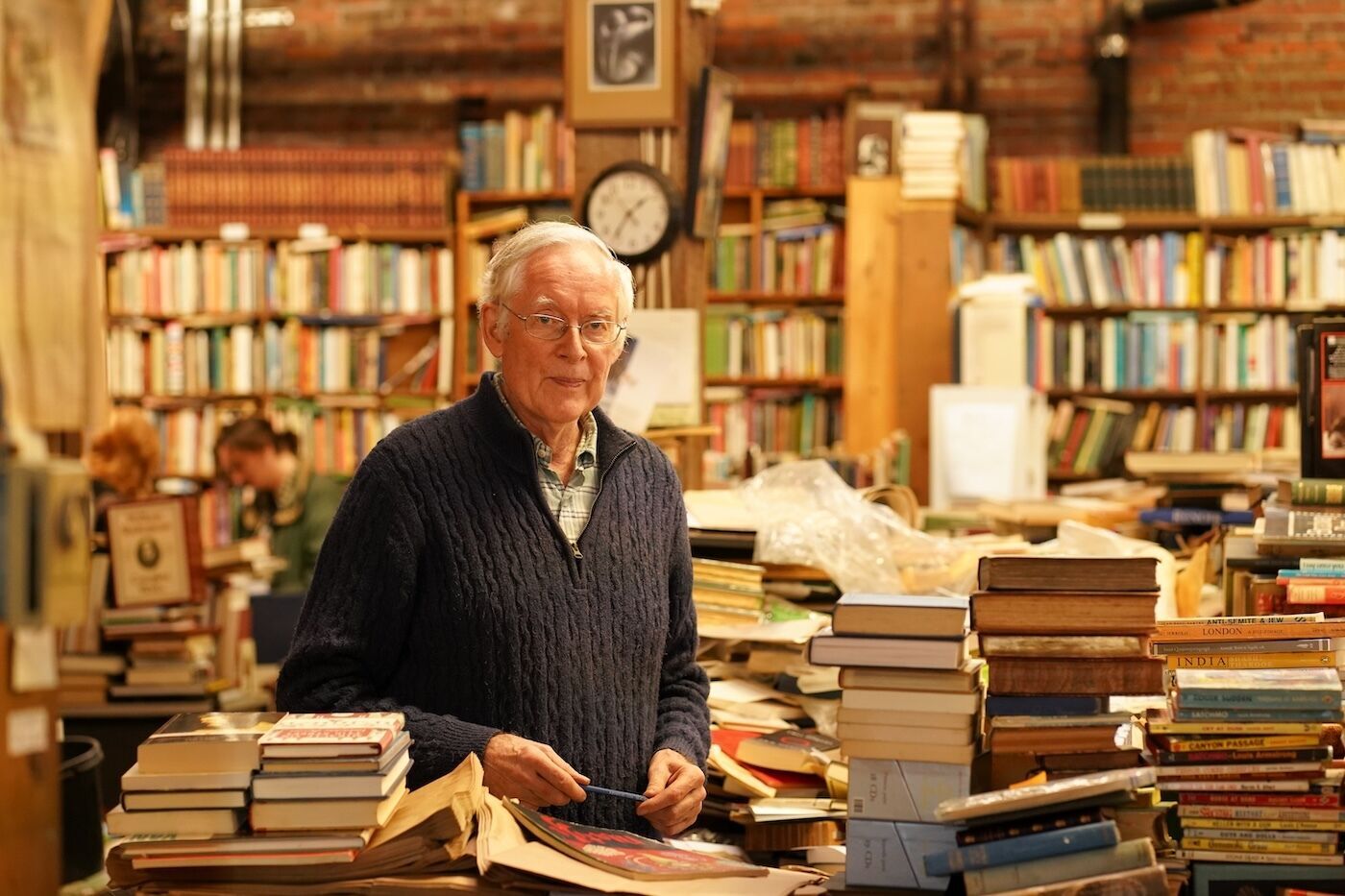
They’re like mini community centres, particularly if they have survived for a long time.
Rodney Clarke (The Paper Hound)
They’re sort of like cafes, philosopher cafes. And a lot of bookshops do have cafes. We decided not to go that route. They are kind of a canary in a coal mine of the state of affairs on the high street—or the low street. Any street, really.
You need one bookshop and then you’ll get more. They tend to anchor each other. A lot of people, when they travel, they look out for things like bookstores, art galleries, cafes—that kind of culture.
David Sidjak (Sigla Books)
When a book person, whether a bookseller or otherwise, goes to a city—especially one never visited before—that book person gets to know the city at first largely by way of the second-hand bookstores. It’s a real index to that city and that culture at that particular time and times leading up to it.
Don Stewart (MacLeod’s Books)
We see in the shop people from almost every country, and it’s very interesting talking to them. And often they’ll say, “Oh, we don’t really have bookshops like this in our city anymore. They’ve been crowded out.” I remember when people would arrive from Hong Kong and they’d tell me that there was immense pressure on the few remaining bookshops. And they were very small shops because the rents had just shot right through the roof, and they were having trouble making their expenses. And this has now happened in almost every country.
Céline Chuang (Paper Birch Books)
The obstacles are bigger now than they were when I was a kid, in terms of how big corporations are now and how much power they have. And how things like Amazon make it exceedingly difficult for small businesses and independent bookstores to survive day to day. But that also means that people who are paying attention to that, or who have these values of supporting small and local and neighbourhood-owned businesses—they’re intentionally seeking out places that they want to support.
We see that a lot. Customers who see what we’re doing with trying to organize different initiatives or donate a day’s worth of sales to different organizations in our neighbourhood. And just the ways that we’re trying to be part of our neighbourhood in good and life-giving ways of care and solidarity. They make an effort to come support our store regularly.
Families that live in the neighbourhood, they love coming here with a kid. And things are always changing around here, and then as the kids’ tastes change and grow, and as their reading progresses, there’s always something new for them. We’ve had a few little kids who started to come into the bookstores as babies, and now that we’re approaching our third year, they’re talking. They’re little people now, and that’s pretty cool to see how this space, which is kind of a third space, is a place where it’s familiar. It’s not their home, it’s not their school, it’s not the library—but it’s a familiar place that they feel welcome in, they feel known in, they see others that they know in the space. And I think that’s extremely valuable. It really is what makes a neighbourhood safer.
There’s never a dull moment in Boyle McCauley, which is our neighbourhood. Sometimes we feel like we’re in a like a quirky sitcom, where we’ll just have the funniest interactions with people, and that’s just the day to day of running a bookstore.
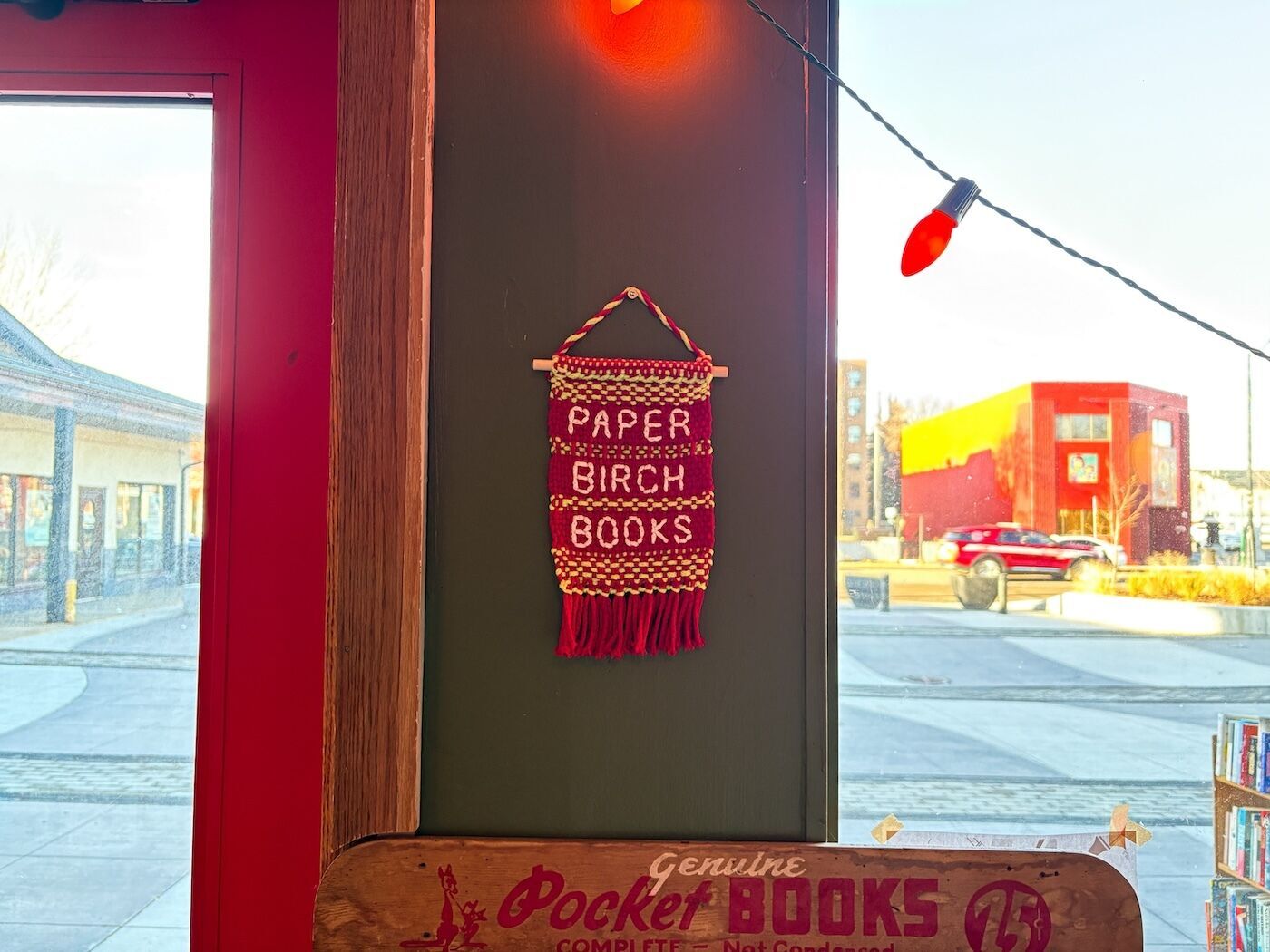
We really wanted it to be a place where people of all sorts could be welcomed and feel like they could come in and be known.
The neighbourhood also reminded me—or maybe Ben compared it a little bit to different neighbourhoods in Vancouver that were near and dear to my heart. I worked in the Downtown Eastside for many years, and knew that area and Chinatown quite well. Knew a lot of people who lived there and would pass through and appreciated how in places where a lot of people are really struggling, there’s also a sense of people taking care of each other. They know each other’s names. They greet each other on the street. There’s that sense of being open to one another.
I think that’s definitely something that is a characteristic of our neighbourhood as well. And I think that was part of how we saw the bookstore being more than just a cozy place to spend some time to read and to buy books. We really wanted it to be a place where people of all sorts could be welcomed and feel like they could come in and be known, be welcomed by name, be seen. And be the kind of business that would be benefiting folks who are marginalized in different ways and don’t have too many places to go to.
When people talk about safety in our neighbourhood, they often talk about discomfort with how visible people who use drugs or who are poor are. Or they’re talking about a form of safety that involves not seeing that, or having more heavy policing, stuff like that. But really, I think—and I know it’s proven from different studies—that people are the safest when they know each other and they can look out for each other. So I feel like we’re part of that in some small way.
Rodney Clarke (The Paper Hound)
I know in Jane Jacobs’s book The Death and Life of Great American Cities—we’ve got one right over there, we always have a copy in stock—it only takes her to page eight before she starts talking about bookstores. Page eight, right? She’s saying just having a bookshop on a street, the value that people attach to it… just a presence on the street like that, opening up and sweeping the sidewalk and greeting people, talking to people in the morning, that sort of thing… It’s not unique to bookstores, but there’s a certain consistency there. We’re open seven days a week.
Céline Chuang (Paper Birch Books)
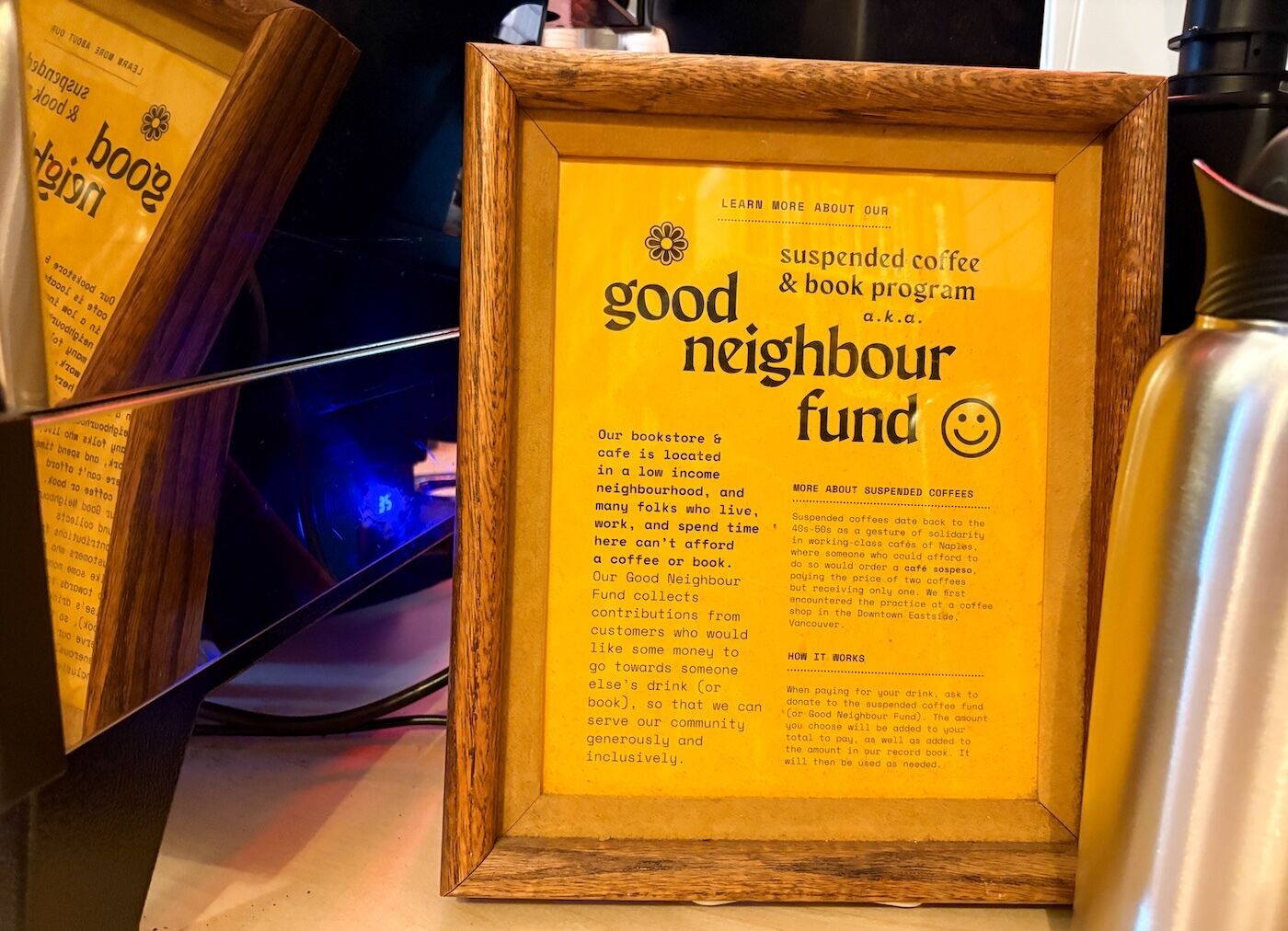
So some of the things that we started from the beginning were we had a community book fund. And now we’ve expanded that to be a book and coffee fund. So we would just have some money set aside. At first, we were doing it through the business, just ourselves. But now we have it where people can donate to our Good Neighbour Fund. They can donate, we’ll note the amount, and then we use that fund for folks who might wander in who would really love a coffee or really want to buy a particular book, but they don’t have the funds for that.
And we have gone through hundreds, maybe more, of dollars since we officially made it into more of a coffee and book suspended fund. And that’s something that I first encountered in Vancouver, in in a cafe in the Downtown Eastside. Just something small you can do that doesn’t put a huge financial burden on you as a small business, but allows people to do something small to make others in the neighbourhood feel welcome. And so that the business is not exclusive of them or makes them feel excluded.
David Sidjak (Sigla Books)
I don’t really have a social mission. I wouldn’t be so presumptuous as to say that I stay here because I want to educate Calgarians on how to appreciate books. No. But I do feel that there’s something to be said for doing this sort of thing in Calgary, where it isn’t always supported very strongly—as opposed to doing it in somewhere like Brooklyn or Portland, Oregon, where there’s a really cool bookshop and cafe and a bike shop on every block.
I don’t know exactly what it is. Maybe it’s just my perversity again, but I sort of like the idea of doing something that is a little out of the ordinary, a little bit outmoded in this place that seems to value mostly the high tech and the modern and the cool.
For the time I’ve been here—since 2017, right in downtown Calgary, the west end, surrounded by offices—I see very, very few of the office workers. In some cases, they might have come in here early on and decided, “That’s just weird. That’s not for me. I don’t recognize many of the authors or the titles.”
I don’t know—it’s mostly speculation—but my regular customers and the newcomers who are constantly coming along like this experience of out of the ordinary books. And in some cases, they are professionals, but in most cases, they are people who just work to afford what they can. And they find room in their budget to buy a few books here and there.
Also, it doesn’t necessarily benefit me financially, being one of the few more serious bookshops in this city—but I feel that there is room for growth here, whether it be my shop in particular, or other shops that come in and fill the gap.
Don Stewart (MacLeod’s Books)
There’s always going to be some kind of future for those who are so inclined and who love books. All I can tell you is that every day is like Christmas. You never know what’s going to walk through the door. You never know what you’re going to run into. There are some amazing books out there, and wonderful customers who are looking for them.
There are lots of problems facing the world of books, and it’s the same in Europe and the same in the United States. One thing is that the value of real estate has reached a point where rents are driving most bookshops to the wall. Operating expenses are constantly increasing, while sales are barely maintaining or slipping backwards.
Part of the problem is that people are living in smaller spaces. Most people are active in acquiring books when they are students, or have their first few jobs and are acquiring things that they are interested in—and they have inquisitive minds. Later, when they reach a point where there’s no more room on their shelves, they have to start rethinking.
Because it’s so hard for younger people to buy houses now, there is this incredible space challenge for most younger people. And of course, the money challenge of having to save every penny they have for a down payment. So the contradictions are coming in on us from all directions.
David Sidjak (Sigla Books)
I have had a few, not teenagers or even 20-somethings, but people in their 30s who have expressed interest in having a shop of their own. And further to that, for the last 10 years—in bigger, maybe more cosmopolitan cities than Calgary—there has been an uptick in the number of bookshops after reaching a nadir in the early 2000s. As I said, very roughly 10, maybe 15 years ago in New York and London and places like that. There has been an uptick in the number of, I guess, mostly young people who are opening bookshops.
I do feel that there’s something to be said for doing this sort of thing in Calgary, where it isn’t always supported very strongly.
Céline Chuang (Paper Birch Books)
We’ve had a lot of people from many different demographics that maybe would not be expected. Like we’ve had a lot of Gen Z kids coming in looking for physical books, because they really want that experience of reading the actual book instead of on their screen or their phone. And seniors or older folks who are trying to avoid using a screen or a phone, or they appreciate just the traditional form of reading a book. And so we have something for both those people.
David Sidjak (Sigla Books)
Sometimes it does not come from the person you would expect it to come from. And conversely, it does come from someone you did not expect to be truly curious.
So one way to to illustrate that is sometimes it’s a university prof who at first says nice things and says, “Oh, I can’t believe how long I went without knowing about this place. You have some really interesting books.” And then it just sort of stops there.
Whereas, conversely, it might be an 18-year-old. It’s a heartening thing about this context that we keep referring to of digital and so forth. I get a surprising number of really young people, teenagers and people in their early 20s— and granted, they represent a tiny percentage of the people in their demographic, and not all of the ones who come in here are terribly interested. But some of them are surprisingly interested and surprisingly insightful into some of these points that I’m making. They have something to offer in terms of the value of things outside the mainstream.
It’s almost a cliche now that a lot of these Gen Zers are turning back towards physical culture, material culture, CDs and cassettes and LPs and, to some extent, the book. They like having the artifact and liner notes and all of that. So it’s one thing that keeps me going in the midst of a lot of complacency and indifference.
I mentioned the office workers and the “haves” and the well-heeled. I’m not a real hardened socialist by any means. I have nothing against people making money and wearing nice clothes and having good jobs and nice cars. But it is a little disappointing to see just how little interest most of those people here in Calgary have in books, certainly in slightly out of the ordinary books such as the ones I have in my shop.
Rodney Clarke (The Paper Hound)
I think, for the right-minded people, it’s a lifestyle. It’s a career. You just need inventory and location and customers and you will potentially thrive.
David Sidjak (Sigla Books)
If the person is motivated in the right way, it ends up being that person’s vocation and avocation. A bookseller is almost always, when he or she isn’t looking after the shop, out looking for books.
Rodney Clarke (The Paper Hound)
If there are young people out there, or any people—in particular, young people that want to get into a good career, this is something that you could do. I would suggest you get a couple of like-minded people and talk it over. Discuss what kind of books you want to sell, what your strengths are and and go for it. Just buy some books. Get some inventory. Hang a shingle out that says BOOKS FOR SALE.
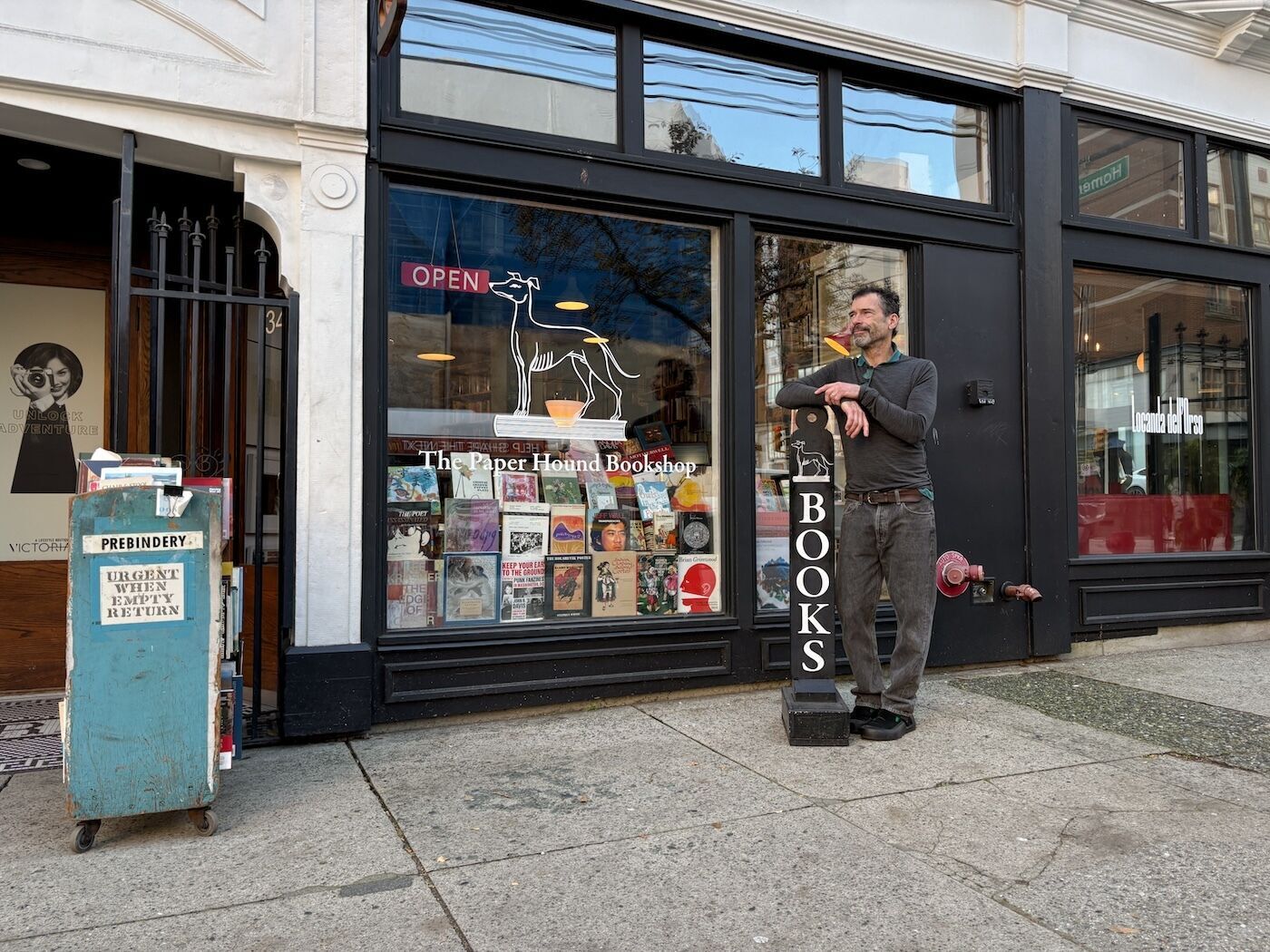
You open up a bookstore and people want to support you right away. They make all sorts of assumptions — good assumptions — about who you are.
Céline Chuang (Paper Birch Books)
Those who know Paper Hound—who travel, have been to multiple bookstores… I think people compare us the most to Paper Hound in terms of another bookstore in Canada. And that’s a big compliment, because that was one of my favorite bookstores in Vancouver. And I think there there are differences as well. We have slightly different customer bases and communities of regulars and that kind of thing. But I think the things that bring us joy and excitement when we find a particular book—there’s a lot that’s in common.
I think the kind of culture that they created of generosity, of sharing, is very much something we wanted to choose, too. So if we were at the same big bulk sale of some kind, and I found like three of the same book that I know would be really great for the bookstore, I would give one to Paper Hound and be like, “You want this?” And they would do the same to us. We go through each other’s reject piles to see if there’s anything there that we want. So it’s a very collegial and friendly relationship, which has been great.
Don Stewart (MacLeod’s Books)
Also, because bookshops are purveyors of ideas and good writing, there’s a lot of cross pollination that happens if people allow themselves the time to browse and the time to make discoveries. Unfortunately, the entire culture has become very hectic, and people often just feel they don’t have a lot of time. So there’s been quite a change.
More and more people are relying on online orders to get the books that they want. They’re getting the convenience, but they’re not getting the pleasure of browsing and making discoveries by doing so.
David Sidjak (Sigla Books)
Tom always said an adage of his: “Always go to the bottom of the stack.” So in other words, look at everything. A good reason for doing that is that you make discoveries.
Céline Chuang (Paper Birch Books)
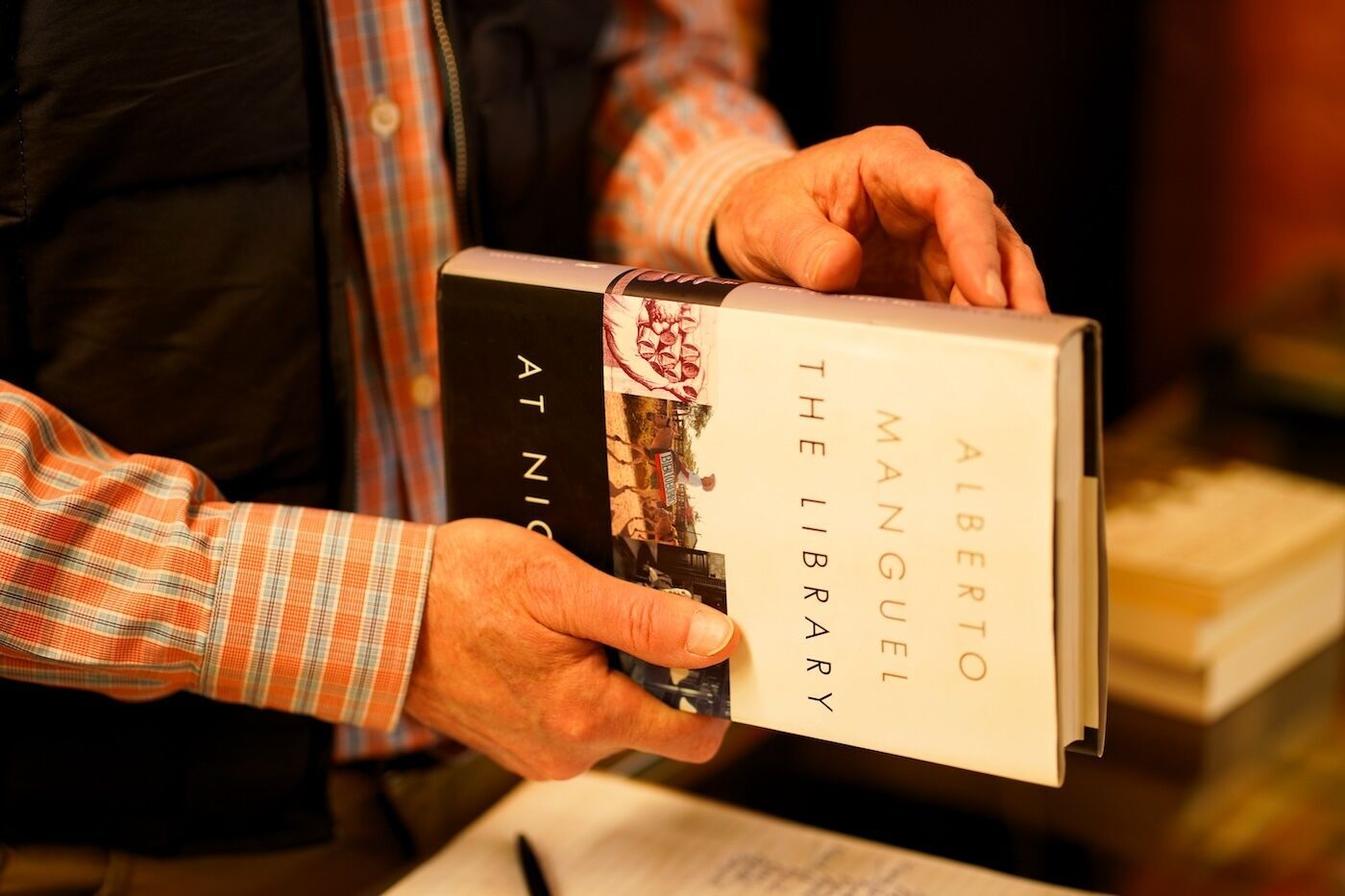
There’s books everywhere. We try to keep books off the floor for access reasons, but there are piles of books everywhere to be found. So there’s definitely an element of treasure hunting and of being surrounded by books, which is something that I think both of us associate with the best parts of the bookstores we loved growing up and becoming book people.
David Sidjak (Sigla Books)
The kind of material that is contained in a lot of my books is not necessarily easily found on the internet. And there’s just the whole bookish experience that I think is increasingly important.
And bookshops? I can’t overemphasize my interest. And my interest increases as the book and the bookshop recede from the mainstream. It just all becomes more interesting and more valuable as that whole process increases—and gives me more and more of a sense of purpose. Not a social purpose per se, but just putting as many interesting books in my shop as I can for those who care.
Jeremy Klaszus is founder and editor of The Sprawl.
Like a good local bookshop, The Sprawl exists to make Calgary a more connected city—but we rely on community support to stay afloat. Support our work if you value our independent local journalism! You can sign up here. We'll even pop a little surprise in the mail for you after you join.
Support independent Calgary journalism!
Sign Me Up!The Sprawl connects Calgarians with their city through in-depth, curiosity-driven journalism. But we can't do it alone. If you value our work, support The Sprawl so we can keep digging into municipal issues in Calgary!