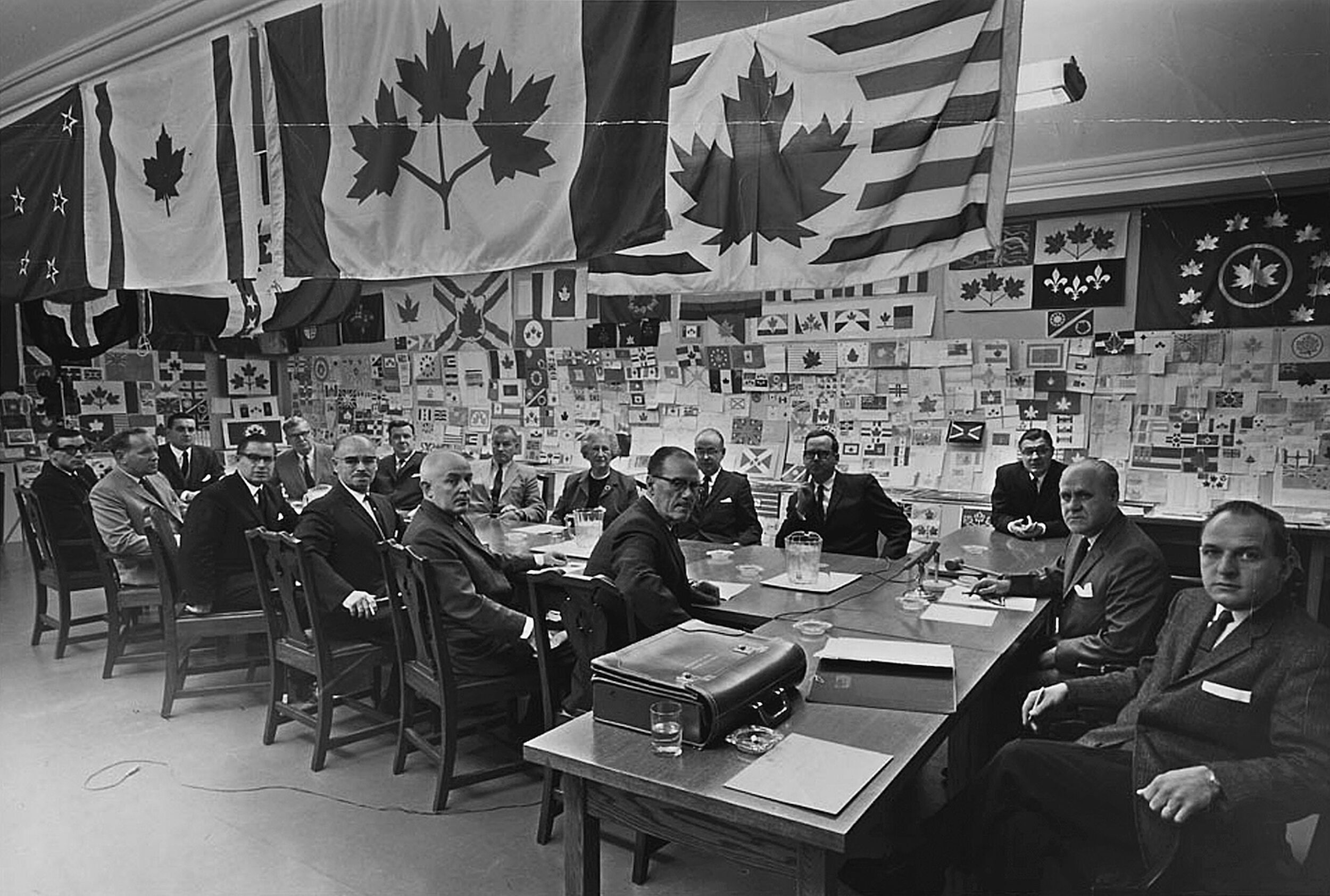
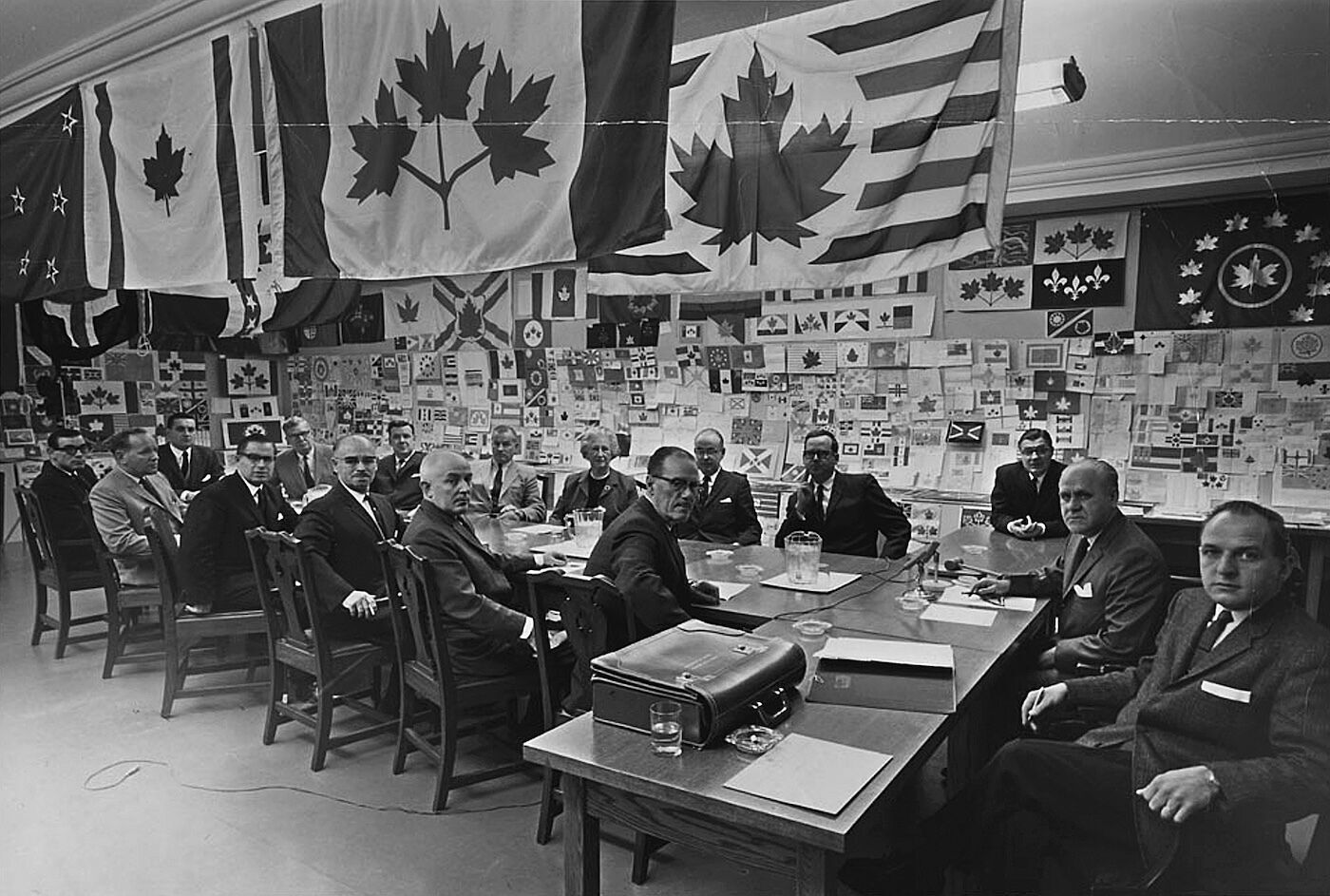
Canada's flag committee in 1964. (Cliff Buckman/Queen's University Archives)
How a Calgarian created Canada’s flag
George Stanley proposed ‘a simple red and white’ design.

A question hangs in the air. Will Canada hold together, or will the nation break apart?
There’s growing talk of separatism. Newspapers refer to a “national unity crisis.” And the prime minister in Ottawa speaks of the difficulty in striking a balance between federal and provincial powers.
“The reconciliation of these two things is not easy,” he says. “It never has been, in this country or in any confederation—and I suspect it is as difficult now in Canada as it has ever been in our history.”
This was Canada in 1964.
The prime minister was Lester B. Pearson. And with the nation approaching its 1967 centennial, Canada’s future seemed more uncertain than ever.
In the midst of these tensions, it was a born-and-raised Albertan who stepped up with an elegant solution to a problem that had vexed Canadian governments, both Liberal and Conservative, for decades.
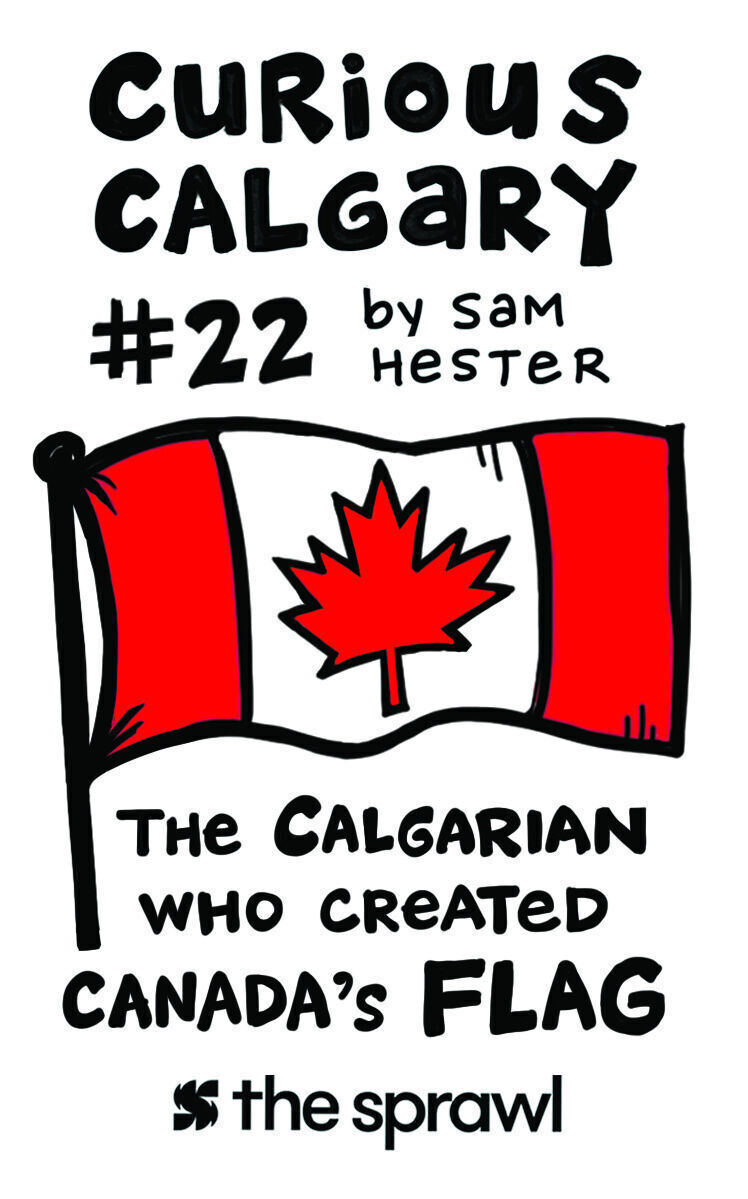
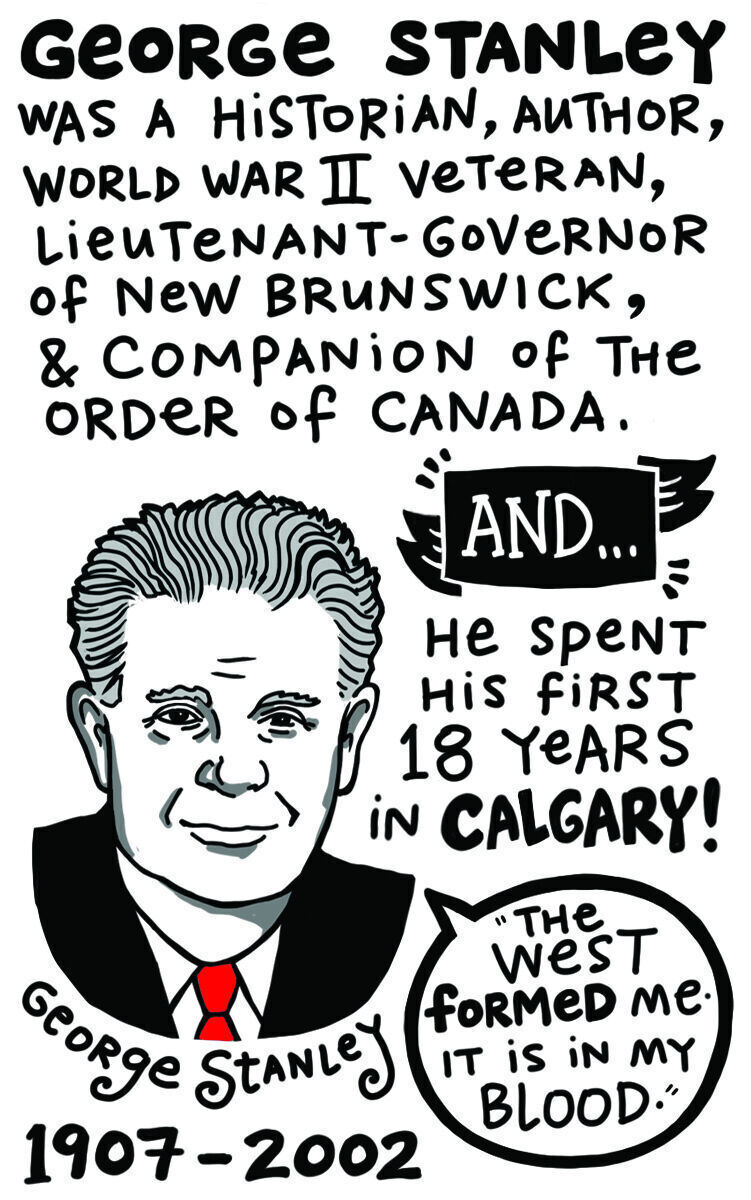
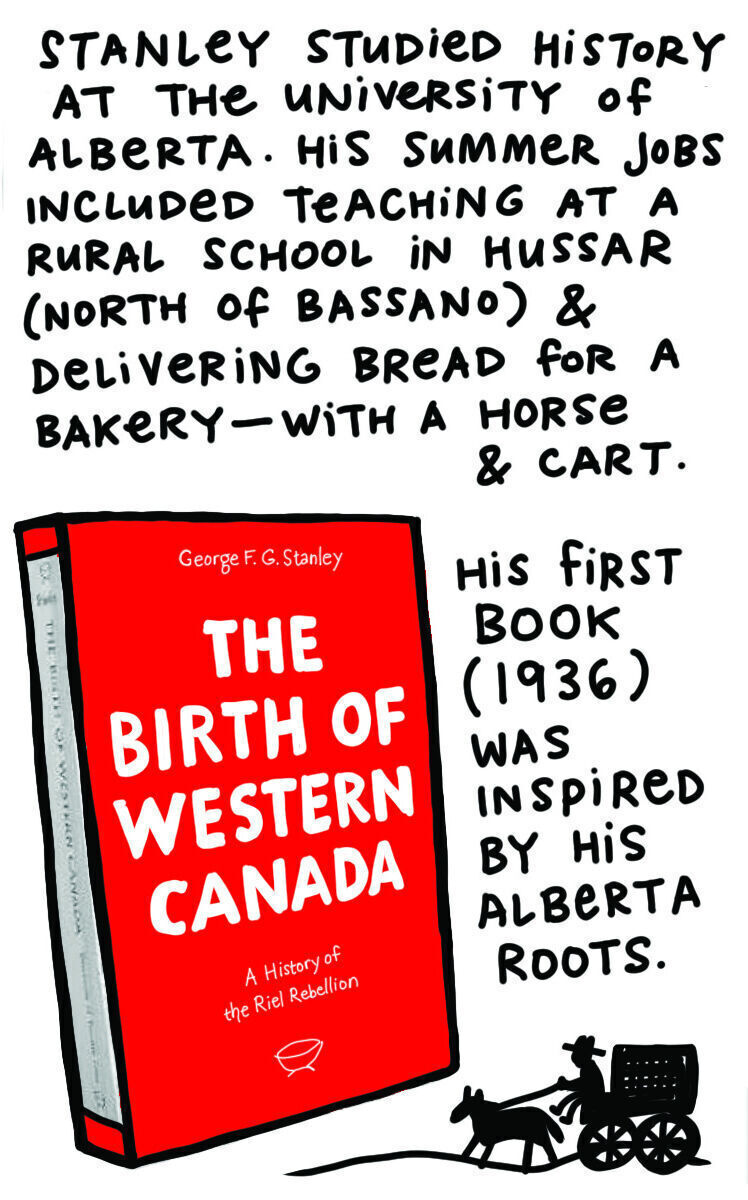
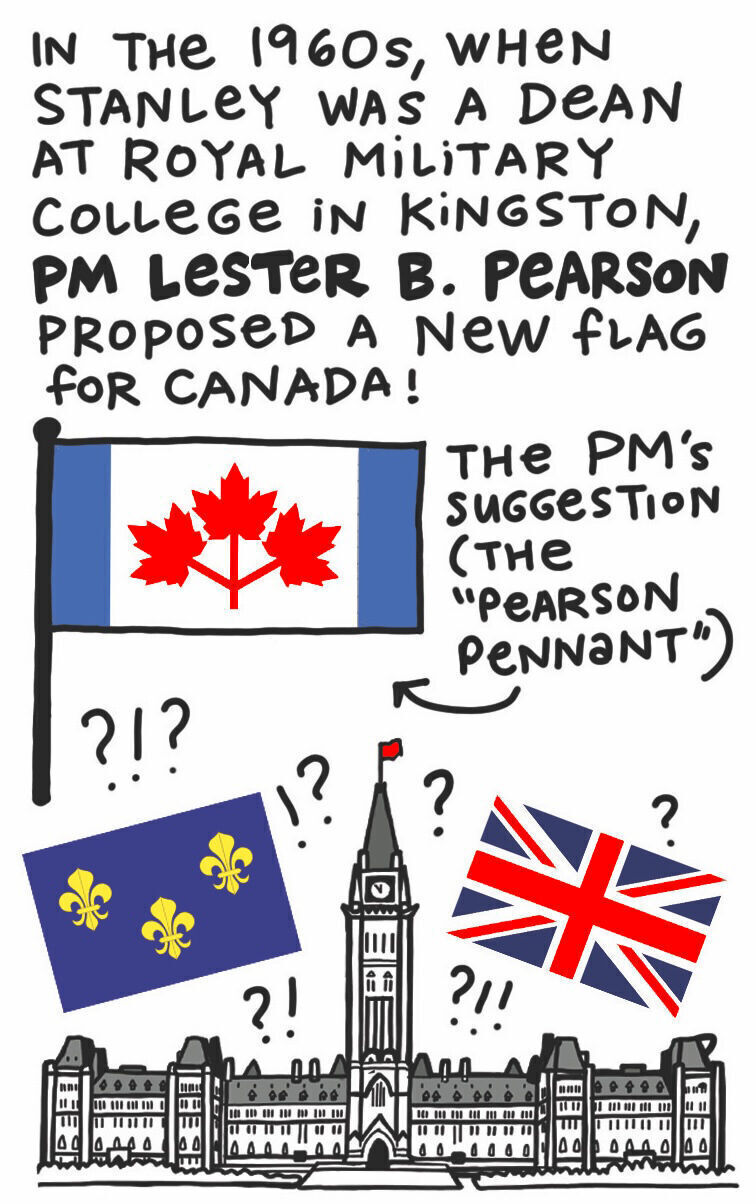
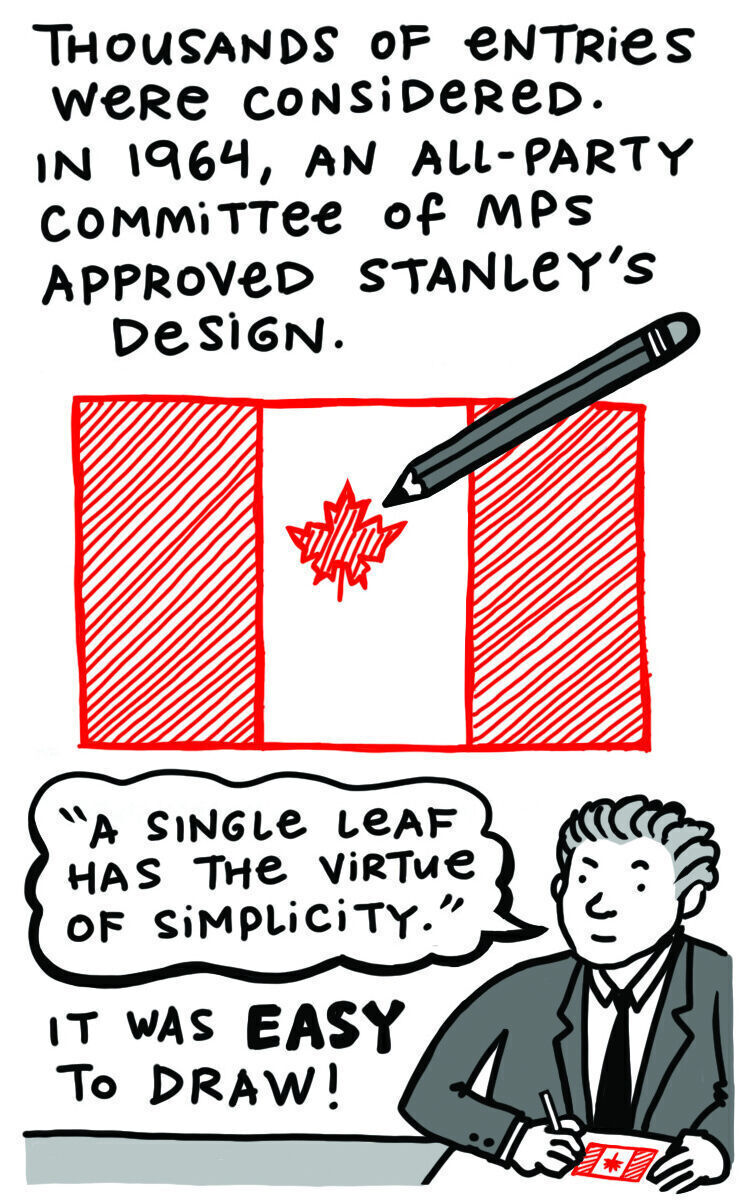

A life shaped in Alberta
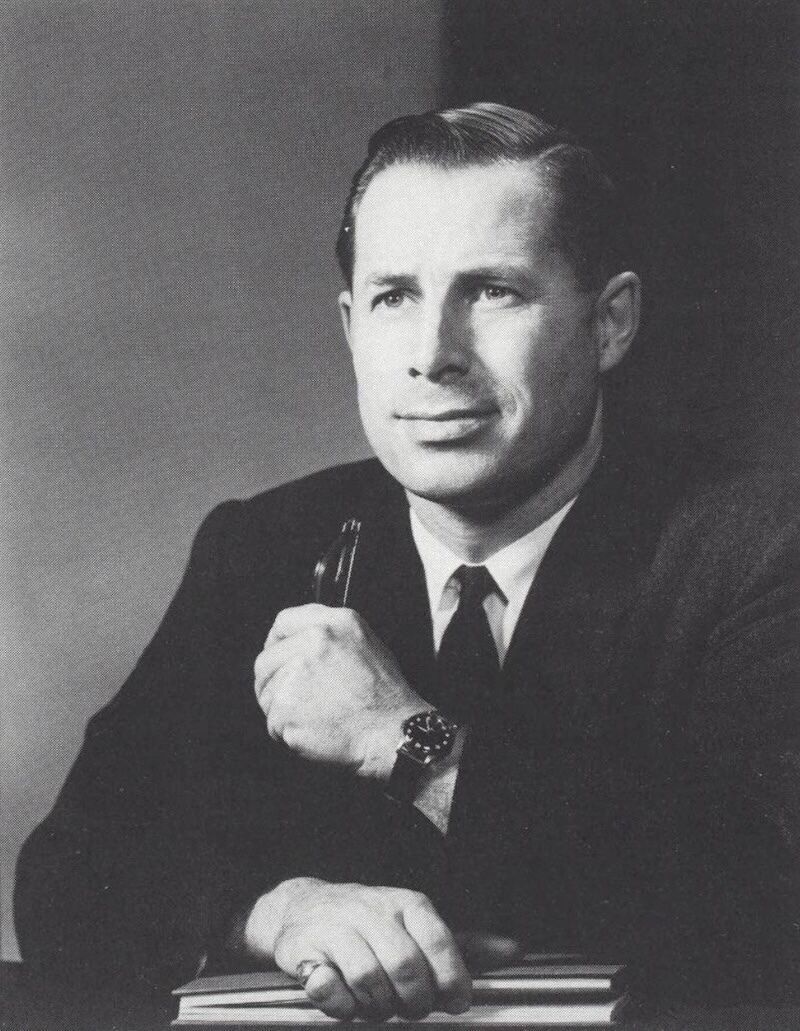
From his earliest days in Calgary, George Francis Gillman (F.G.) Stanley—an only child in a well-to-do family with British roots—was surrounded by books.
His parents, Della Lillywhite and John Henry Stanley, were both from Ontario. They came to Western Canada in the 1890s and got married in Fort Macleod in 1900.
“My initial education began at home,” wrote Stanley in Citymakers: Calgarians After the Frontier. “Both my father and mother were great readers. They liked books; they bought books and they read books.”
His father worked in the paper business and, after the Stanleys moved to Calgary in 1903, started his own company.

George was born in 1907, two years after Alberta became a province and joined Confederation.
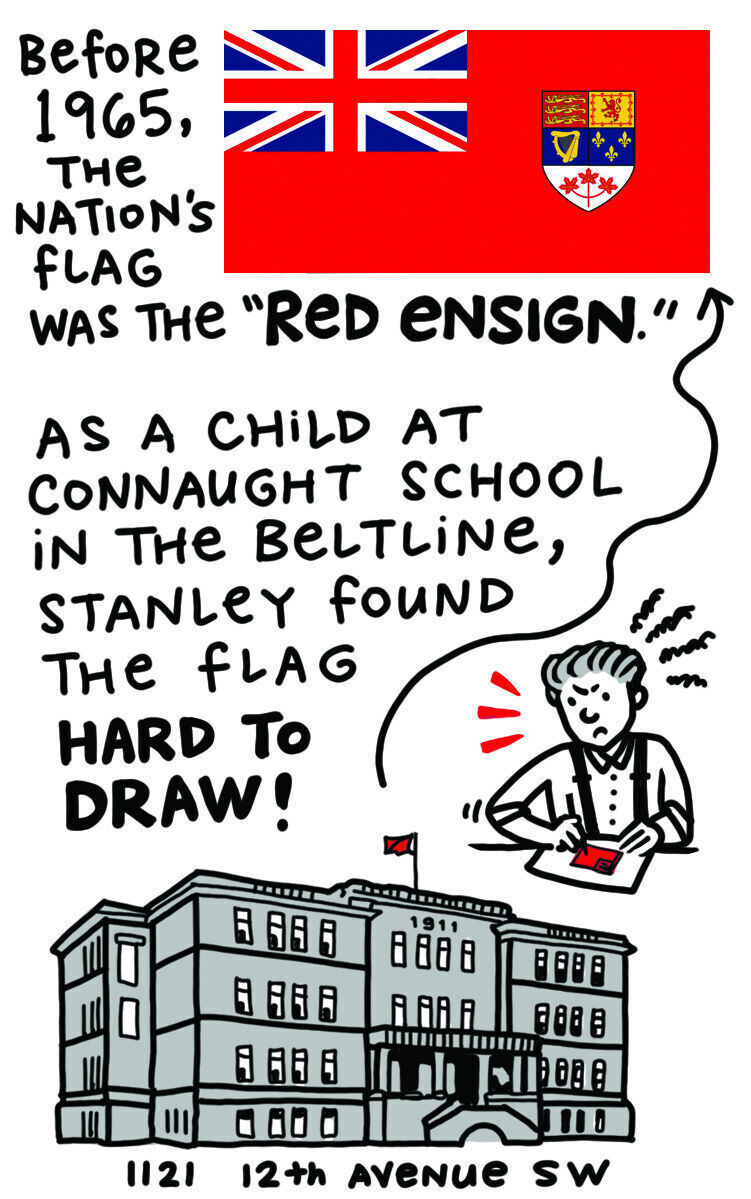
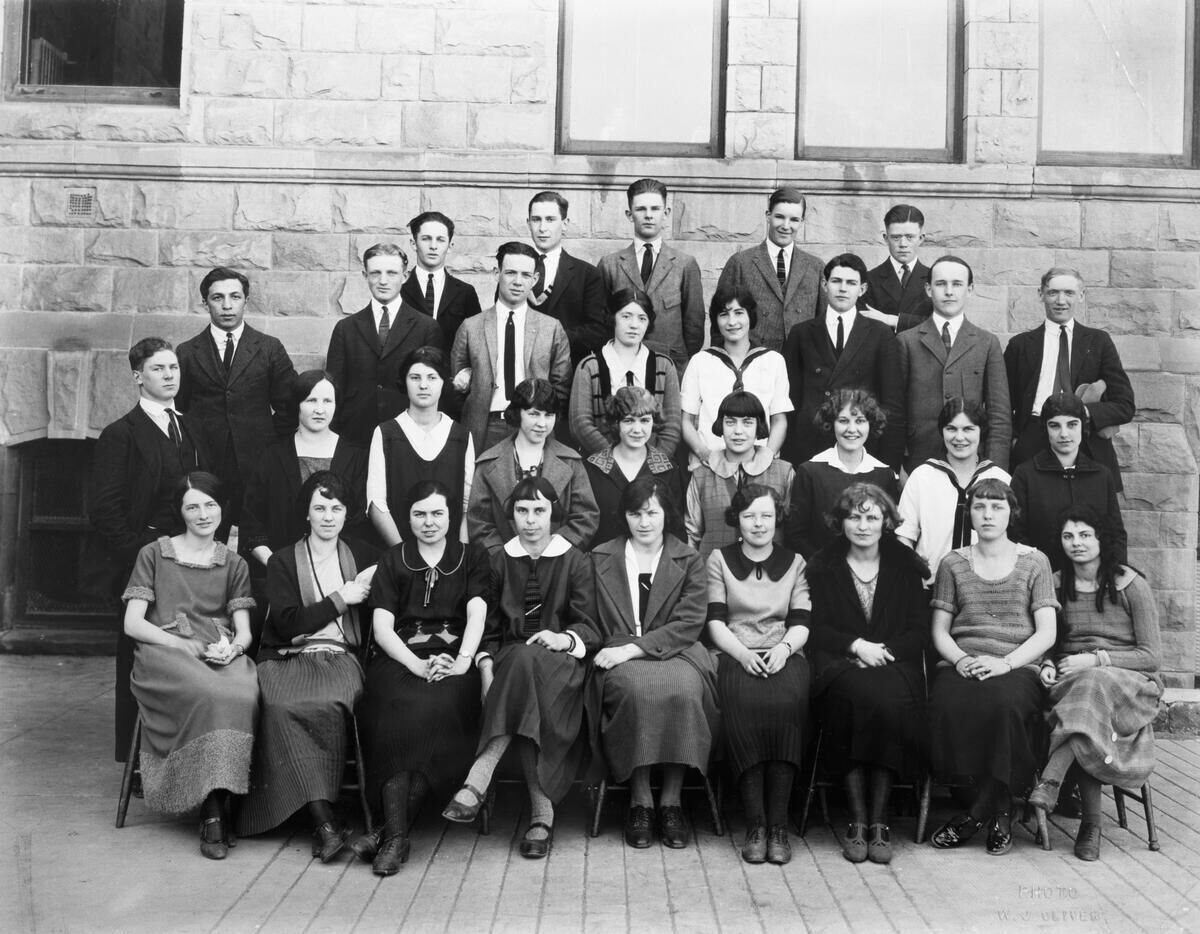
He went to school mere blocks from home—first at Connaught School and then, for high school, at the Calgary Collegiate Institute (now called the Dr. Carl Safran Centre, part of the Calgary Board of Education’s downtown HQ). Both buildings were part of Calgary’s pre-1914 sandstone building boom.
Stanley was seven when World War I began. “When I watched soldiers returning to Calgary, from the War of 1914 - 1918, I thought of them, not as British soldiers, but as Canadians who fought alongside the British,” wrote Stanley. “We were allies of the British not subordinate to them...”
Those soldiers may have been Canadian, but they fought under the Union Jack—the flag of Britain.
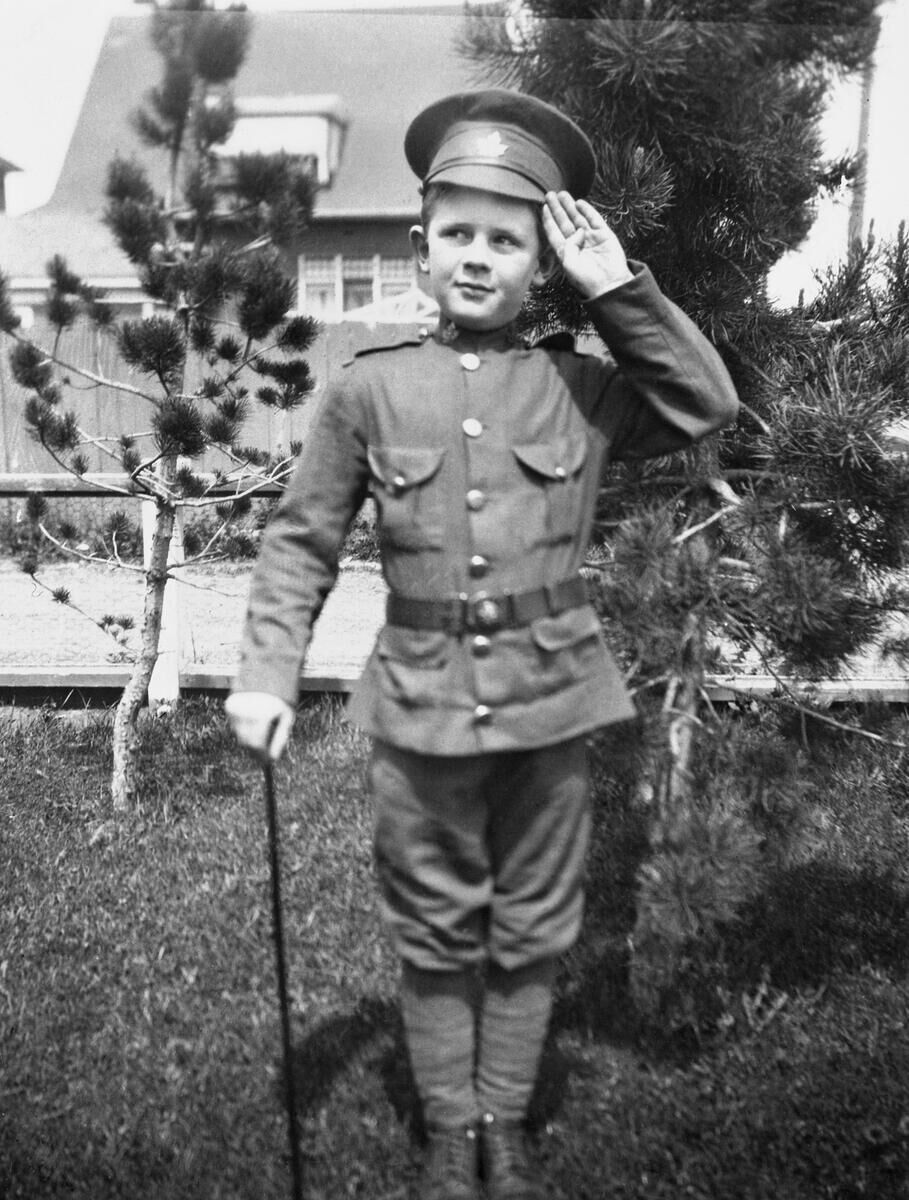
The Stanleys prospered in Calgary. They had two automobiles (one for the family, one for the paper company) which, in those days, put them in the upper crust of Calgary society. Every summer they went to Banff National Park—“the part of Canada I loved best,” George wrote.
It became clear that George Stanley would not follow his father into business.
“I found office routine tiresome and preferred to work in the warehouse—not because I liked the sweaty work that stacking heavy rolls of paper or loading the company truck involved; but because I could smuggle a book into the warehouse and, concealing myself behind the great barriers of paper, read undisturbed by the contemplation of muscular effort,” he wrote.
Both my father and mother were great readers. They liked books; they bought books and they read books.
Stanley’s father was a Conservative and the Stanleys were friends of R.B. Bennett, the Calgary lawyer and Conservative MP who would become prime minister in 1930. The plan was for George to graduate from high school, study law, and go work in Bennett’s office.
But in 1924, he learned that he was missing a math course he needed for university.
He attended the Calgary Normal School instead—in what is now called Heritage Hall, on the SAIT campus—for a teaching certificate. And from there, he went to the University of Alberta where he ended up pursuing a degree not in law but history, which he’d always been interested in.
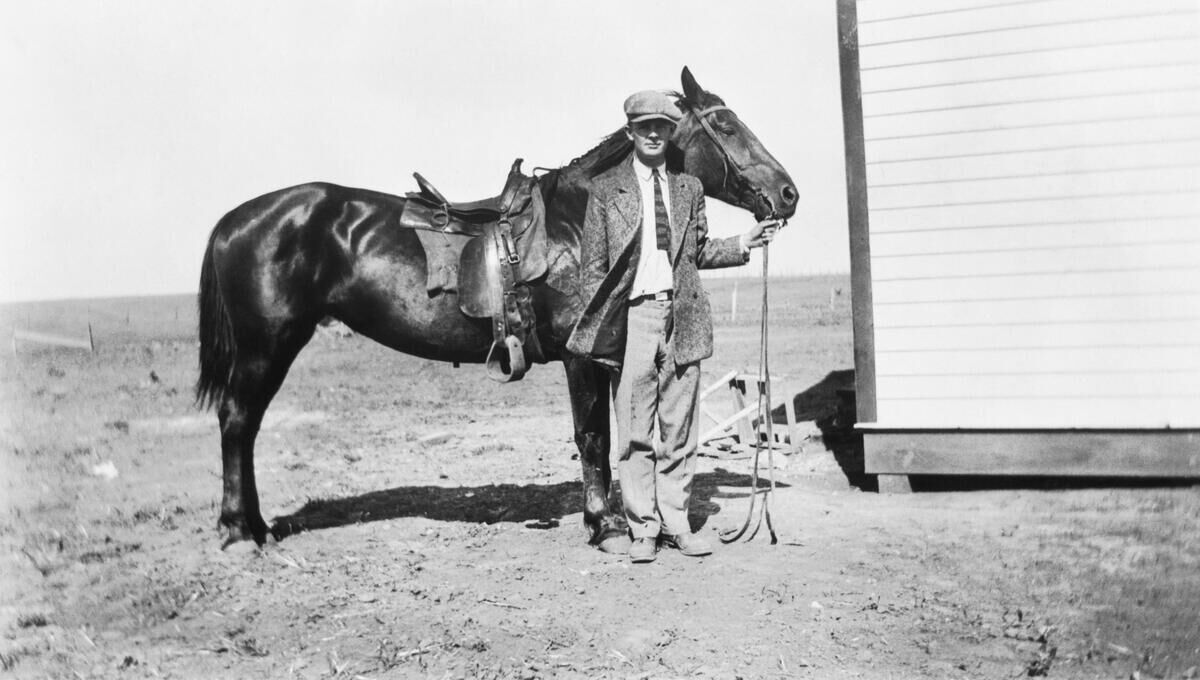
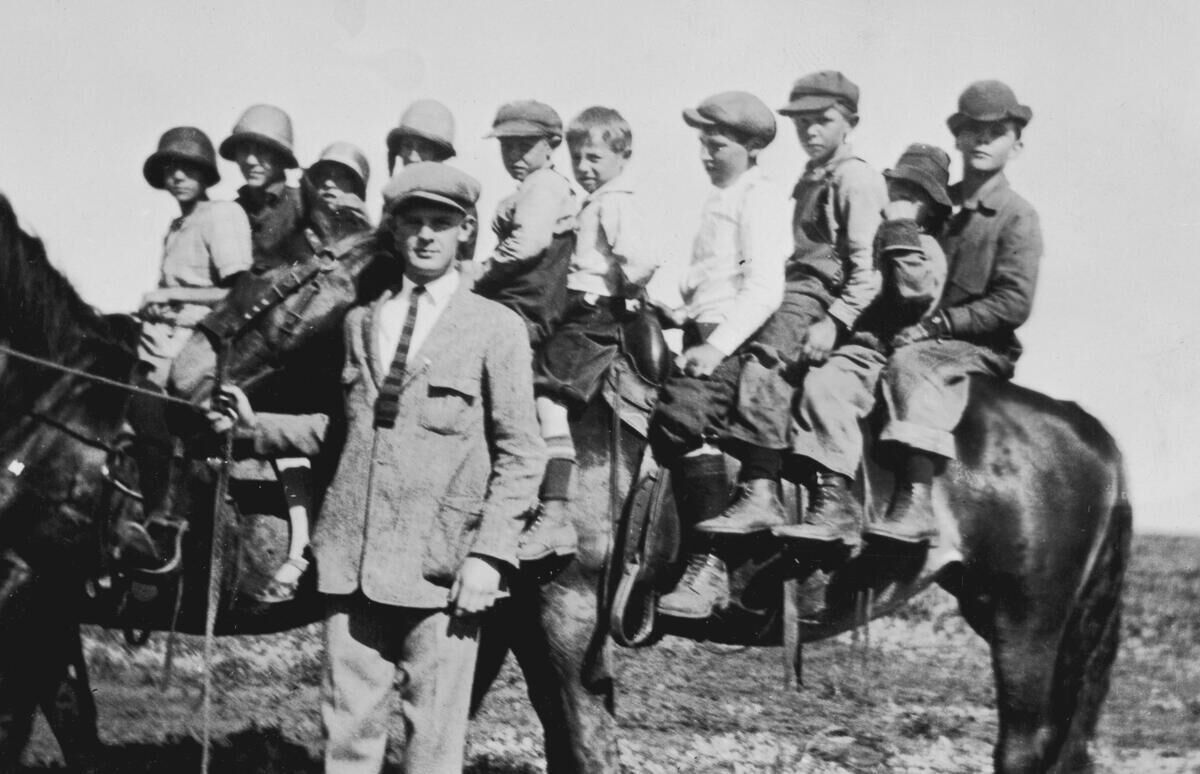
In 1926, he got an invitation from a farmer to be a summer teacher at Fairyvale School near Hussar, Alberta, a German settlement east of Calgary.
Stanley was used to going west into the splendour of the Rockies, not east. He looked at a map and saw that the school was by a place called Dead Horse Lake.
“The name did not suggest a popular resort or week-end aquatic sports; and my worst fears, that the lake would prove to be nothing more than an alkali slough, were confirmed when I saw it,” he wrote.
Fairyvale School wasn’t much to speak of, either. “How bare and unattractive it appeared when I first saw it! How inappropriate the name, Fairyvale!”
Inside the school, a Union Jack and Red Ensign hung on the wall. The Union Jack had been Canada’s flag after Confederation in 1867. It gave way, over time, to various iterations of the Red Ensign, which had the Union Jack in its upper-left corner and a Canadian coat of arms on its red fly.
But there was a problem with the Red Ensign: you couldn’t tell what it was from afar. And it resembled other flags.
“Even at a short distance it was impossible to distinguish between the Canadian Red Ensign, or the red ensigns of Newfoundland, or Bermuda, or the Bahamas, or the British merchant marine flag, for that matter,” Stanley later wrote.
In any case, in 1926 Stanley wasn’t focused on the flag—yet.
Stanley was used to going west into the splendour of the Rockies, not east. ‘How inappropriate the name, Fairyvale!’
He was learning to teach and enjoying it. Stanley grew to like his students and the farmers around Hussar. “I was not unaware that I was learning much from my pupils and their parents, rather more perhaps, than they were learning from me.”
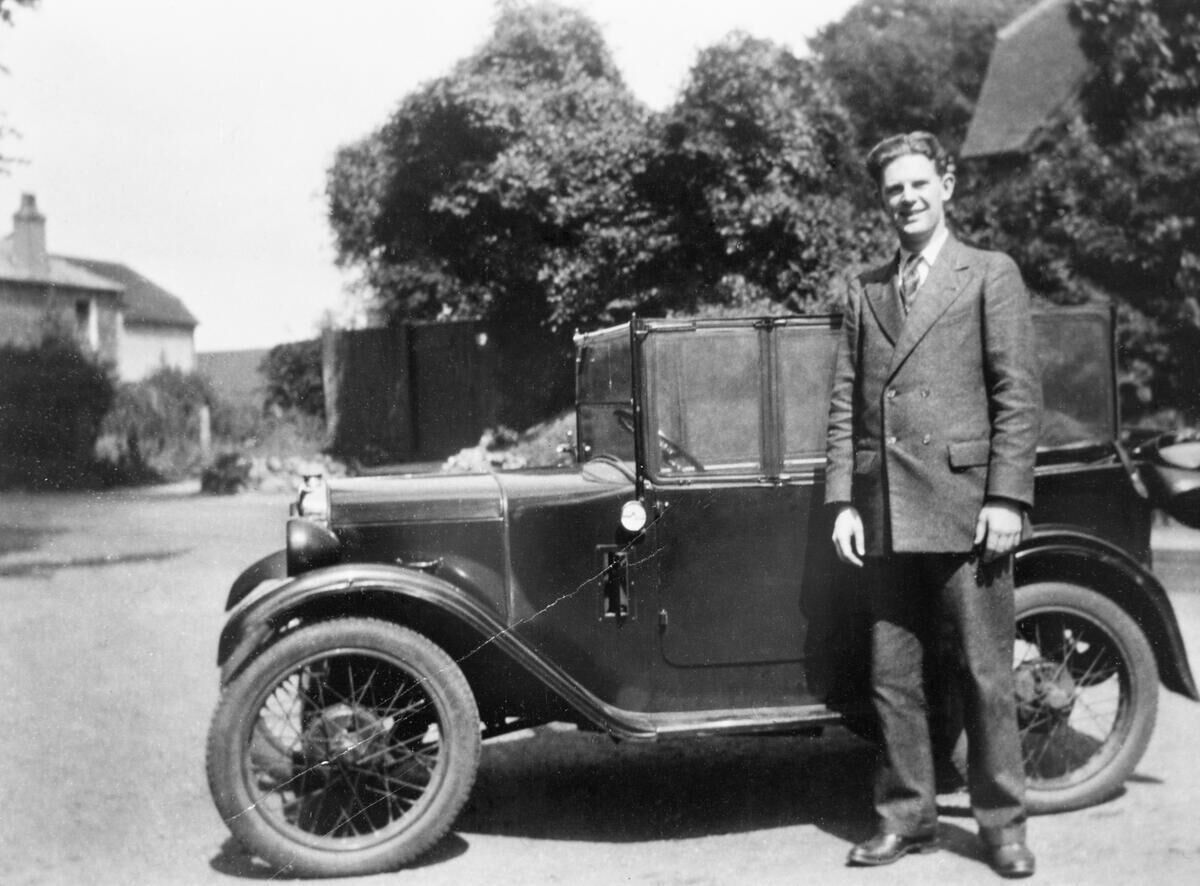
In 1929, Stanley got a prestigious Rhodes Scholarship to Oxford University. There, he did his doctoral thesis on the Riel Rebellions. In 1936 it got published as The Birth of Western Canada, his first book, which was hailed for its scholarship.
“The years I spent in England confirmed and reinforced my national feeling,” he wrote. “Not that I disliked England. I didn’t; but the experience of living abroad made it clear to me that Canadians were not transplanted Britons; they were a separate, distinct breed.”
Returning to Canada from Oxford was an adjustment.
“One of the things that surprised me about Canada, after my seven years in England, was the political intolerance that I discovered both in the university community and among Canadian people generally,” Stanley said in a 1971 interview. “To be understood one adhered closely to party lines as known in Canada.”
“These lines, of course, were familiar and helped label or identify a person. I did not seem to fit these party lines. For that reason I was called a communist by some and a fascist by others.”
A red and white flag: ‘Its very simplicity gave it strength’
In 1949, after serving in World War II in the Canadian army’s historical section, Stanley joined the Royal Military College (RMC) in Kingston, Ontario.
He’d taught history at Mount Allison University in Sackville, New Brunswick, before the war—and at the University of British Columbia after the war, from 1947 to 1949.
At Kingston, Stanley became the college’s dean of arts and wrote Louis Riel (1963), a definitive biography of the Métis leader, among other history books.
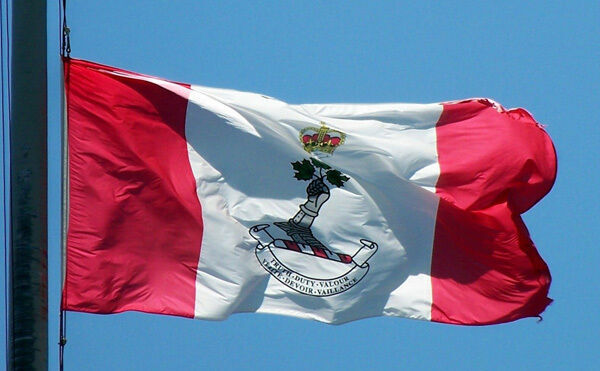
He also became increasingly captivated by the RMC flag.
It was red and white, with the college’s crest in the middle. On his way to work, Stanley would often turn off the highway “in order that I might see the College flag standing out boldly against the background of sky and water.”
“The flag was pleasing aesthetically; its very simplicity gave it strength,” he wrote.
Stanley realized he was becoming more proud of the RMC flag than the Red Ensign. “To me it embodied all that was desirable in a flag; it proclaimed Canada by its colours; it was distinctive; and it was easily identifiable, and identifiable, too, at a distance,” he wrote. “That had always been the great weakness of the Red Ensign.”
To me it embodied all that was desirable in a flag; it proclaimed Canada by its colours; it was distinctive; and it was easily identifiable.
For decades, calls had been growing for a new and distinct Canadian flag.
In 1925, Prime Minister Mackenzie King appointed a committee to investigate possibilities, but he backed down after he came under fire from supporters of the Union Jack.
After that, private members in the House would semi-regularly call for a flag. “Oddly enough, in view of later events, most of the proponents of ‘a Canadian flag, representing Canada as a whole’ came from Western Canada,” wrote Stanley.
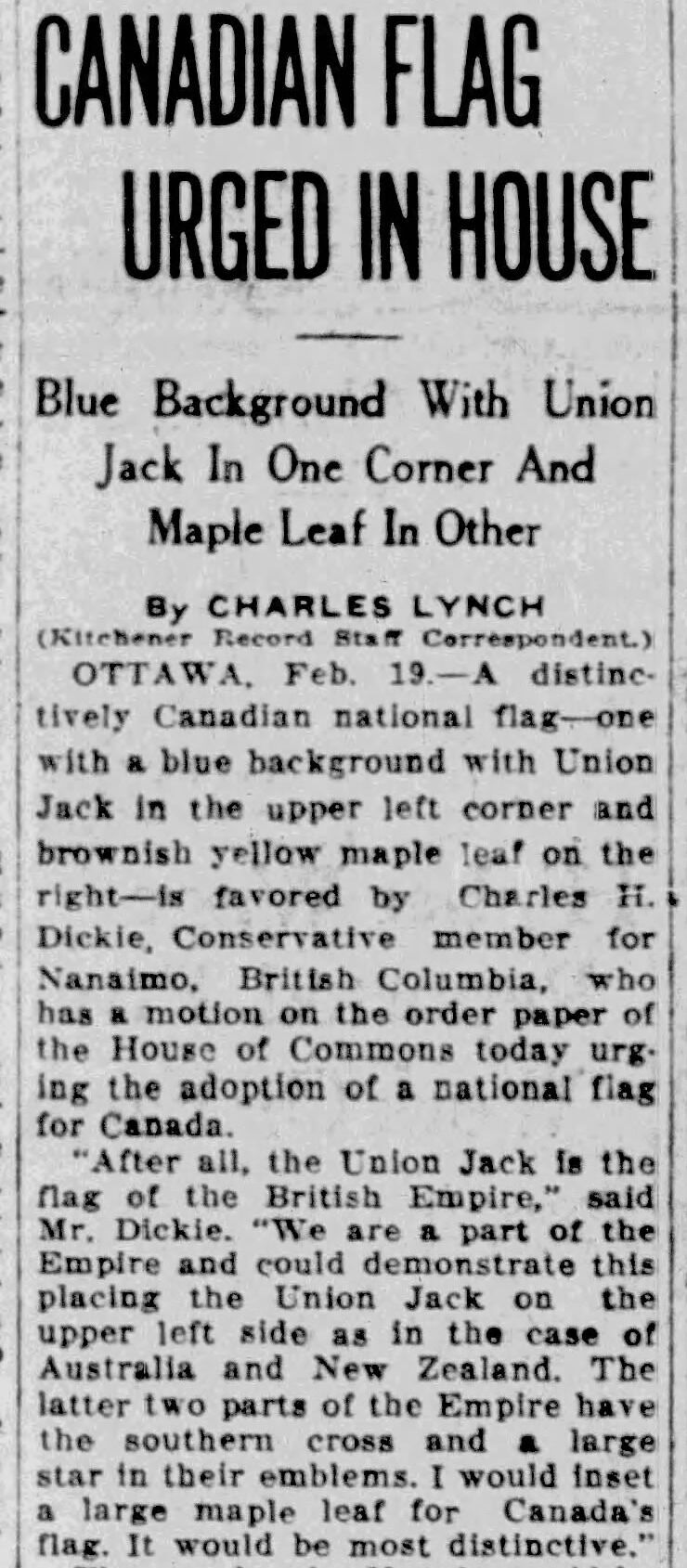
In 1934, a Conservative MP from British Columbia lamented, as Stanley did, that you couldn’t discern the Red Ensign from afar. The coat of arms “appears simply as a blotch upon the otherwise beautiful banner,” Charles H. Dickie said.
“I am all for the Union Jack, but I am also for a cheerful, artistic and beautiful flag for Canada,” Dickie added.
In 1945, King tried again, hoping for the Red Ensign to become official. He appointed a committee to consider the options.
“No fewer than 2,695 designs were submitted, some of which were ridiculous in the extreme,” Stanley wrote. “One, I remember, was a white flag, with a draped female figure—presumably the federal government—holding in one hand a golden chain, leading nine little beavers—presumably the nine provinces of Canada.” (Newfoundland joined in 1949.)
But of all these submissions, two-thirds showed a maple leaf—which had long been recognized as the emblem of Canada.
Its origins are French Canadian, with the maple tree being hailed for its strength. In 1834, in Montreal, politician and journalist Denis Viger declared that “the maple is the king of our forest; it is the symbol of the Canadian people.”
English Canadians soon embraced the maple leaf as well. It became part of the Canadian coat of arms: three maple leaves on one stem.
In 1946, the flag committee had narrowed the options to two designs. One had a green maple leaf on a red and white background. The other was a Red Ensign with a golden maple leaf instead of the coat of arms.
But that’s as far as it went.
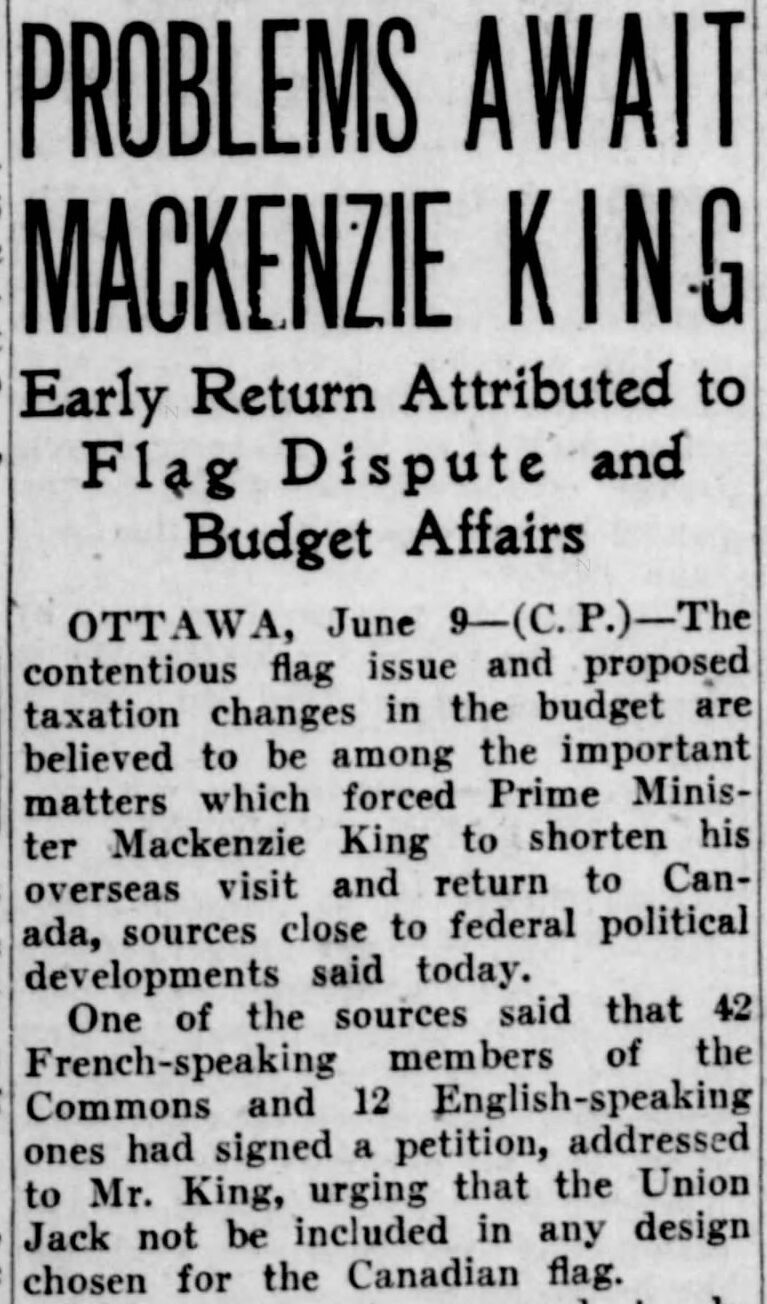
“The first breath of criticism was enough to recall to Mackenzie King the experiences of twenty years before,” wrote Stanley. “Flag Committees were obviously productive of no political good. What if the debate should get out of hand?”
“And it looked as if it might with French Canadian, and even some English Canadian members demanding a Canadian flag that would contain no symbols of Canada’s old colonial past.”
King again backed down. In the meantime the government could continue to fly the Red Ensign of the day.
In the following years, each party accused the other of inaction on the flag issue.
“When the Liberals were in power Conservatives were the critics; when the Conservatives attained office in 1957 Liberals voiced their complaints,” wrote Stanley.
To say Canada needed its own official flag was stating the obvious. Going any further than that was politically risky.
But by the 1963 federal election campaign, against the backdrop of the growing Quebec separatist movement, Pearson had decided it was time. He promised that if the Liberals were returned to power, a new flag would be presented to Parliament within two years.
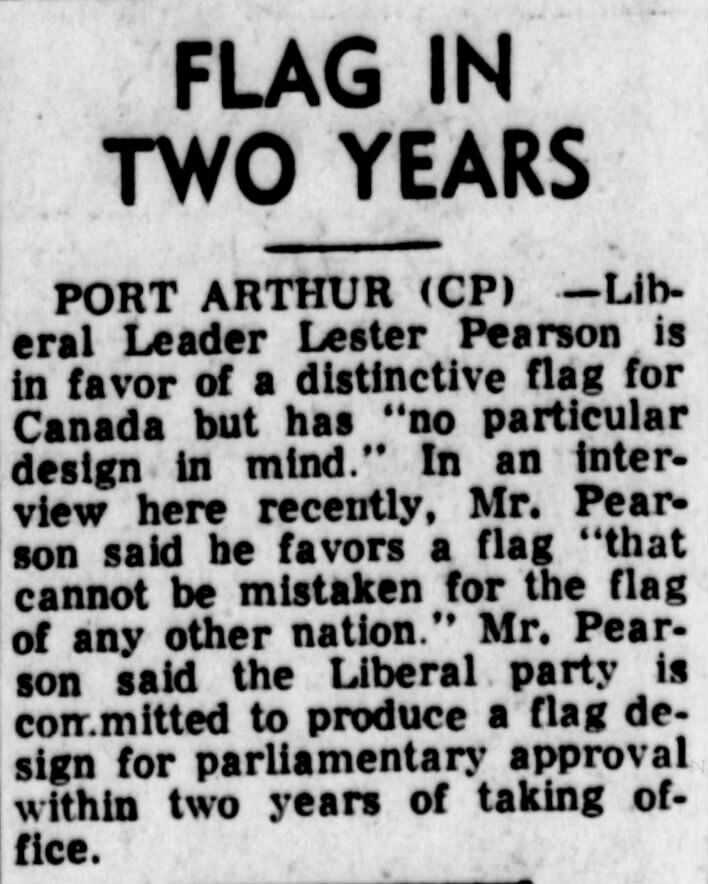
“Pearson was convinced that Canada badly needed a common symbol around which Canadians of all ethnic groups could rally; a flag which did not suggest colonialism, but was a positive assertion of Canada’s national sovereignty and promise of Canada’s national future,” wrote Stanley.
“Rightly or wrongly, he believed that Canada’s disunity was traceable in part to English Canada’s retention of colonial symbolism and failure to adopt a common symbol of identity and sovereignty.”
In the April 1963 election, the Liberals won a minority government, defeating John Diefenbaker and his Progressive Conservatives.
So the search for a new flag was on—and now there was a deadline.
But what should that flag be? That was an explosive question.
Pearson was convinced that Canada badly needed a common symbol around which Canadians of all ethnic groups could rally.
The great flag debate of 1964
Should the Canadian flag contain the Union Jack? The fleurs-de-lys? Both? Or neither—something else entirely?
While Pearson had still been opposition leader, he’d tasked John Matheson, an Ontario MP and heraldry expert, with researching flag possibilities. In May 1963, after the Liberals were back in power, Matheson submitted his flag concept: “a white field charged with three maple leaves conjoined on a single stem.”
But Matheson was aghast when, in a meeting with Pearson, designer Alan Beddoe produced a version of this flag to which he had added two vertical blue strips on the ends, meant to represent Canada’s motto: From sea to sea. This deviated from heraldic tradition, in which water is signified by horizontal wavy bars (see the B.C. or New Brunswick flags as examples).
“Amateurish design roughed out in haste,” Matheson later wrote. “Rather corny symbolism,” Stanley later called it.
But Pearson loved it.
In May 1964, he publicly suggested it for Canada’s new national flag—and all hell broke loose. Pearson had triggered a fierce national debate that would last for the rest of that year.
This flag was quickly dubbed the “Pearson pennant.”
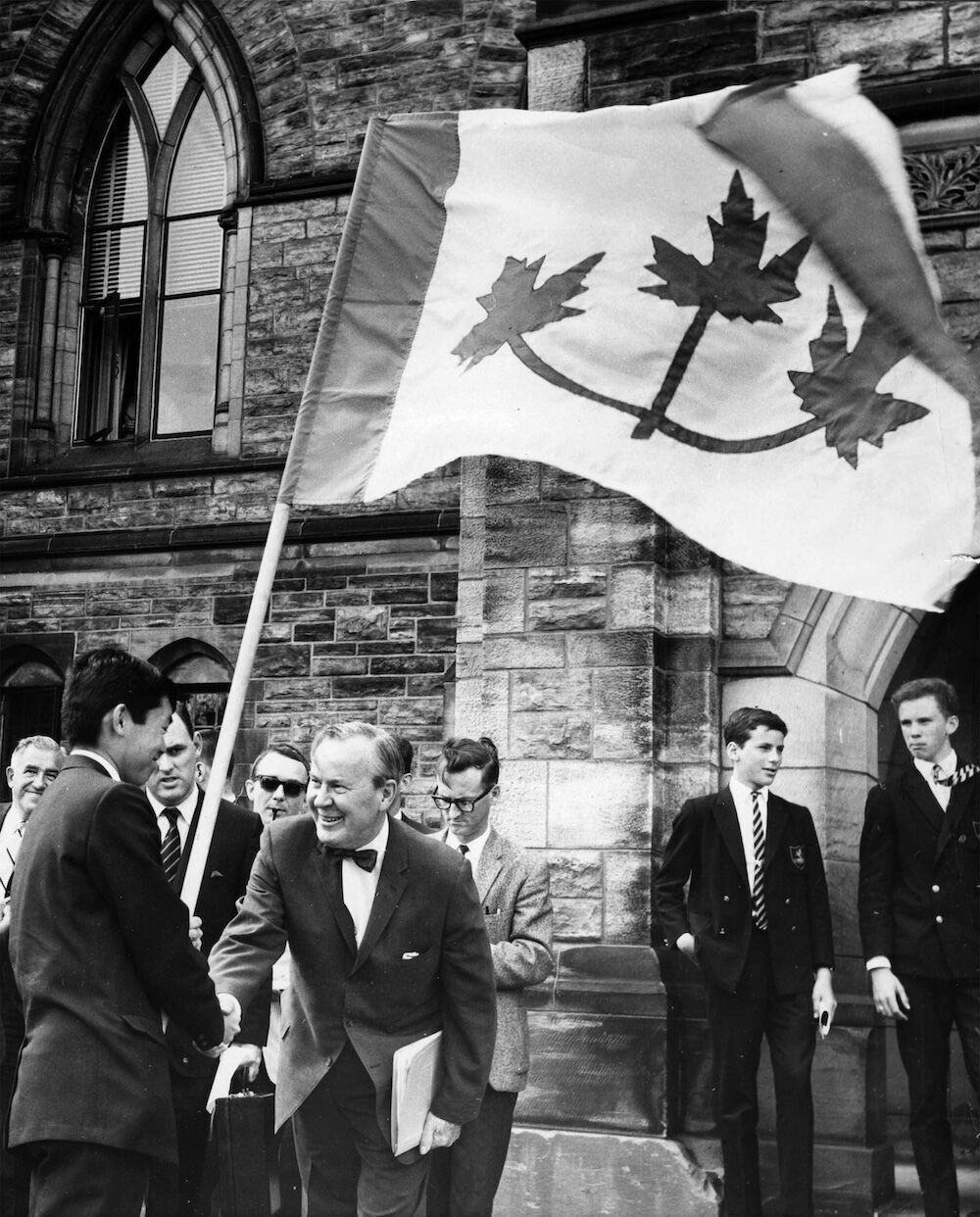
On May 17, 1964, Pearson spoke at a Royal Canadian Legion convention in Winnipeg. He recalled his experience serving in World War I as a Canadian soldier.
“We didn’t fall in or fall out as Irish Canadians, French Canadians, Dutch Canadians, Japanese Canadians,” said Pearson. “We wore the same uniform, with the same maple leaf badge.”
Pearson had been calling for end to what he called “hyphenated Canadianism.”
A few days earlier he’d said in a Toronto speech: “I think the time is near when the idea of Canadian citizenship, strengthened by the adoption of Canadian national symbols, will erase the image and the idea of any kind of hyphenated Canadianism.”
He reiterated this in Winnipeg. “We are all or should be Canadians—and unhyphenated; with pride in our nation and its citizenship, pride in the symbols of that citizenship,” Pearson said. “The flag is one such symbol.”
At this, the Legion crowd erupted with boos and hisses.
We are all or should be Canadians — and unhyphenated; with pride in our nation and its citizenship.
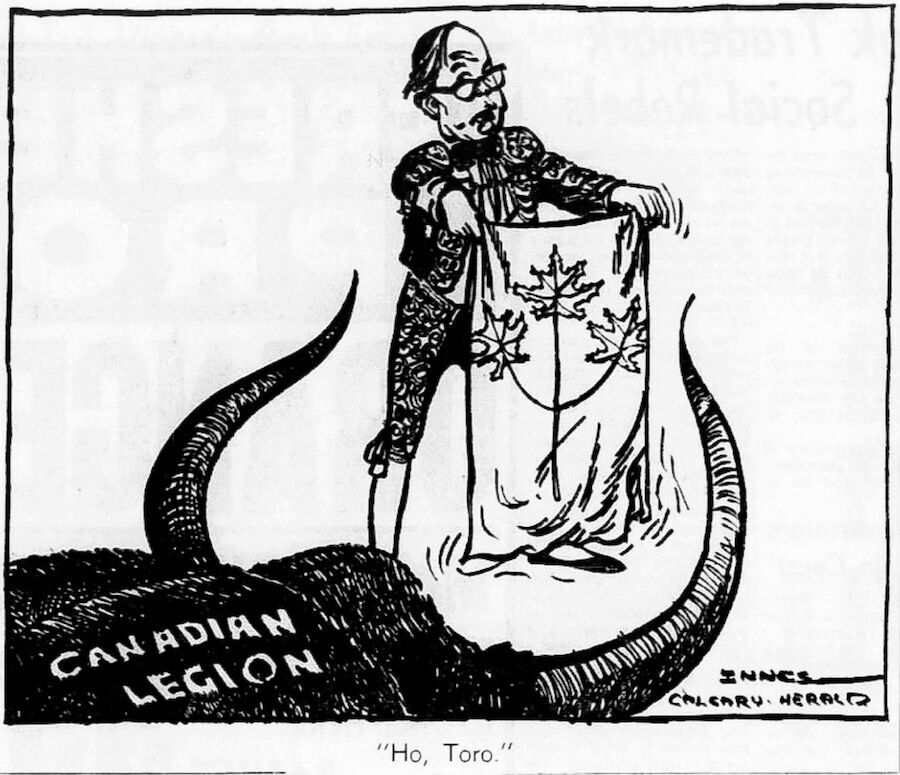
The Royal Canadian Legion was irate over Pearson’s flag. The Red Ensign, after all, was the flag that Canadian soldiers had fought and died under in World War II.
The Legion vigorously campaigned against the Pearson pennant, presenting the Red Ensign alongside the slogan: “This IS Canada’s flag—keep it flying!”
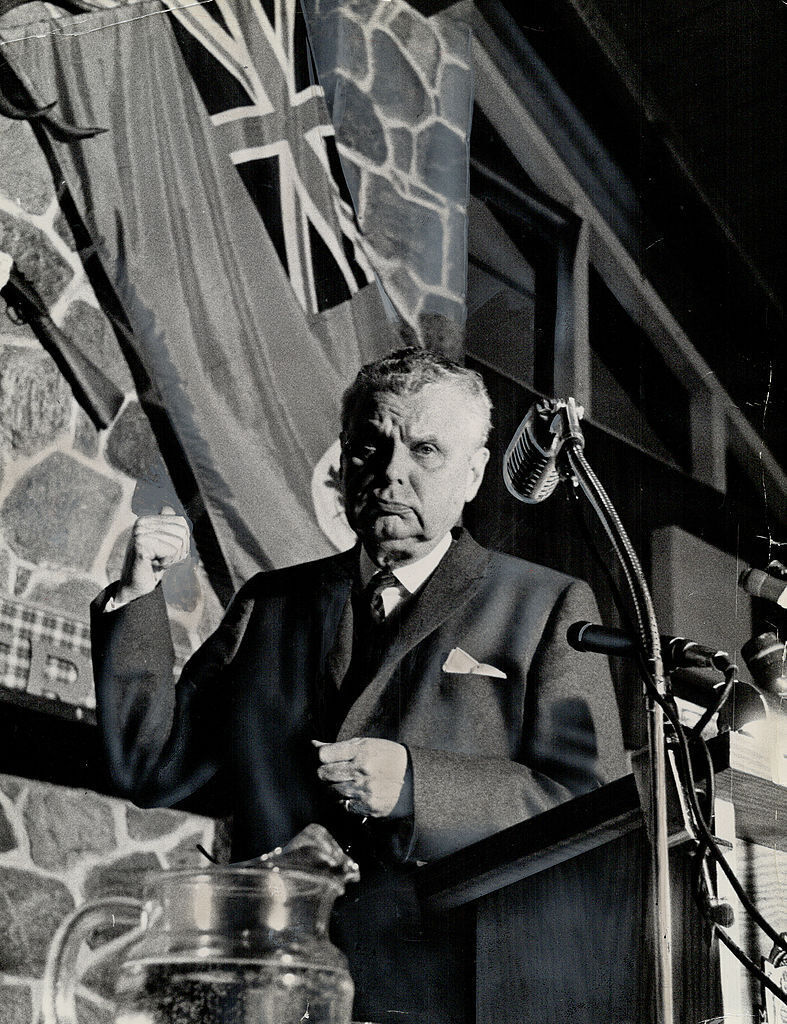
Progressive Conservative leader John Diefenbaker was also staunchly supportive of the Red Ensign becoming the official flag. He regarded Pearson’s flag as a desecration of tradition. It would “divide the nation,” he said.
One Calgarian writing to The Albertan derided the Pearson pennant as a “dish rag of a flag.” Denunciations like this were common.
The Calgary Herald took a more measured view.
“Even before the recent upsurge of separatist talk in Quebec it was clear to most Canadians that the issue of a national flag was central to the issue of national unity,” stated the Herald in an editorial on May 29, 1964.
The paper praised Pearson “for his display of decisiveness in selecting a new flag design and for his courage in laying the fate of his administration on the line in its behalf.”
“This is a lot more than can be said for Mr. John Diefenbaker, Opposition leader, from whom Canadians might expect to hear words of positive wisdom at this time of decision. Mr. Diefenbaker has been raising his voice, but purely in negative and destructive fashion.”
‘Children should be able to draw it’
Months before the flag controversy erupted, the government had quietly gone to George Stanley for guidance.
In the spring of 1964, Stanley was in Ottawa with others from RMC when he ran into Matheson, who was a friend, in a House of Commons hallway.
“He took me aside and confided in me that he had been entrusted by the Prime Minister, Lester B. Pearson, with the task of preparing a new flag for Canada,” Stanley wrote. “What he wanted from me was a memorandum on historical symbols in Canadian history; in particular the beaver and the maple leaf. Then he added, ‘If you have any ideas about the principles of flag design, please add them to your memorandum.’”
“Here was my opportunity. I agreed to write the memorandum.”
There was no doubt in Stanley’s mind that the colours should be red and white—the official colours of Canada, which allude to Britain and France.
Three conjoined maple leaves was the Canadian symbol on the coat of arms. The Pearson pennant contained three leaves.
But Stanley saw this as a problem.
“Recalling my schooldays in Calgary, I realized that simplicity was another principle that should characterize the flag,” Stanley wrote. “Children should be able to draw it. As a small boy I had no difficulty in drawing the Union Jack; but I never made much of a job of the Red Ensign, because I found the details of the Coat of Arms too elaborate.”
“Three leaves on a single stem would present almost as many difficulties for the average schoolboy. A single leaf would, however, be easy, particularly if that leaf were stylized.”
Recalling my schooldays in Calgary, I realized that simplicity was another principle that should characterize the flag.
Stanley took the various ideas that were flying around and decluttered them.
One maple leaf—not three.
Two colours—and no more.
“To my mind it was the one pattern that satisfied the principles of good design in terms of aesthetic balance, ease of identification, and embodiment of official colours and emblem,” wrote Stanley.
He proposed to Matheson “a simple red and white flag.” He suggested two possibilities: one with a single leaf, and one with three. The first option, he said, was best.
“I confess that I never thought of this memorandum as a historic document,” Stanley wrote later, in 1975. “John Matheson had asked me to treat his request in the strictest confidence and so I typed the memorandum myself and drew my own little sketches. I did not even make a carbon of the original memorandum.”
“Then I sent it off to Ottawa.”
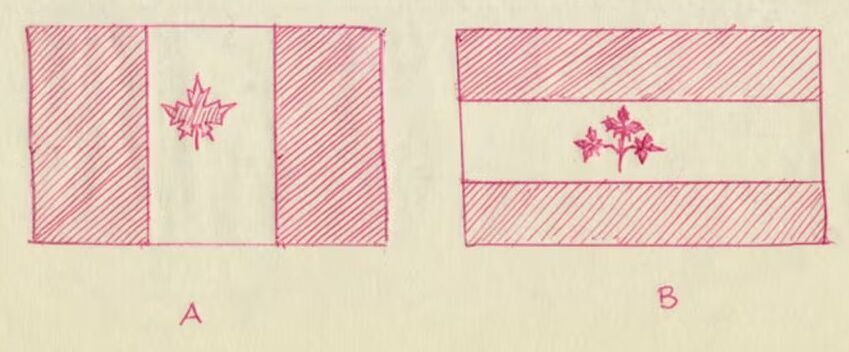
I typed the memorandum myself and drew my own little sketches. I did not even make a carbon of the original memorandum.
It was dated March 23, 1964—nearly two months before Pearson publicized his pennant.
When Matheson was at RMC a few weeks after they met in Ottawa, Stanley directed his attention to the college flag. “There is your flag, John,” Stanley said. “Put a red maple leaf in the centre pale.”
Matheson was unconvinced.
“What I at first found disturbing was his declared preference for a single red maple leaf over the triad appearing in the arms,” wrote Matheson in his 1986 book Canada’s Flag.
Matheson couldn’t understand Stanley’s rejection of the three maple leaves, which had strong historic precedent. “I thought I had developed an iron-clad case that any professor of history would seize upon and support,” Matheson wrote.
What I at first found disturbing was his declared preference for a single red maple leaf over the triad appearing in the arms.
“Dr. Stanley understood my technical argument, but he remained unimpressed with its importance,” continued Matheson. “He believed that simplicity was of the essence in a flag and that a single leaf would serve the purpose better than three.”
“I was troubled by his views.”
Diefenbaker rails against the maple leaf flag
Throughout the summer of 1964, debate raged over the Pearson pennant. Diefenbaker called for a national plebiscite. He vowed to keep fighting a flag “that is a denial of our past, its history and tradition and, we believe, a peril to our future.”
He said Pearson’s flag foray had “caused to this nation cleavages and fissures and separations that more than a generation of people to come will recall.”
Diefenbaker even questioned how the Pearson pennant would look in the snow: “I ask you how far you are going to be able to see that white flag in winter?”
With the issue at an impasse, in September 1964, Pearson referred the matter to a 15-member flag committee: 7 Liberal, 5 Conservative, 1 NDP, 1 Social Credit and 1 Créditiste.
It became increasingly clear that the Pearson pennant would not become the nation’s flag. Many saw it as a Liberal flag, not a Canadian one.
Now it was up to the committee to find a solution.
“In the worst possible circumstances of acrimony and mistrust, the government members of the committee (in minority) were expected to produce a result which had theretofore defied Canadian statesmanship for almost a century,” wrote Matheson.
“Diefenbaker believed that he would be able to use the committee’s failure to rout a wobbly government, so with a gun at our heads we were asked to produce a flag for Canada and in six weeks!”
Diefenbaker vowed to keep fighting a flag ‘that is a denial of our past, its history and tradition and, we believe, a peril to our future.’
A secret scheme for Stanley’s one-leaf design
Now what?
It was in this deadlock that Matheson returned to George Stanley and his single-leaf proposal.
“This soldier-intellectual sensed exactly what the flag question was all about for he was British in his background, generously sympathetic to French culture, and competently bilingual,” wrote Matheson. “Here was a Rhodes Scholar from Alberta with a doctorate from Oxford University who nevertheless was first and foremost a Canadian.”
Matheson began to reconsider his initial resistance.
“Discussions with Stanley and much reading of press clippings about the flag issue had caused me to wonder whether I had allowed myself to become too technical, too inflexible, too opinionated,” Matheson wrote.
“I resolved to start afresh, to consider once more every suggestion that had been made.”
He warmed to the Stanley concept. Even the Legion’s new badge was a red maple leaf on a white background. “The irony of now presenting Canada’s angry Legionnaires with their own badge on a flag appealed to my sense of mischief,” Matheson wrote. “It would be the perfect retort courteous!”
But getting anywhere would be difficult. In the rancorous political climate of 1964, open Liberal support for any new design would almost certainly be fatal to that flag.
So Matheson placed the Stanley flag, with its proportions adjusted and refined, on the wall in committee, “but secretly and without any suggestion of my interest or support.”
The irony of now presenting Canada’s angry Legionnaires with their own badge on a flag appealed to my sense of mischief.
The flag committee made little progress—and time was ticking.
Eventually, Matheson writes in his book, he was approached by committee members Grant Deachman (Liberal) and Reid Scott (NDP). Deachman was increasingly worried that returning to the House of Commons without a recommended design would be a “political catastrophe” for Pearson’s minority government. And so there was a plan to go along “with something acceptable to” Conservative MP Waldo Monteith.
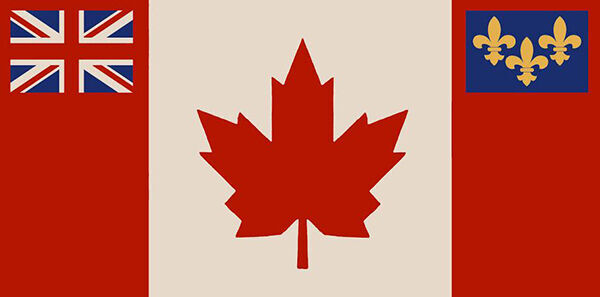
The Conservatives had been calling for a Red Ensign with a fleur-de-lys in place of the coat of arms.
Matheson was furious. He believed Canada needed not a tweaked Red Ensign, but a flag that would meet the aesthetic standards of the Pearson pennant (its “amateurish” blue strips aside).
“When Deachman and Scott invited me to point out examples of designs that would meet such exacting criteria, I drew their attention to the refined proposal of George Stanley, dilating upon its characteristics without disclosing from whence it had originated,” Matheson wrote. “Almost instantly a consensus was reached and a bargain struck.”
They would support the Stanley design—but secretly, so as not to provoke Conservative opposition.
Here was a Rhodes Scholar from Alberta with a doctorate from Oxford University who nevertheless was first and foremost a Canadian.
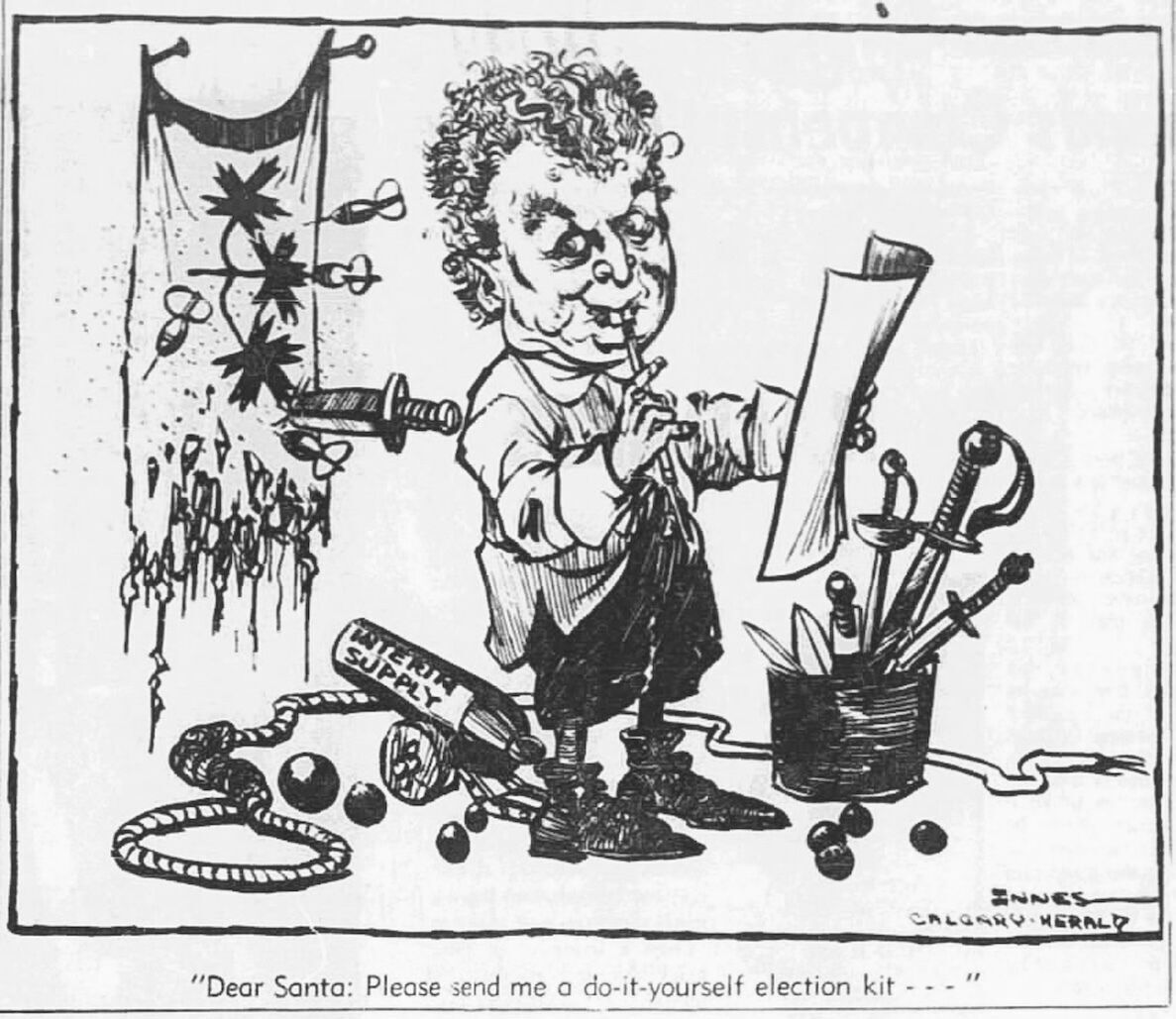
For months, Diefenbaker’s Conservatives had been focused on defeating Pearson’s flag. The Liberal strategy now was to keep Conservative ire directed precisely there, while stealthily nudging the single-leaf design along.
“The strategy required that they must vote in fear of an ultimate victory for the ‘Pearson pennant,’” wrote Matheson. “They must on no account suspect that a decision had been made by all the others to support the Stanley design.”
It worked, as committee voting was secret. By October 20, the number of designs had been whittled down to 30, including Stanley’s.
Then it was down to three: the Pearson pennant, Stanley’s flag, and a second version of Stanley’s flag with the Union Jack in one top corner and the fleur-de-lys in the other.
“At this point Matheson’s strategy paid off,” wrote Stanley. “Believing that the Liberals would vote for the Pearson pennant, the Conservatives voted for the single-leaf flag. One can imagine their embarrassment and consternation, when they discovered that not only had the NDP and the Social Credit joined them in voting for the single-leaf flag, but so too had all the Liberals.”
In the final vote, committee approved Stanley’s design 10 - 4.
On November 30, the flag committee returned to the House of Commons with its recommendation: a red flag with a white square containing a single red maple leaf.
Now the flag fight resumed.
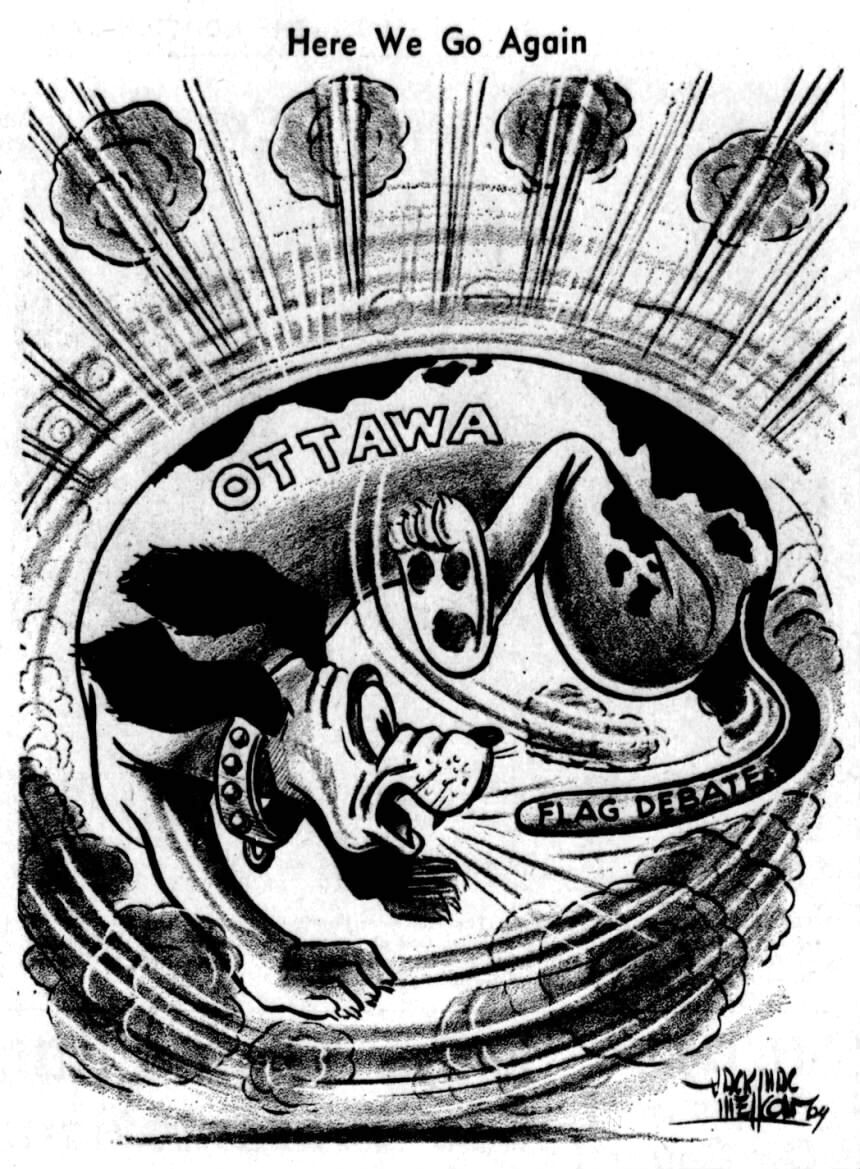
Believing that the Liberals would vote for the Pearson pennant, the Conservatives voted for the single-leaf flag.
Diefenbaker still would not relent.
“There is nothing in this design for memorial, sorrow, or old renown... This design forgets our past,” charged Diefenbaker. He again called for a plebiscite.
By now the Conservative party was split on the flag issue, with MPs growing weary of Diefenbaker’s filibuster tactics and refusal to budge.
“The new flag is the symbol of the future because it expresses unity... I believe that in the maple leaf flag Canadians of whatever origin or background may find something in common,” said Quebec Conservative MP Paul Martineau in the House.
“I believe this maple leaf flag will express for Canadians, in their own undemonstrative and taciturn way, the firm conviction that Canadians want to live together, work together, and build a worthwhile nation.”
On December 9, MP Léon Balcer, Diefenbaker’s Quebec lieutenant, also broke with his leader and asked the Liberal government to invoke closure and end the debate. “In this instance the Commons has been turned into an oratorical society and it is impossible to reach a decision,” Balcer lamented.
In the early hours of December 15, 1964, the House finally voted.
Matheson scribbled a note to Stanley at 2 a.m.: “Your proposed flag has just now been approved by the Commons 163 to 78. Congratulations. I believe it is an excellent flag that will serve Canada well.”
Nearly a century after Confederation, Canada finally had its own distinct flag.
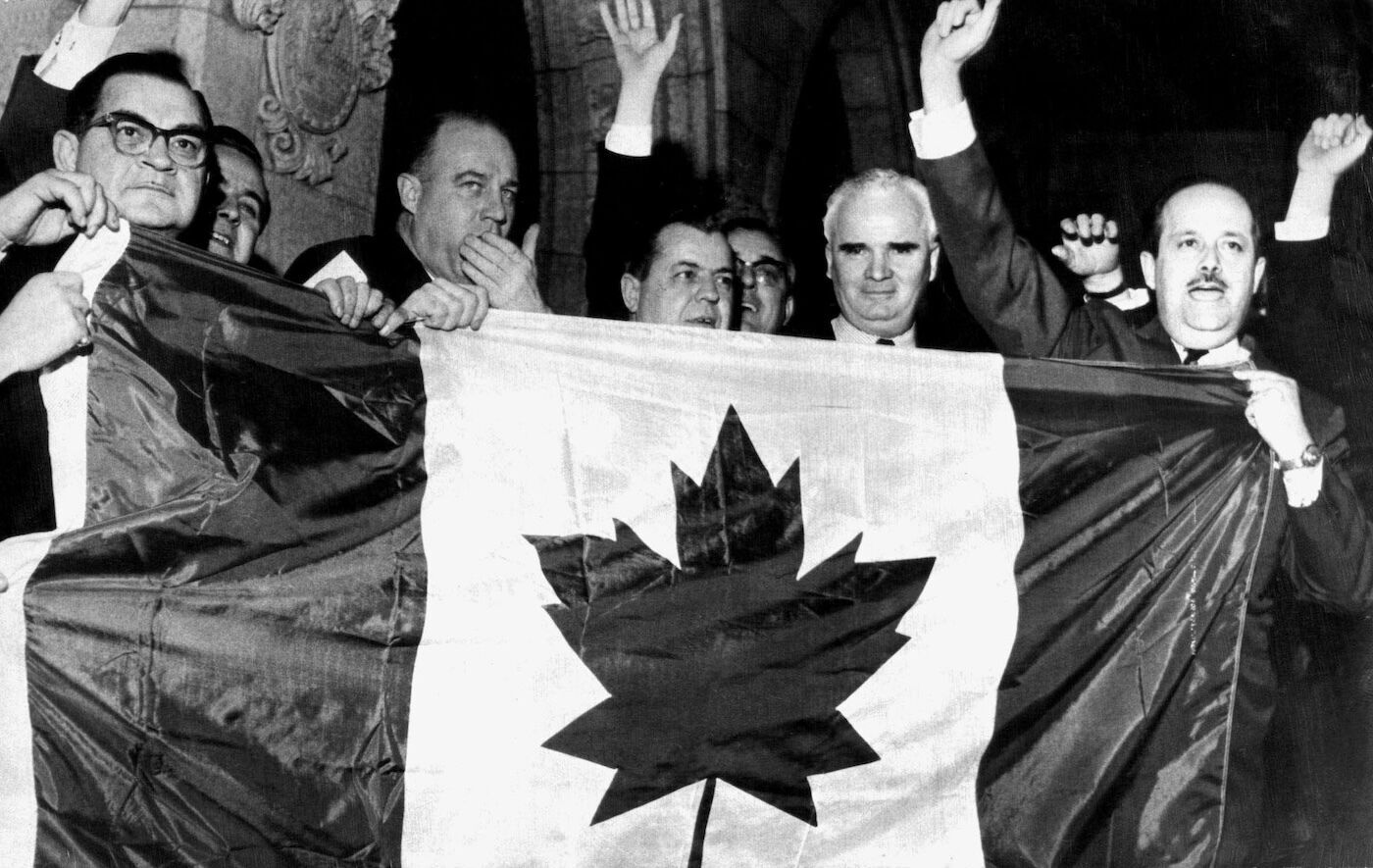
I believe that in the maple leaf flag Canadians of whatever origin or background may find something in common.
The inauguration of Canada’s new flag
After all the rancour, when the new flag was finally raised in Stanley’s hometown on February 15, 1965, there was little fanfare. It was a complete non-event.
New flags went up at Calgary city hall and other public buildings—as they did around the country, and Canadian embassies internationally.
“Most people passing below didn’t even know that Canada’s new flag was being raised over their city for the first time,” reported The Albertan. “Even fewer seemed to care.”
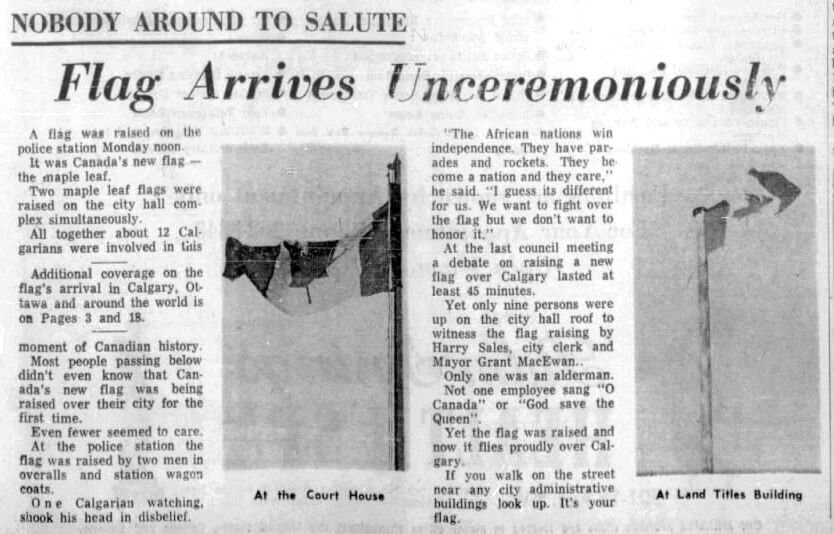
The new flag had been designed by one of their own, but few if any Calgarians would have known that. (Stanley disclosed his role later that year in his 1965 book The Story of Canada’s Flag: A Historical Sketch, published by Ryerson Press.)
The Albertan exhorted its readers limply: “If you walk on the street near any city administrative buildings look up. It’s your flag.”
But that same day in Ottawa, for George Stanley, the raising of the new flag on Parliament Hill was a proud moment. Wearing a bright Hudson’s Bay blanket coat, Stanley stood with Pearson, Diefenbaker, and thousands of Canadians for the inauguration.
“There was a slight breeze and the flags broke to their full extent,” wrote Stanley. “I felt a lump in my throat as I watched the Red Ensign being folded and put away. After all, it had been the flag I had known as a boy in Calgary as the flag of my country. But when I looked again at the red Maple Leaf flags on the horizon… I felt something far more exciting.”
“The lump was still there and I could hardly speak; but inside there was a warm feeling of pride. To me the new flag was a glorious thing, bold and proud, asserting Canada’s nationhood, for all to see. I found myself yielding to the unsophisticated desire to join in the cheering.”
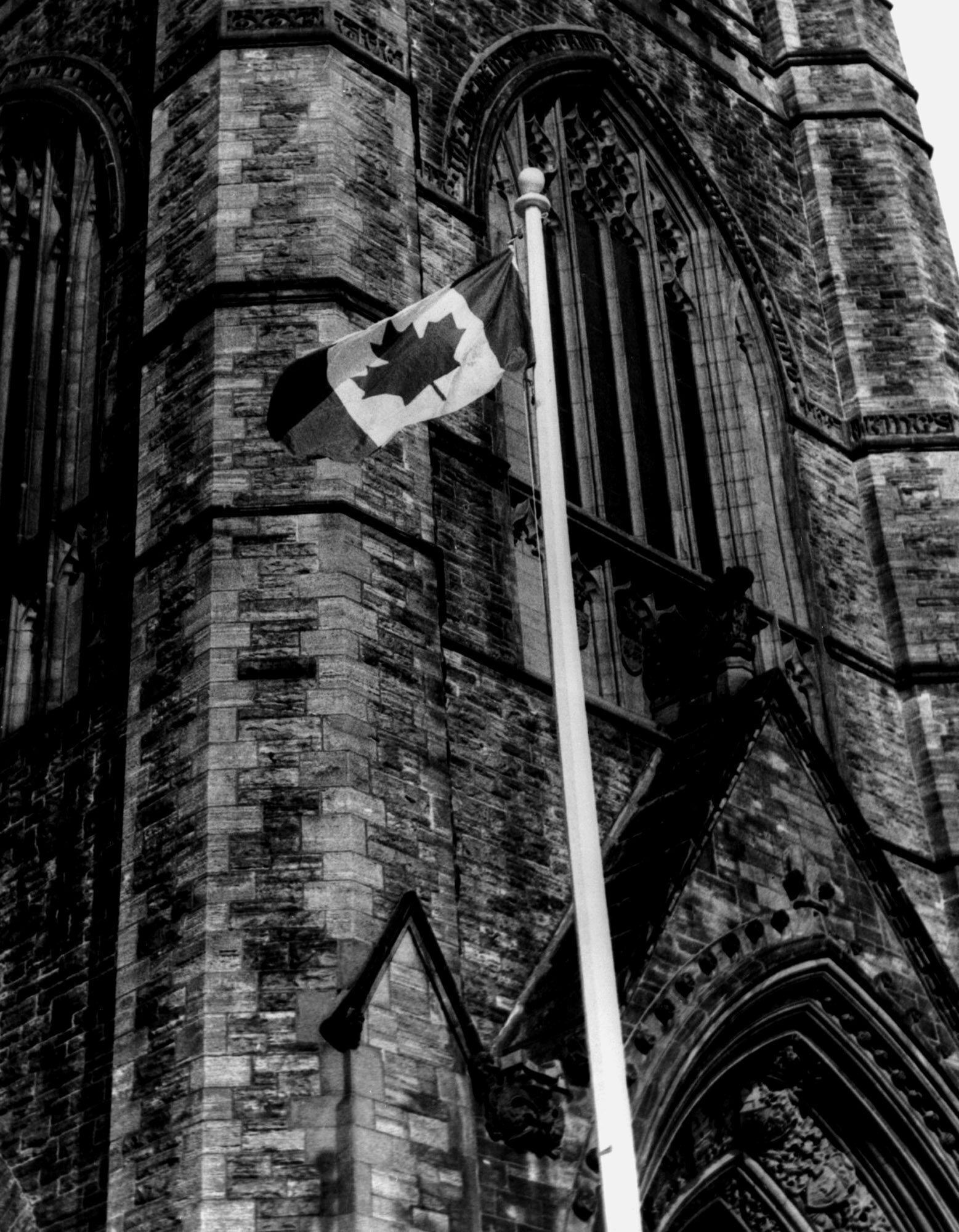
To me the new flag was a glorious thing, bold and proud, asserting Canada’s nationhood, for all to see.
When he got home to Kingston, he had a letter waiting for him.
“It was post-marked Ottawa, and it was unsigned,” Stanley wrote. “Crudely printed, it said in direct words, that I was a traitor to my country and that the next time I came to Ottawa I would be assassinated.”
He was not. In 1969, he returned to Mount Allison University in Sackville, New Brunswick, where his teaching career had started. He then served as New Brunswick’s Lieutenant Governor from 1982 to 1987.
Stanley died in 2002 at the age of 95 after living “a life of quintessential Canadianness,” his Ottawa Citizen obituary stated.
In Calgary’s deep southeast, in Cranston, a new junior high school opened in 2017 with his name: Dr. George Stanley School. And at his childhood home in the Beltline, which is now a Vietnamese restaurant called An An Kitchen & Bar, his Globe & Mail obituary hangs on the wall.
“Historian designed Canada’s flag,” reads the headline.
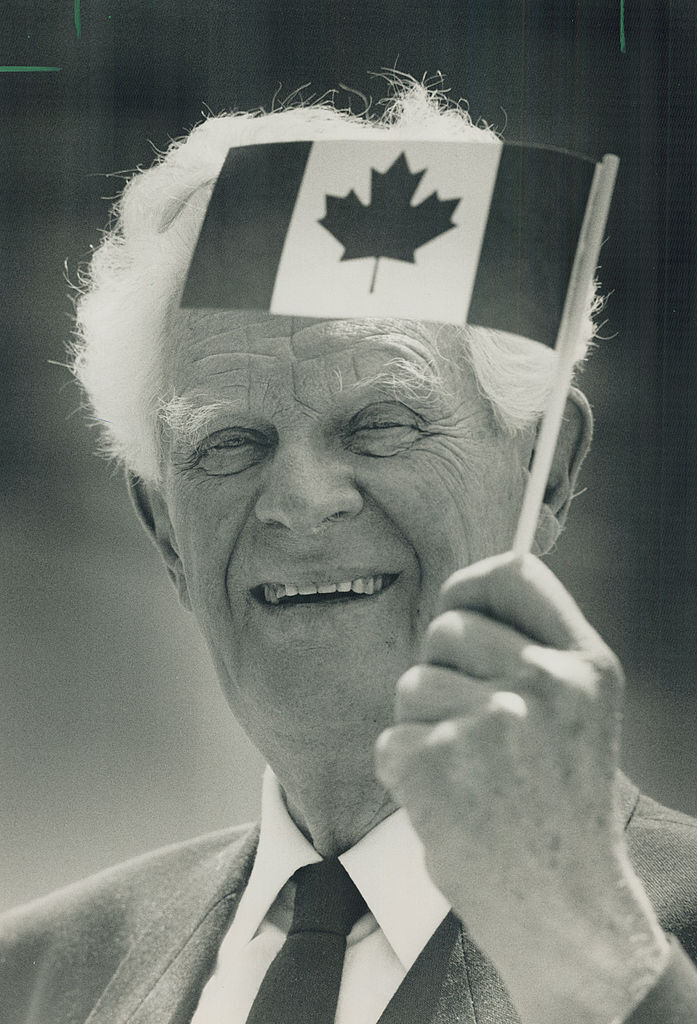
A Western Canadian at heart
Today in his hometown, Stanley’s role in the creation of Canada’s flag is largely unknown—much as it was in 1965 when the flag was first raised in the city.
But what he created endures nationwide, easily drawn from memory by children, the way he envisioned. It became a symbol embraced by Canadians of all backgrounds across the political spectrum.
“Its pattern is strong, unique, and rooted in history,” wrote former Conservative prime minister Stephen Harper in his 2025 book Flags of Canada.
Although he left Alberta when he was young, Stanley considered himself a Western Canadian at heart.
“I am... prairie-born, prairie-educated (at least at the school and undergraduate level), nourished upon prairie prejudices and, even when I disagree with various prairie spokesmen, some of them Johnnies-come-lately as far as I am concerned, I am still Western Canadian in sympathy,” he wrote in the 1970s, in notes for a speech titled “The Prairie West and Canada.”
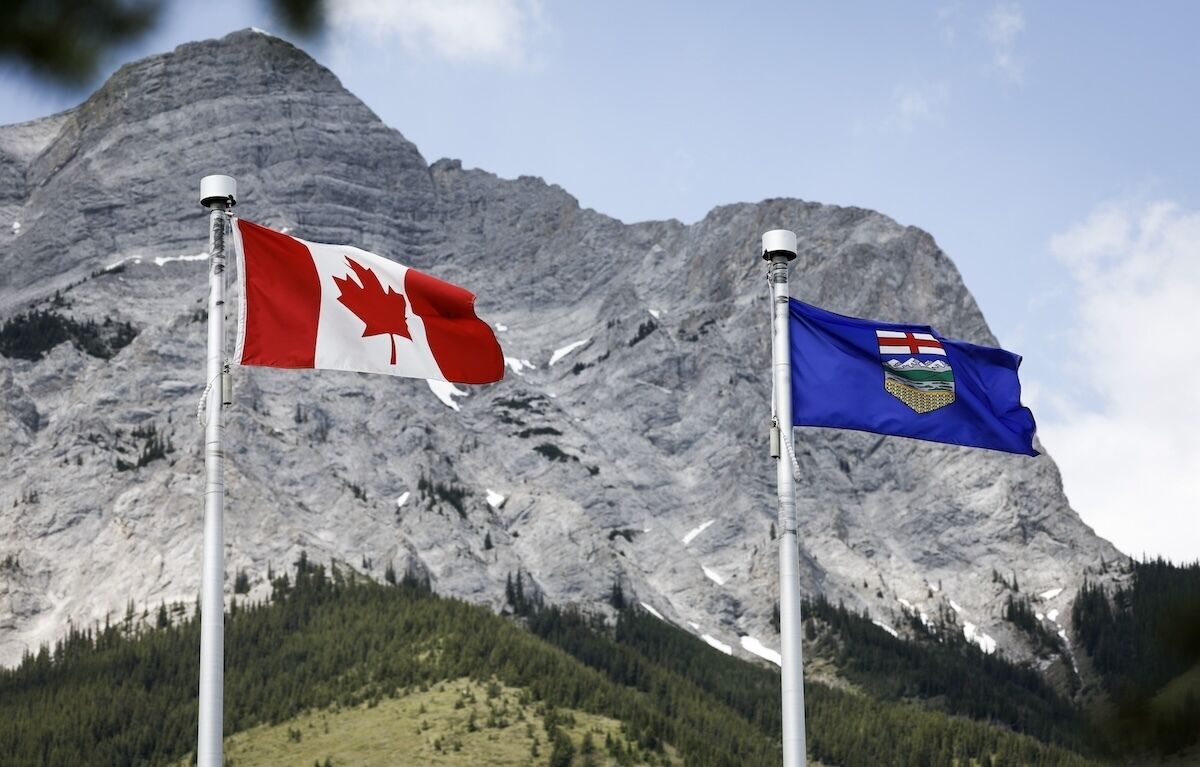
Stanley pointed out that prior to World War II, the Conservatives were considered the party of centralization, friendly to the bankers and manufacturers of Central Canada, and “now it is the Liberals who are cast in this role.”
“Whether or not the western attitude is just and reasonable is beside the point,” Stanley wrote.
“In politics, it is not what is true that counts, but what people believe to be true. Opposition to Ottawa in Western Canada has become a state of mind. It is the inward and spiritual force behind the outward and visible voting pattern in the west since the end of the first World War.”
Opposition to Ottawa in Western Canada has become a state of mind.
Like Alberta Premier Peter Lougheed, Stanley believed over-centralization had put too much power in too few hands.
“If too much centralization has been a major factor in producing the western malaise—and I believe this to be the case—then surely the answer is a greater degree of decentralization. And this applies to politics, economics and the CBC...”
“There are those people who will reply that decentralization is bound to destroy Canada by weakening the powers necessary to ensure its survival. Personally, I believe that it is those very powers which have produced the malaise which is threatening to tear our country apart.”
As dire as such threats may be, they were, to George Stanley’s mind, solvable.
“In a federation, as in a marriage, there must be some accommodation between the partners, and the partners, when they quarrel, must, above all, avoid those words and those actions which are not likely to be forgotten or forgiven,” he wrote.
Jeremy Klaszus is founder and editor of The Sprawl. Sam Hester is a Calgary cartoonist and the author of The Sprawl’s Curious Calgary comics series. This story draws heavily from George Stanley’s own papers, which were donated to the University of Calgary archives after his death—including an 18-page typewritten document from 1975 in which Stanley describes, in detail, the creation of Canada’s flag.
The comic at the beginning of this story can be printed on a regular sheet of paper and made into a zine. Print it either in colour or in black and white and then fold it (see instructions here, and a demonstration video here)—and pass it around!
The Sprawl relies entirely on crowdfunding for our independent Calgary journalism. If you appreciate our in-depth stories, support our work today!
Support independent Calgary journalism!
Sign Me Up!The Sprawl connects Calgarians with their city through in-depth, curiosity-driven journalism. But we can't do it alone. If you value our work, support The Sprawl so we can keep digging into municipal issues in Calgary!