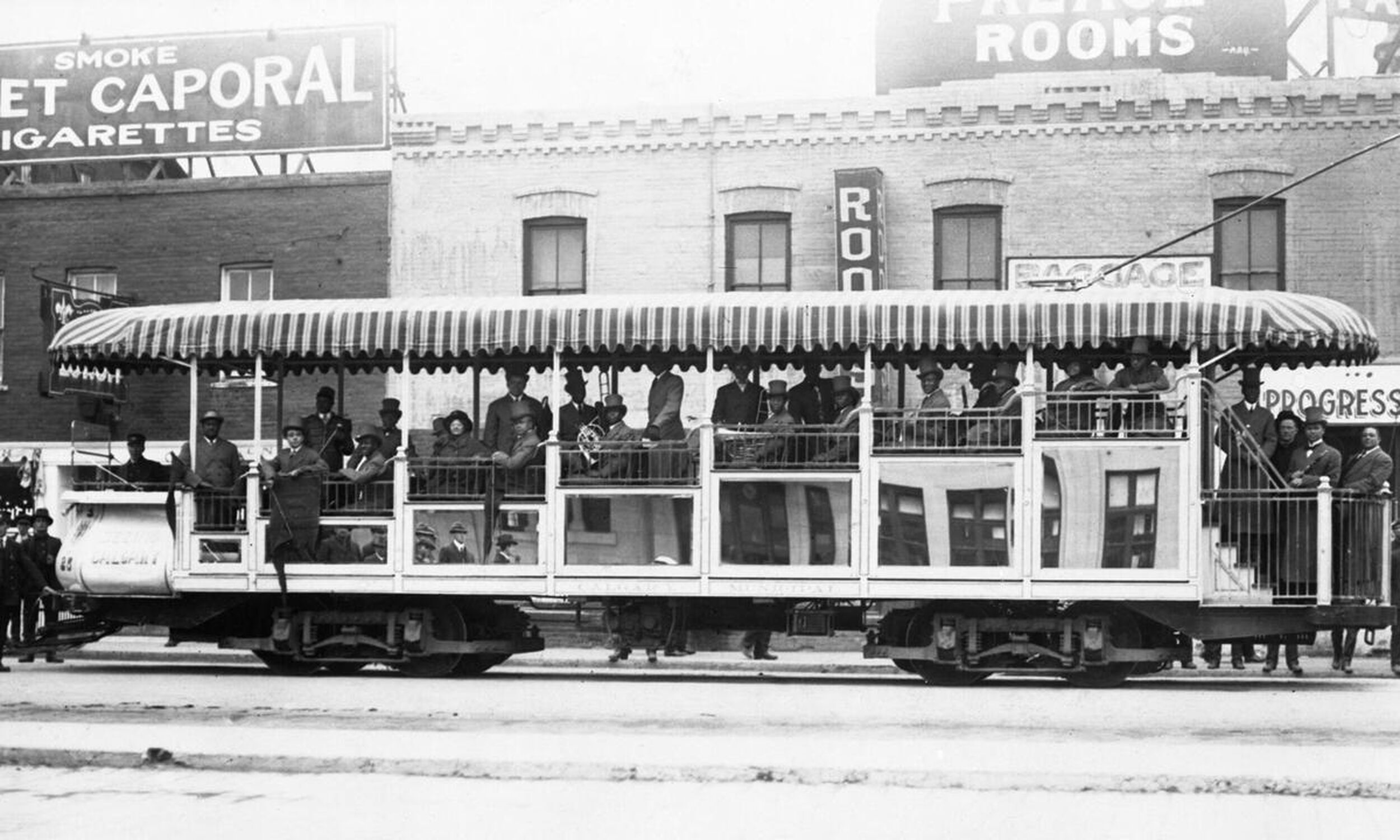
Black band on Calgary sightseeing streetcar, circa 1912. (Glenbow Archives, U of C)
Charles Daniels’s stand against racism: How Alberta history is repeating itself
In 1911, province feared ‘dark tide’ of Black immigration.

Support independent journalism—help us get 90 new members!
Sign Me Up!To celebrate The Sprawl’s 9th anniversary, we’re aiming to get 90 new members by the end of September. If you value in-depth, curiosity-driven journalism, support our work so we can keep digging into municipal issues in Calgary!
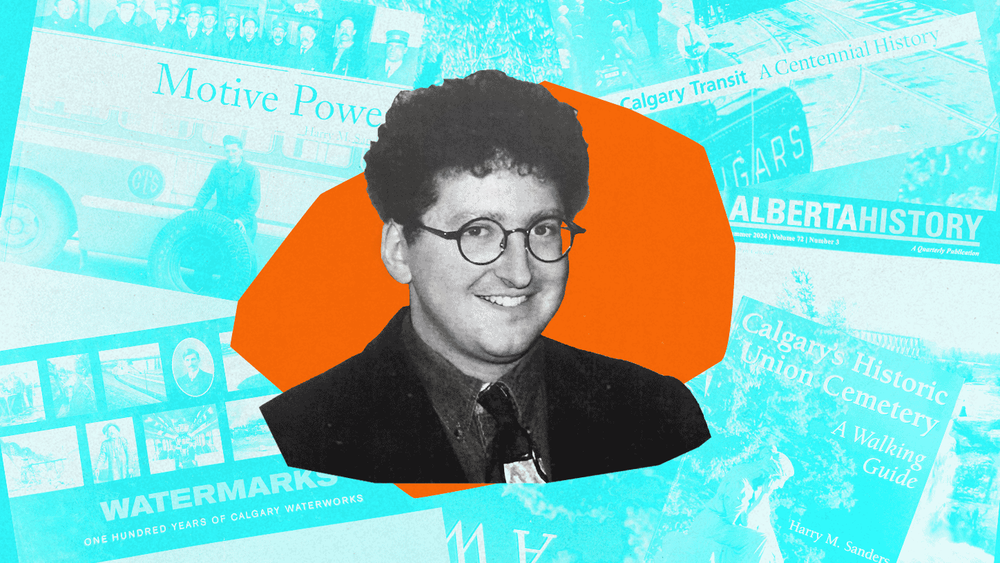
In 2018, Bashir Mohamed wrote for The Sprawl about a little-known local civil rights champion: a Black Calgarian named Charles Daniels.
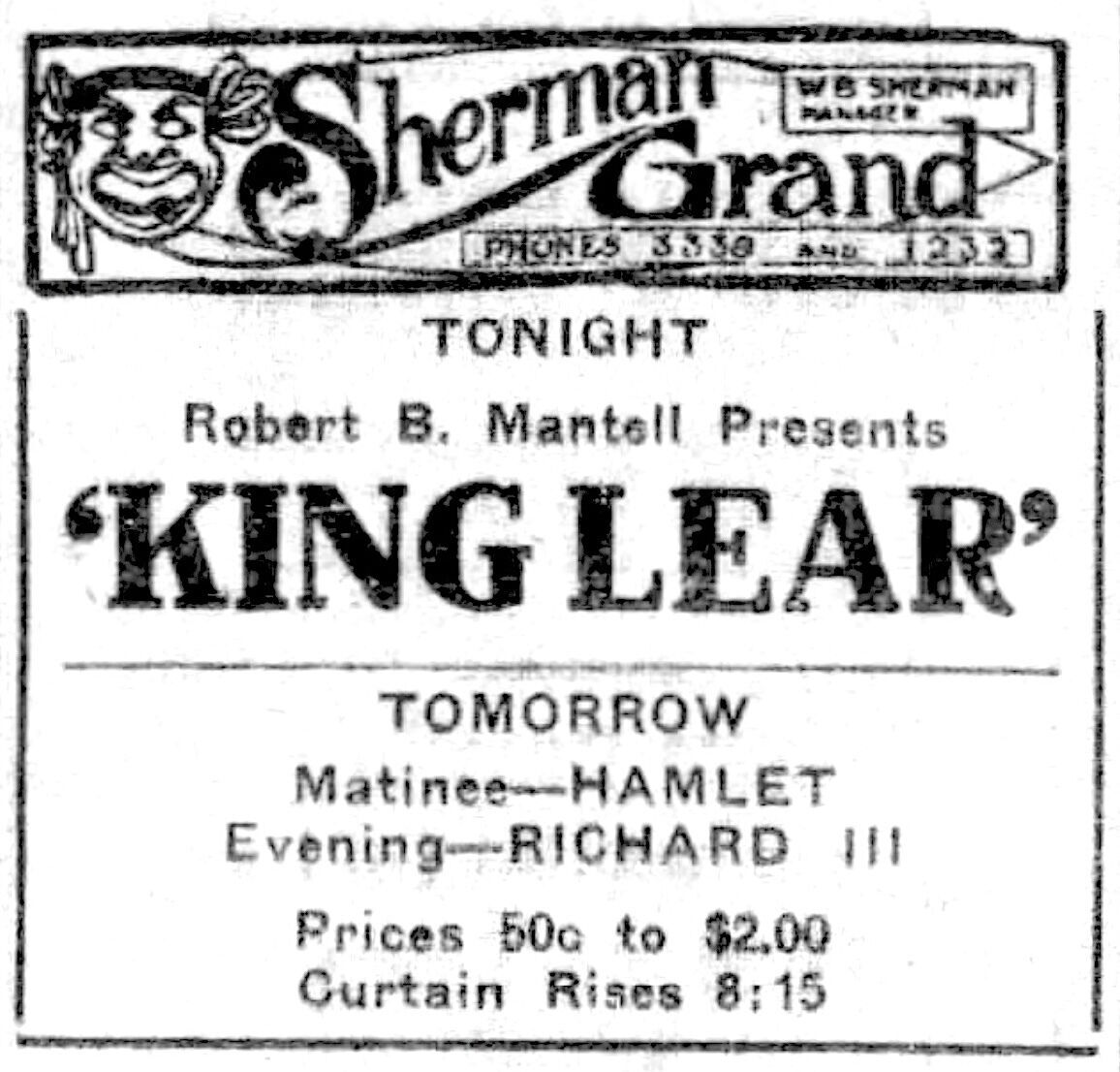
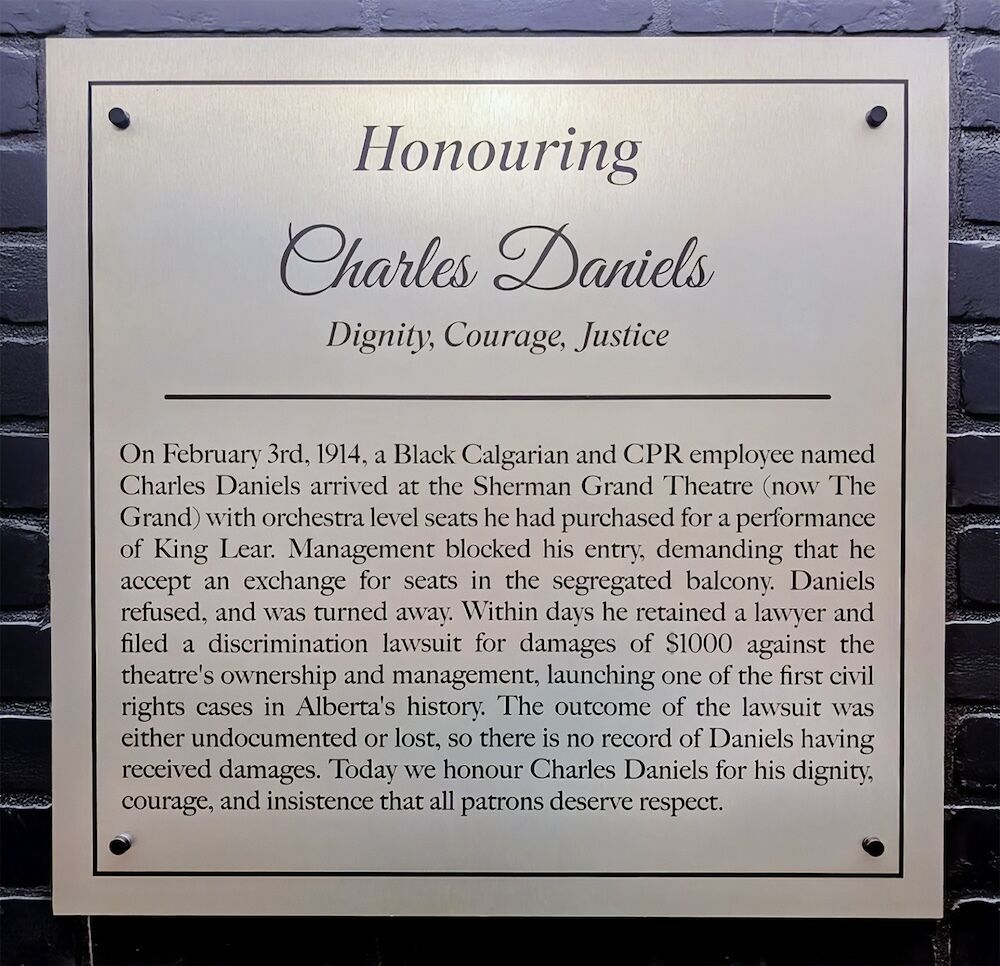
Daniels, a porter inspector for the Canadian Pacific Railway, had purchased a ticket for a performance of King Lear at the Sherman Grand Theatre in downtown Calgary. This was in 1914. His ticket was for seat H3 in the orchestra section.
But when Daniels entered the Grand, he was denied his seat. Management directed him to sit in the balcony instead.
Daniels refused—and took the matter to court, a case Mohamed described in his story. No settlement was recorded.
At the end of his piece, Mohamed wrote: “Today the Grand stands as a reminder of Calgary’s anti-Black racism, along with resistance to that racism. Perhaps it’s time for Daniels to be honoured with a monument at that site.”
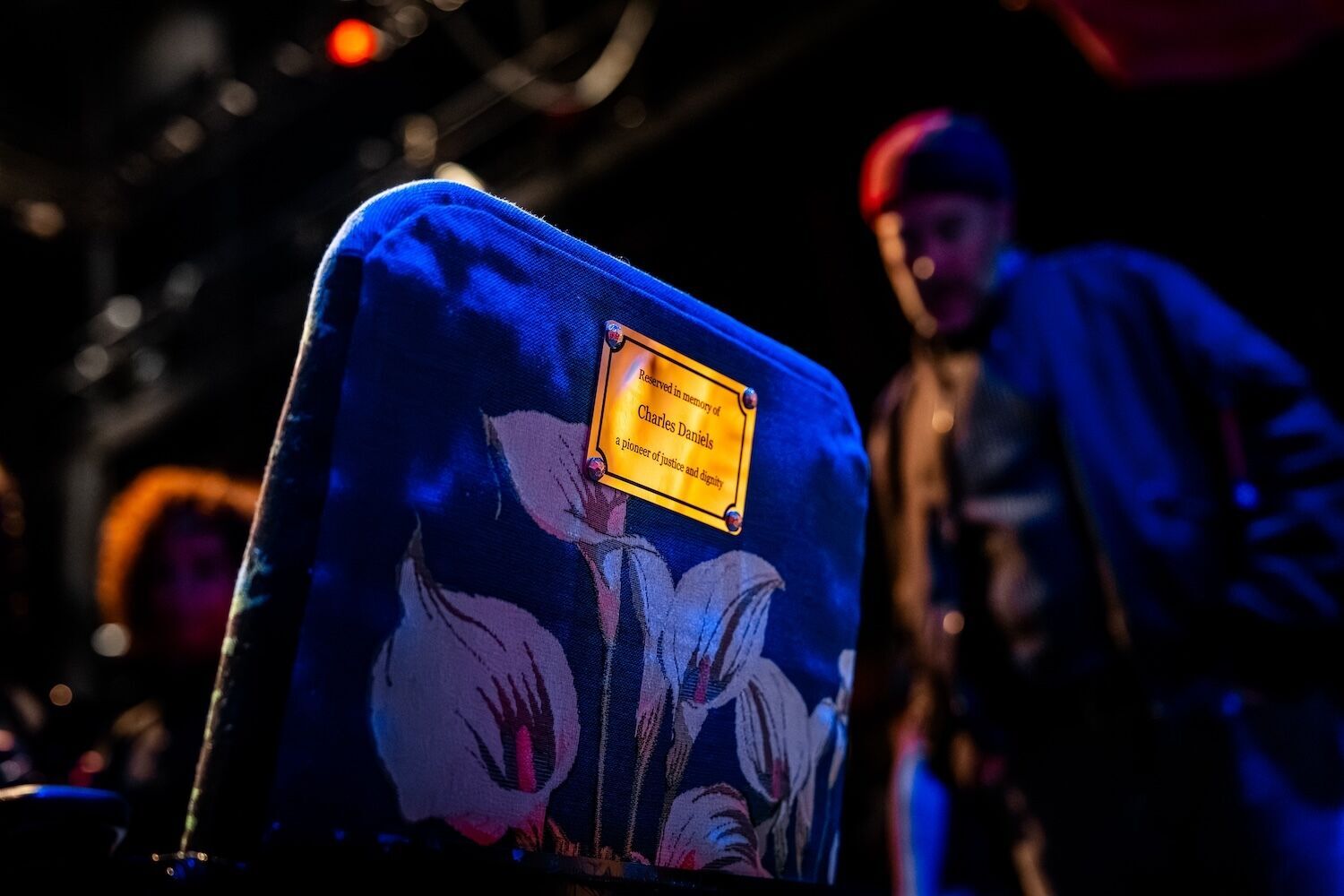
At a commemoration event on February 3, 2026, the Grand announced that seat H3 will be permanently reserved for Charles Daniels.
“I am very happy to see that they’ve chosen to honour him in that way,” said Mohamed. “My initial thoughts are that it is striking to have him be honoured during a time where there is such hostility towards immigration.”
Mohamed’s article in The Sprawl prompted historian and filmmaker Cheryl Foggo to research Daniels further and create the short 2019 documentary Kickin’ Up a Fuss: The Charles Daniels Story (viewable here).
“Bashir’s impetus to tell more of this story has had ripple effects down the years,” said Foggo, one of the commemoration organizers.
Foggo says the racism Charles Daniels faced in Alberta over a century ago is disturbingly relevant in 2026.
“It’s really interesting how much the rhetoric of today resembles the rhetoric of those years,” said Foggo. “How much immigrants were not seen in a positive light, and how much immigrants are being blamed for a host of problems that they are not responsible for.”
“I have so many friends in my circles who are people whose families have immigrated here, and it’s really devastating to see how at risk they feel.”
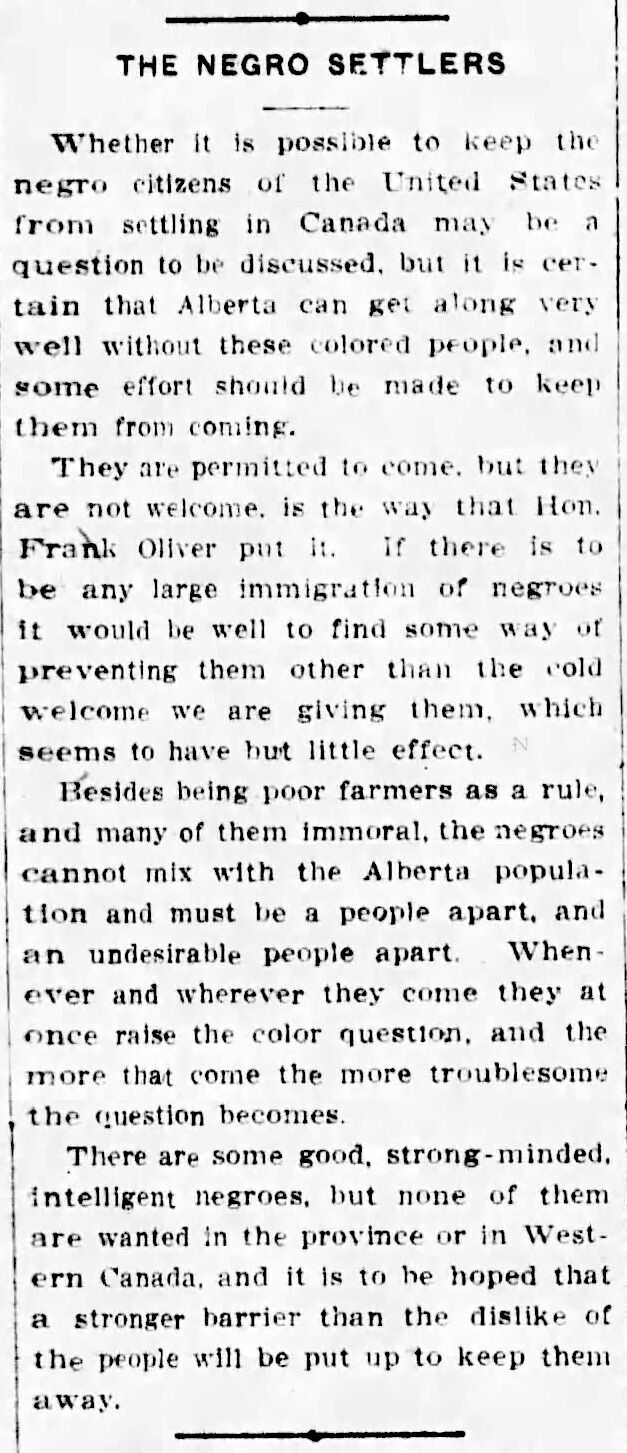
In Daniels’s day, with Black migration from the U.S. into Alberta in 1910 and 1911, fears were raised over a “dark tide” of immigrants flooding over the province’s borders and “crowding the white people out.” One Alberta cabinet minister said it was up to the federal Liberal government to “legislate for this evil.”
Later that year Prime Minister Wilfrid Laurier signed an order in council barring “the landing in Canada of any immigrant belonging to the Negro race, which is deemed unsuitable to the climate and requirements of Canada.” Though the order in council never became law, it helped halt that wave of Black immigration.
It’s really interesting how much the rhetoric of today resembles the rhetoric of those years.
Smith condemns feds for ‘flood’ of immigrants
After Premier Danielle Smith initially called for more immigrants into the province, she said February 19 that Alberta can no longer “permit the federal government to flood our borders with new arrivals” (even though immigration levels have dropped dramatically).
Smith plans to put nine referendum questions to Albertans later this year, including one asking voters if they support “the government of Alberta taking increased control over immigration” and “ensuring Albertans have first priority” for new jobs.
Another referendum question will ask about charging non-permanent residents a fee for healthcare and education services, echoing government tactics that were used, in Charles Daniels’s lifetime, to deter and penalize Chinese immigrants.
They could of course put a head tax on every negro that would be so high as to practically exclude him the same as they do in the case of the Chinese.
All of this is happening against the backdrop of a separatist movement that seeks to cut Alberta from the rest of Canada. To the south, meanwhile, U.S. President Donald Trump regularly vilifies immigrants from countries such as Somalia.
Bruce McAllister, executive director of Premier Smith’s office, recently posted on social media: “Why import from nations with failed systems when our Judeo-Christian heritage and principles have worked so well here?”
For Foggo, whose great-grandparents came to Canada from Oklahoma in the 1910 migration, much of this sounds familiar. “When you go back and you look at the newspapers of the time, and boards of trade with anti-Black petitions and whatnot, you see almost word for word the same kind of rhetoric,” Foggo said.

“I see a lot of politicians during Black History Month talking about John Ware and Violet King and holding up these people as examples of Black excellence and success in the province,” said Foggo.
“If they are also participating in anti-immigrant rhetoric today, their words of praise for the legacies of previous immigrants ring hollow.”
‘It’s about what we choose to do with that history’
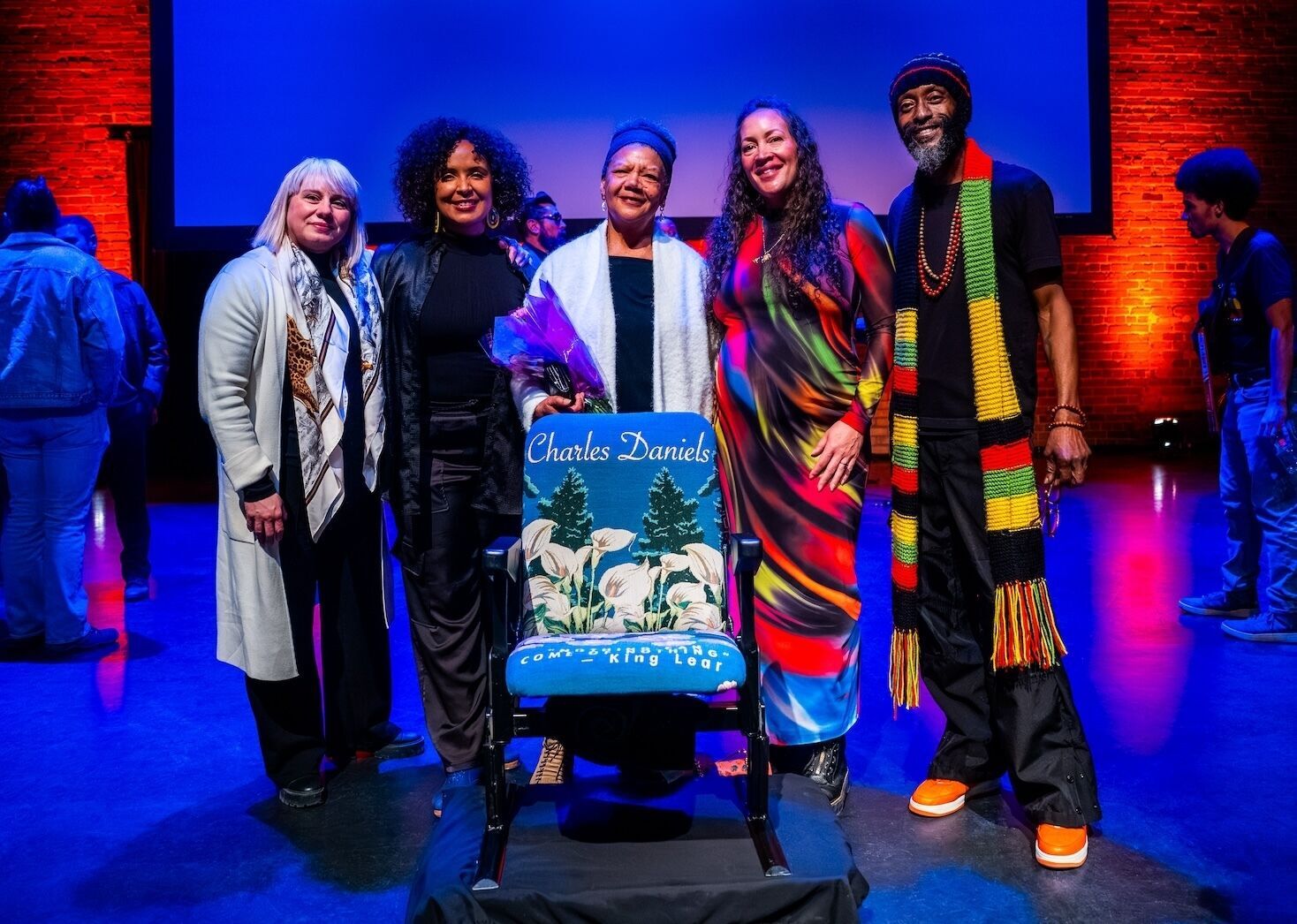
To honour Charles Daniels, textile artist Simone Elizabeth Saunders created a new cover for seat H3 at the Grand, the chair Daniels was denied in 1914. Its Alberta roses, Saunders said, represent strength and resilience, while the calla lilies signify mourning and loss.
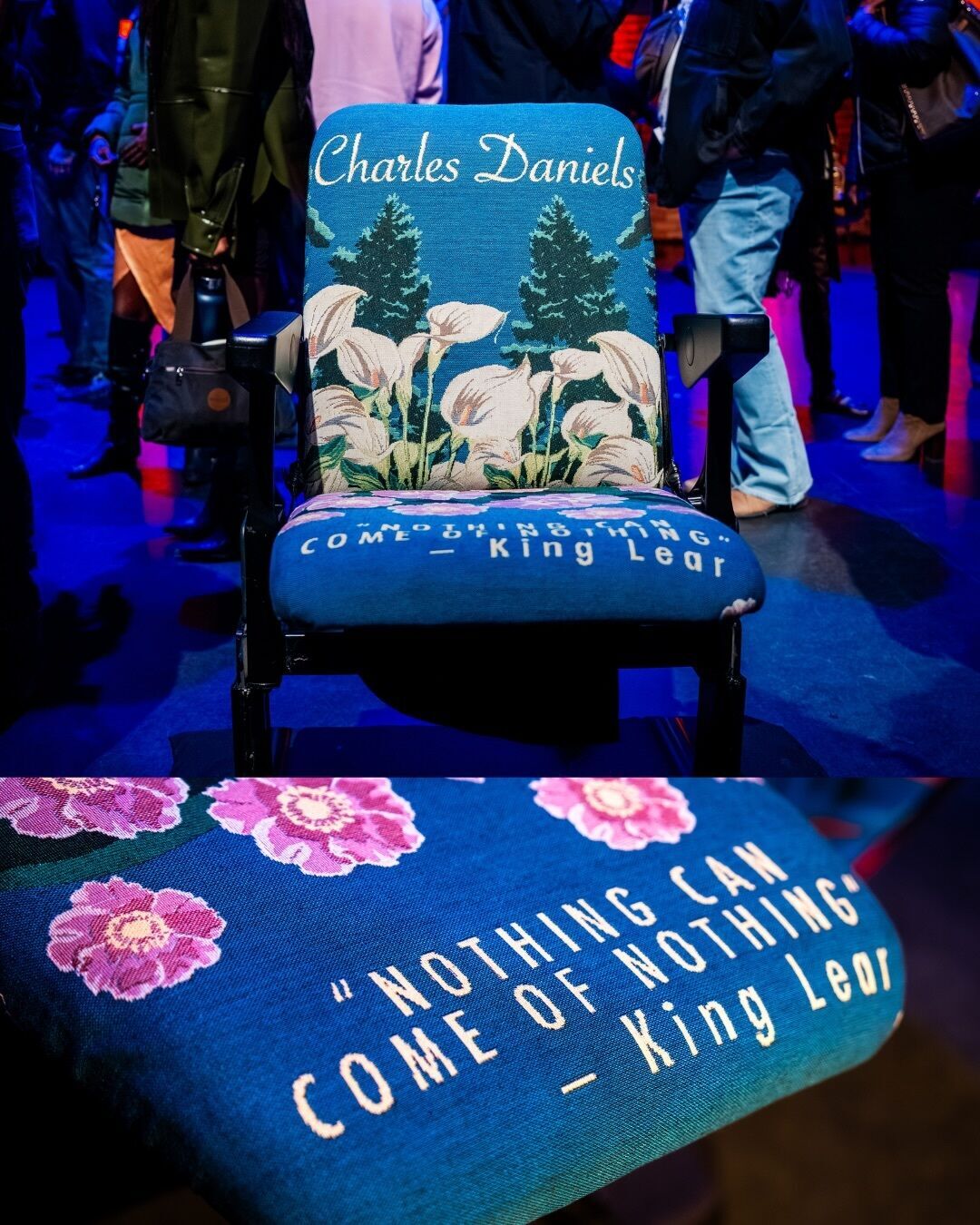
“Charles Daniels came to see a production of King Lear by William Shakespeare, and he was never able to see the curtains rise,” said Saunders at the commemoration. “But in King Lear, in the first scene, he is having a conversation with his daughter... and he had a teaching moment.”
“And one thing that he said was: Nothing comes of nothing. And to me, that really resembles what Charles Daniels did. He used his voice. Nothing would have come from nothing if he didn’t stand up for himself.”
The commemoration was organized by Foggo, poet Wakefield Brewester and tap dance artist Lisa La Touche. The Grand plans to mark Daniels’s story with an event every February. A Charles Daniels Legacy Fund is also being organized.
“When I became executive director of the Grand, one of the first things I was told was Charles Daniels’s story,” said Erynn Nicole Lyster. “I remember thinking, ‘How is this not something we know?’ I grew up here in Calgary.”
Commemorating the legacy of Charles Daniels, said Lyster, “is about remembering that injustice but more importantly, it’s about what we choose to do with that history.”
“It’s really important for people to understand how much we are part of living history,” said Foggo. “We don’t always know when we ourselves are making history, because we’re just living our lives. And that was exactly the case for Charles Daniels and his friends.”
“They weren’t thinking, ‘We’re making history.’ And yet, here we are, 100-odd years later, talking about the work they did.”
“And if you peel back the layers of Black life in this city—Black life, culture, the arts, business—every single layer, as you peel it back, is built upon the efforts of previous generations. So Bashir’s work is very important. Even though it’s more contemporary, it is now a part of a historic legacy.”
Jeremy Klaszus is founder and editor of The Sprawl. If you value The Sprawl's independent Calgary journalism, please support our work!
Support independent journalism—help us get 90 new members!
Sign Me Up!To celebrate The Sprawl’s 9th anniversary, we’re aiming to get 90 new members by the end of September. If you value in-depth, curiosity-driven journalism, support our work so we can keep digging into municipal issues in Calgary!