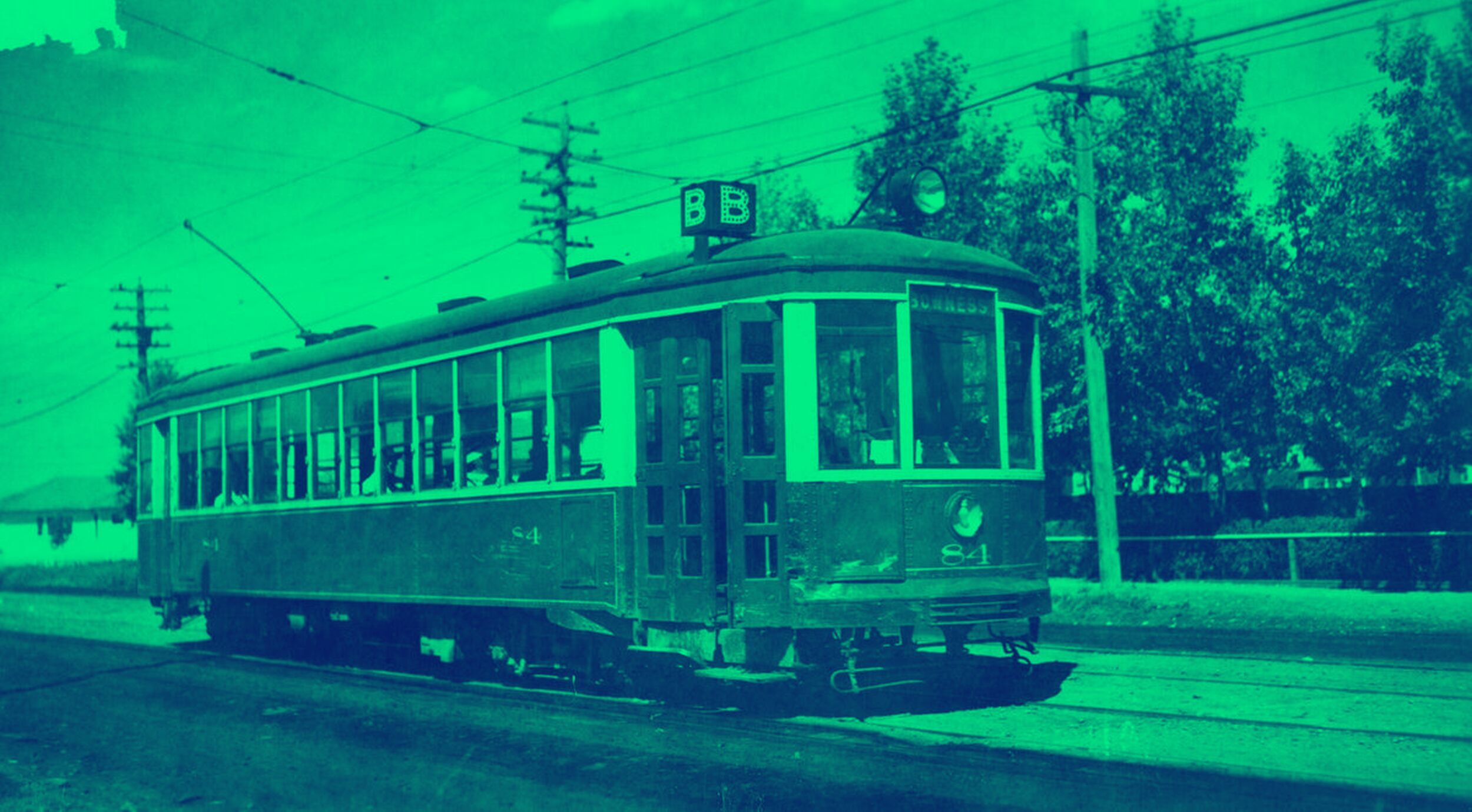
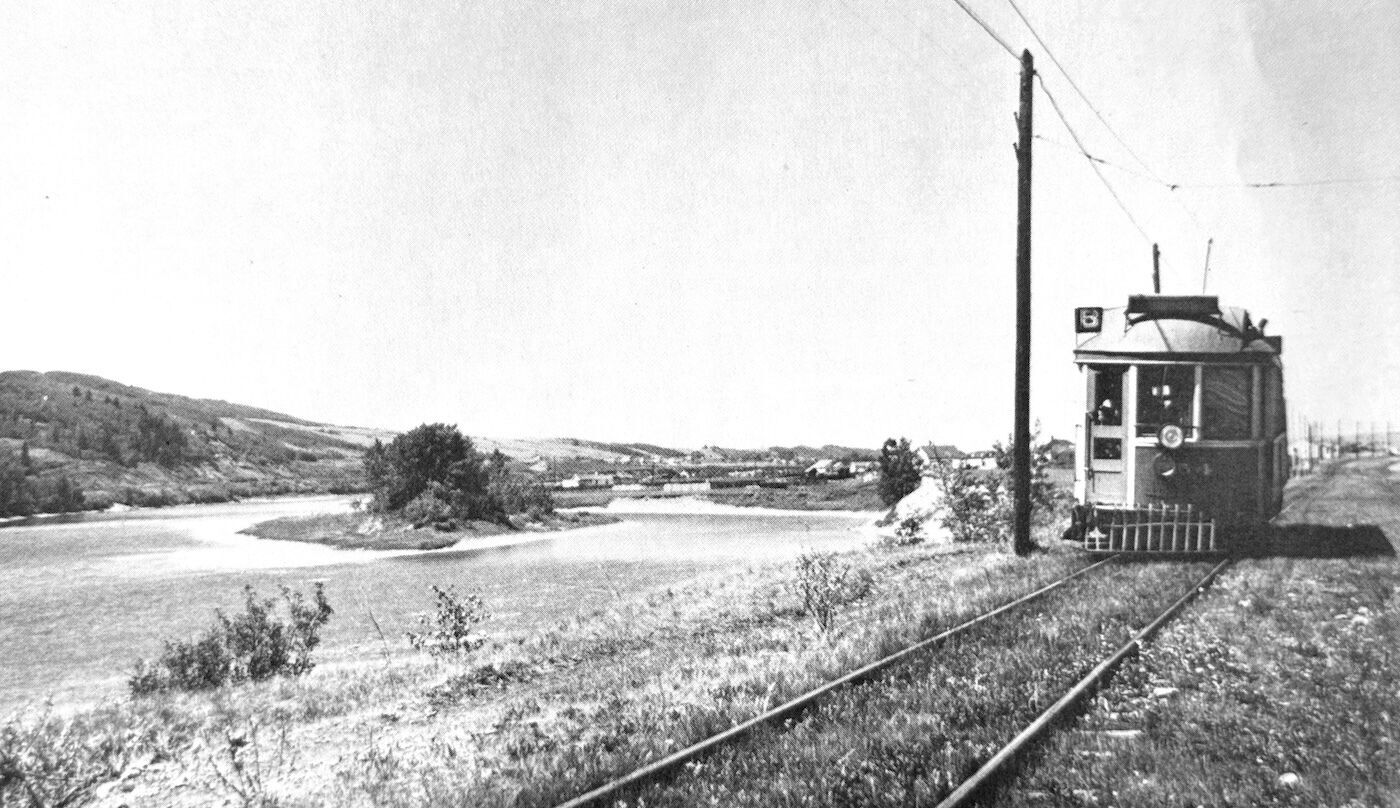
The Bowness streetcar in 1947. (Glenbow Archives, University of Calgary)
The story behind Bowness Park and its streetcar
‘It was the ultimate leveller — a club where no one was excluded.’

I've spent much of this week digging in the City of Calgary archives.
One of the delights of archival research is the tangents one unexpectedly goes on. While researching another story, I found myself on a Bowness side trip.
In a way, this goes back to my roots. In 2003, after my first year of journalism school at Mount Royal College, I got a summer job with the City of Calgary to make a short documentary video about Bowness.
Okay, documentary is a stretch. Promotional video would be more accurate.
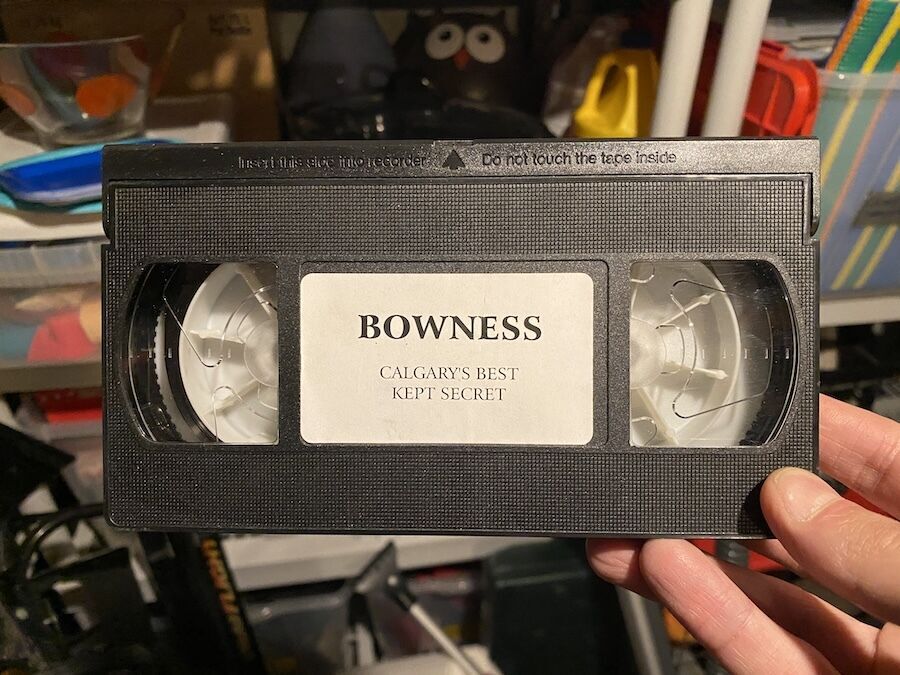
Yes, I worked for city hall, once upon a time. The result was the little-known cinematic masterpiece called Bowness: Calgary's Best Kept Secret. I still have the VHS tape in my basement (and digitized it a couple years ago!).
Working in Bowness, I quickly learned that there was a rich history in this part of the city, along with a fierce local pride.
For the project, I got to interview many Bownesians, including some of the old-timers. One of them, Larry Clayden, had been a firefighter for the town of Bowness before Calgary annexed it in 1964.
Clayden recalled riding the Bowness streetcar, which stopped running in 1950, as a boy. He described how, in wintertime, the conductor would tend to the furnace as the streetcar clattered along.
“He'd start stoking up the coal fire,” he told me. “And the streetcar would be going like this down the tracks”—he waved his arms side to side—“and there was a turn at the end, and you were always afraid that maybe it wasn't going to make that turn.”
This story intrigued me. A streetcar! It had been gone for over half a century, but the Bowness streetcar still had a strong hold on the local imagination.
It begged a question: Why did the streetcar disappear?
The beginnings of Bowness
Calgary was booming and expanding rapidly when the Calgary Municipal Railway first launched its streetcar service in 1909. Bowness was unlike other subdivisions of the day—Bankview, Sunalta, Tuxedo Park—because it was so far from town.
Its far-flung location was meant to be part of its appeal.
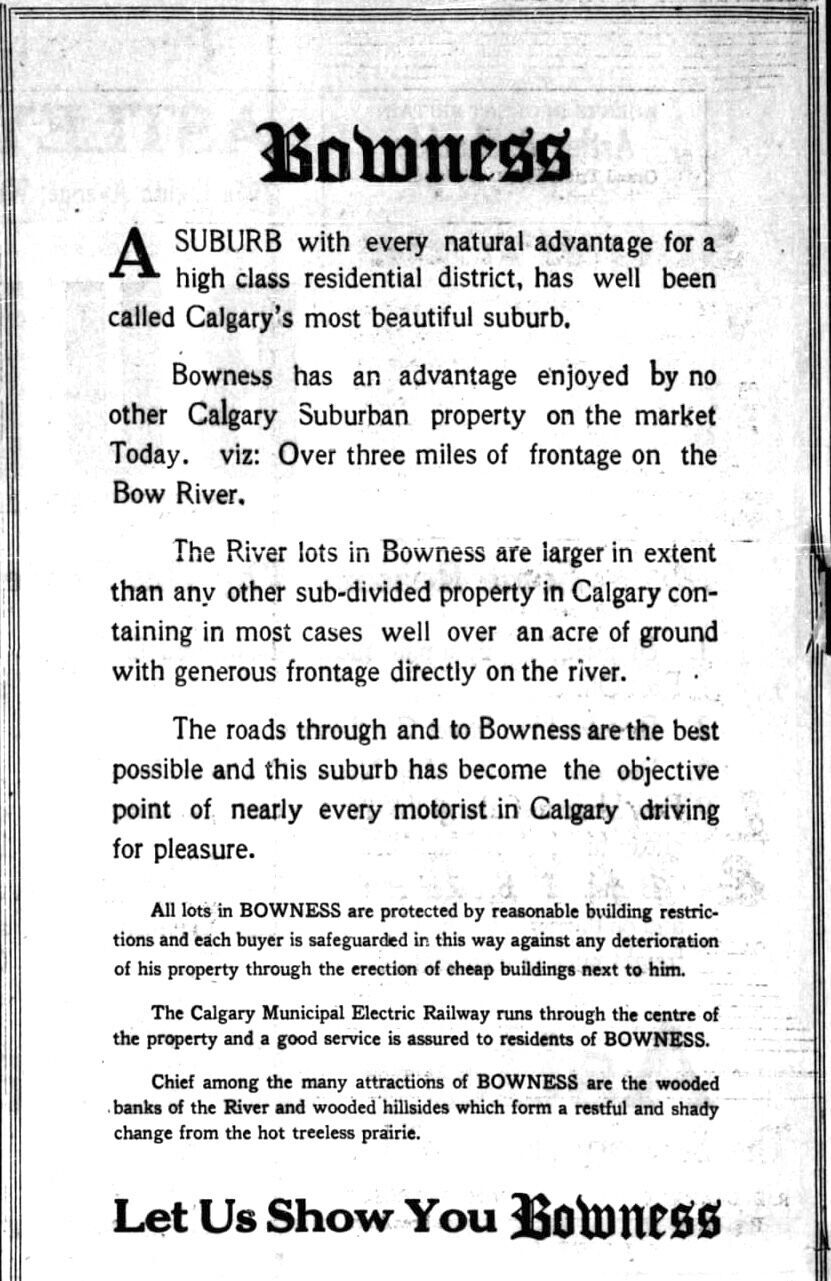
John Hextall, a landowner and the son of a silk merchant, planned an exclusive country development of estate homes by the Bow River. Newspaper ads in 1912 and 1913 promoted Bowness as “a suburb of beautiful homes” with big lots “away from the dust and traffic of the city.”
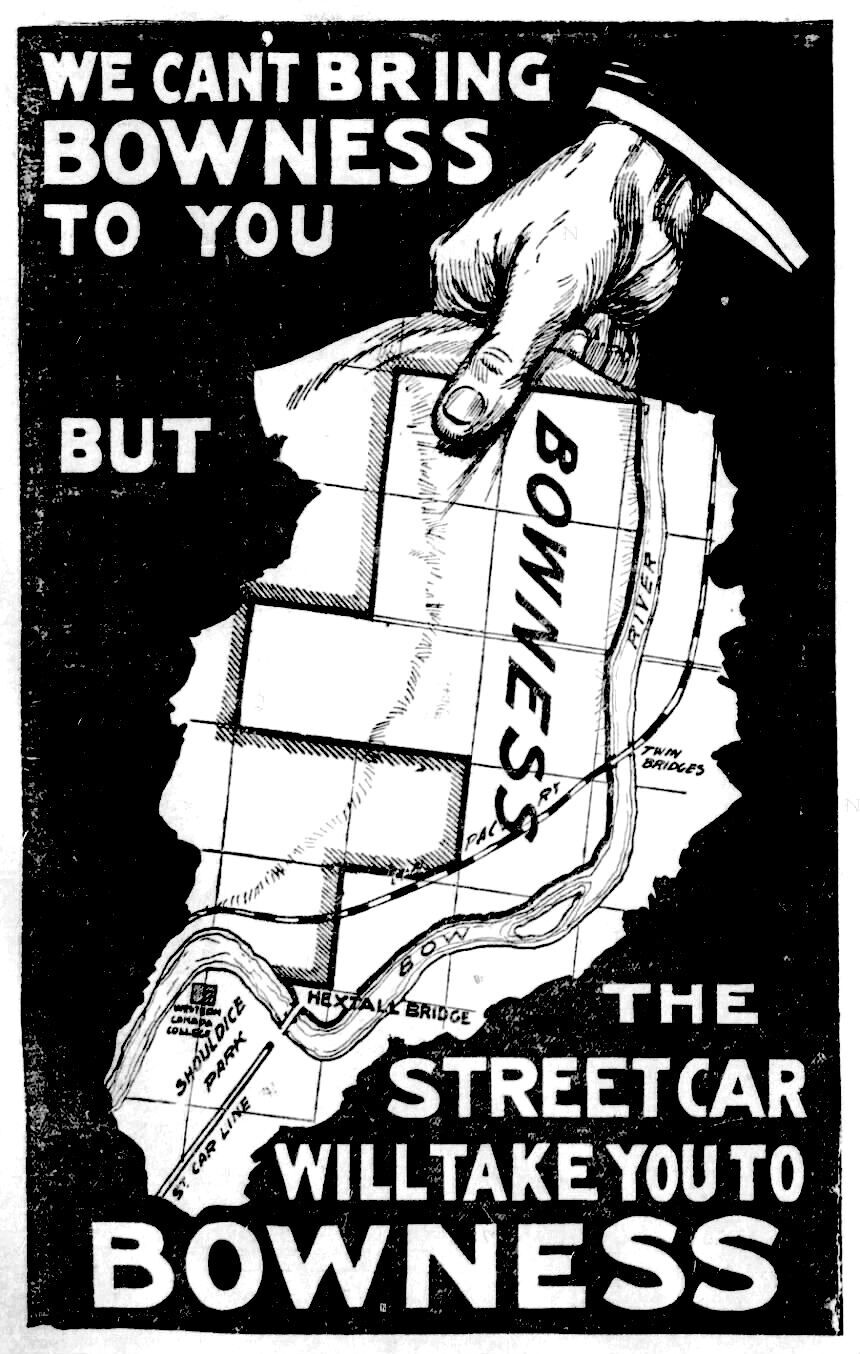
Hextall built a bridge over the Bow River in 1911 for exclusive access to his luxury enclave. At first, he made clear that it was not for public use.
“No persons whatever except purchasers of land in the Bowness subdivision, and others holding licenses from me, have any right or authority to use the bridge or its approaches,” Hextall stated in a 1911 ad in the Albertan.
But later that year, Hextall offered the City of Calgary two islands in the Bow River for a park—which became Bowness Park—if the city would extend streetcar service from Shouldice Park over his bridge into Bowness. The city agreed.
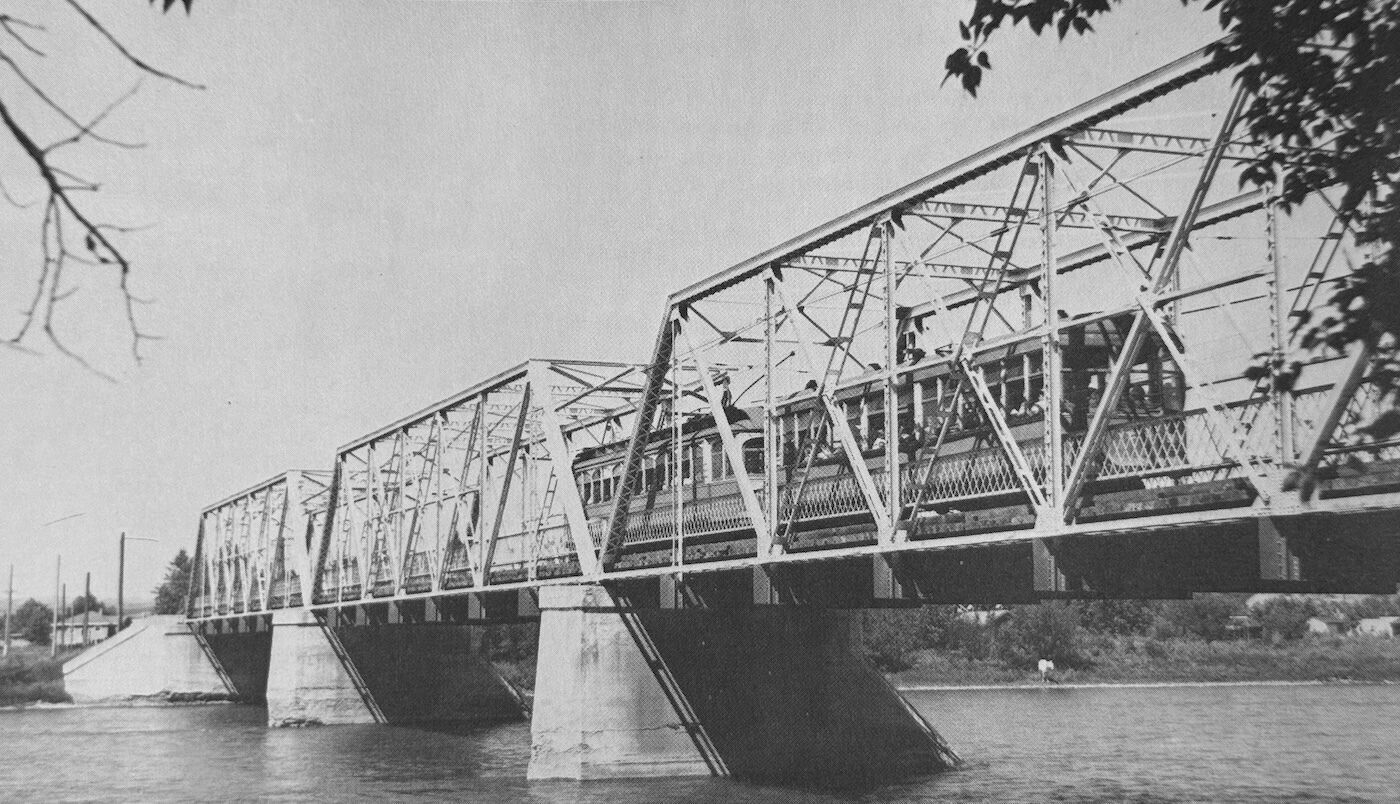
But in 1913, Calgary's real estate boom went bust, and so did Hextall's scheme. He died in 1914.
Now the city was stuck with a streetcar line running pretty much to the middle of nowhere, without the predicted ridership to support it. The Herald called it a money-losing “white elephant.”
An editor for Saturday Night magazine had already suggested such a fate in 1912. “How and why this single trolley line was laid between Calgary and the wilderness known as Bowness is hard to conceive,” he wrote, adding that it was built “in a fit of emotional insanity.”
In 1915, city leaders floated a possible solution—that “Bowness Park should be turned over as an asset to the street railway for improvement to try and make that line a paying one.” In 1917, that's exactly what happened.
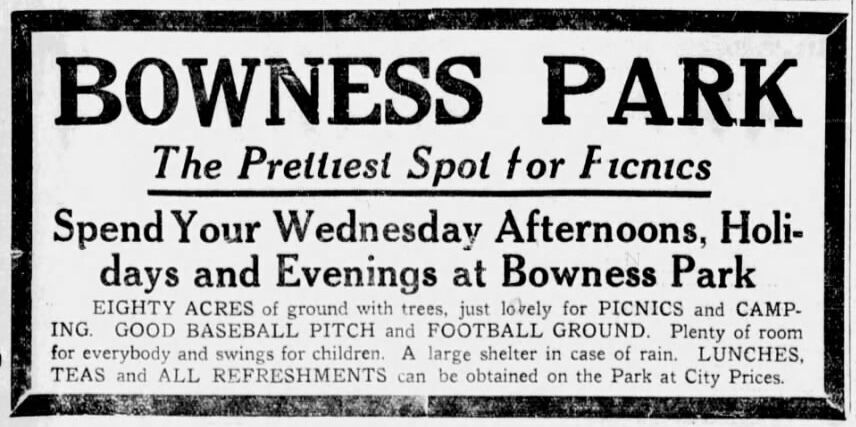
The Calgary Municipal Railway's ‘pleasure resort’
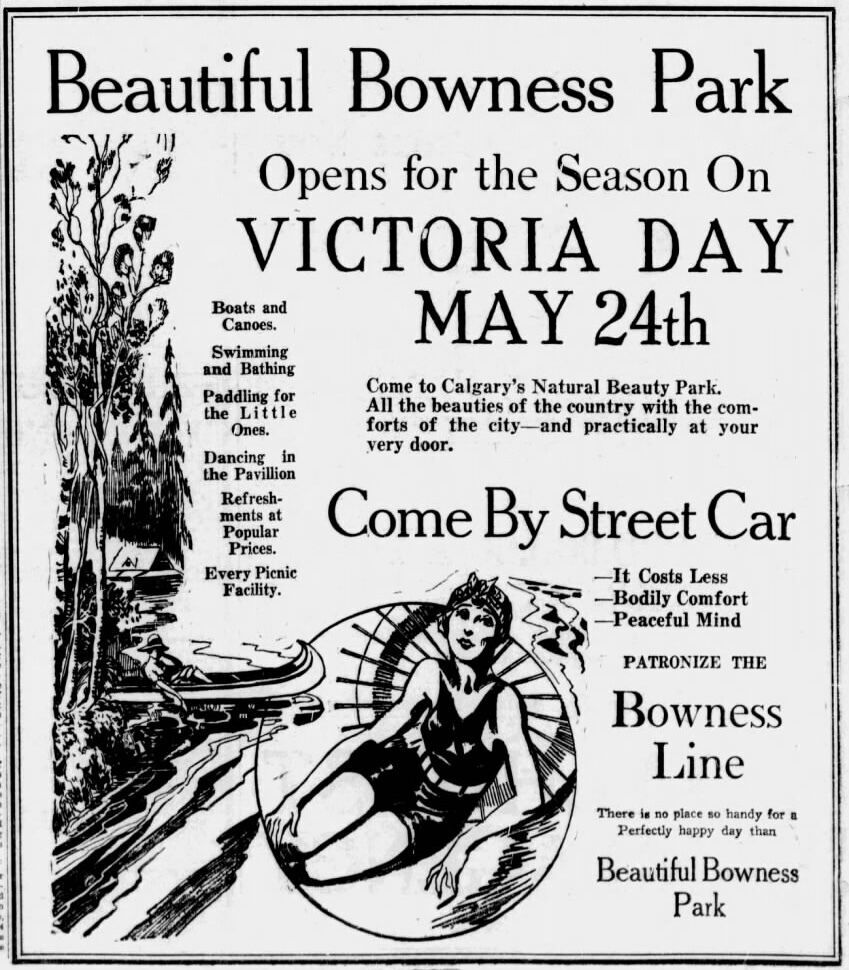
Bowness Park was already a popular picnic spot, but now there were plans for turning it into a “Coney Island of the northwest” with a dancing pavilion, a merry-go-round, band concerts, swimming pools and a lake for canoeing.
The Calgary Municipal Railway went all out, turning Bowness Park into a full-fledged amusement park that became a popular getaway spot on weekends.
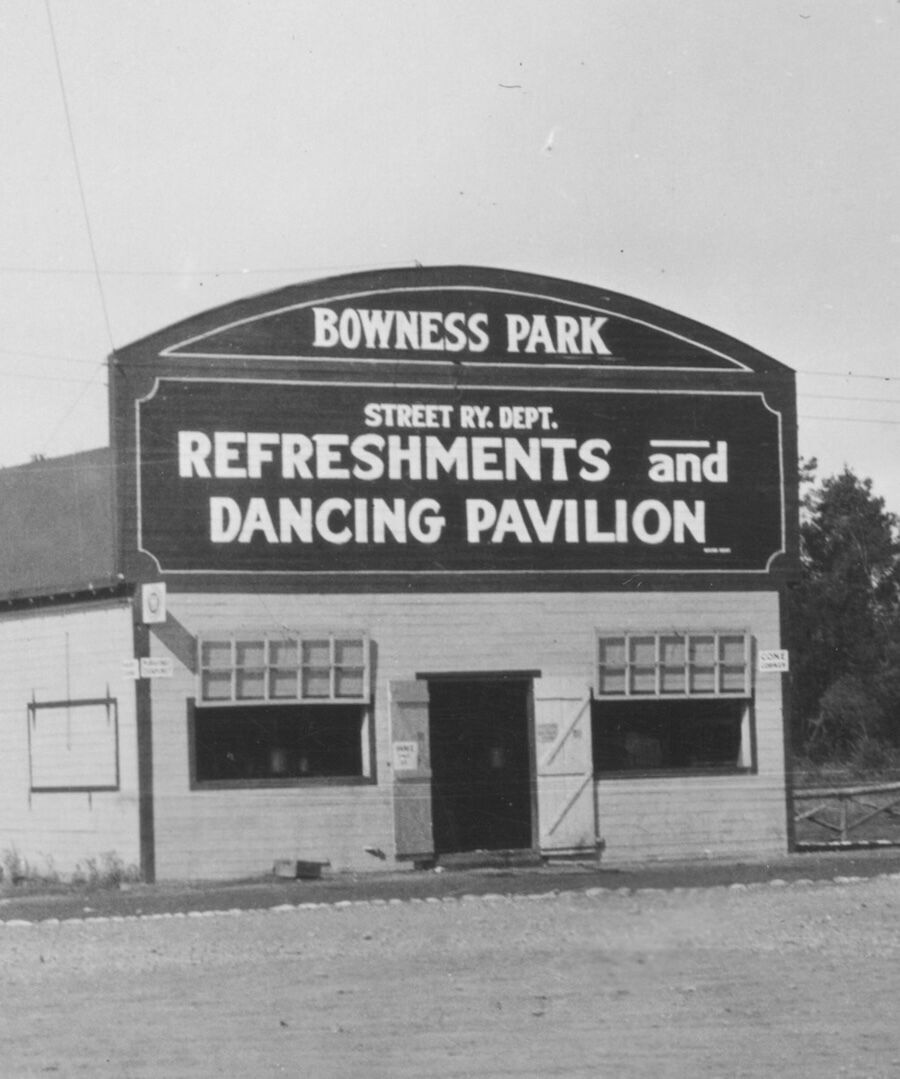
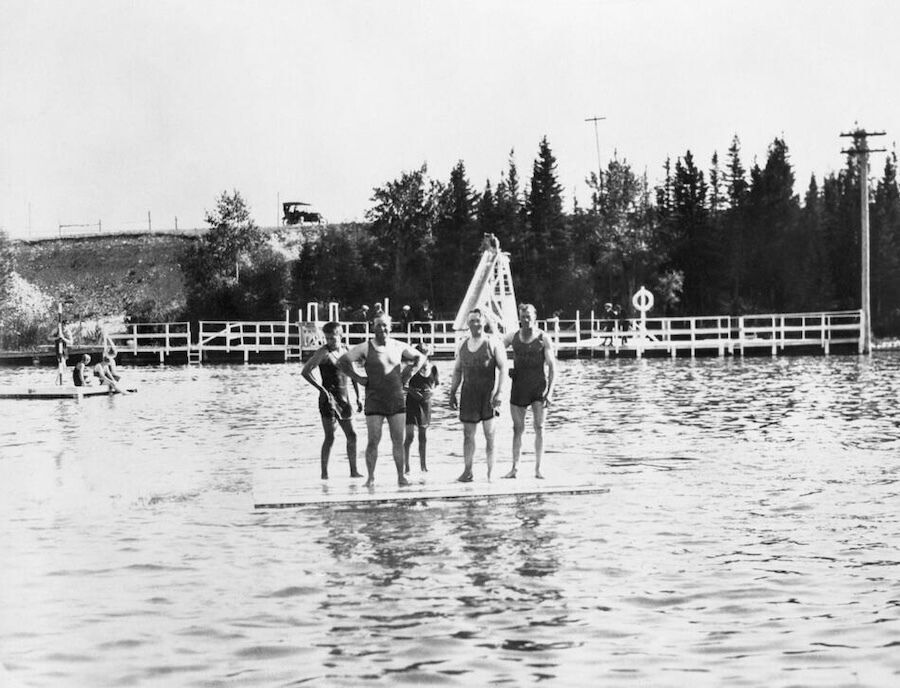
The hope was that all of this could be a moneymaker for the public transit system. And for decades, it was.
Every year, on the May long weekend, the park reopened with great fanfare.
But there was a threat to this plan, and to the viability of the entire streetcar system: the private automobile.
The streetcar increasingly had competition.
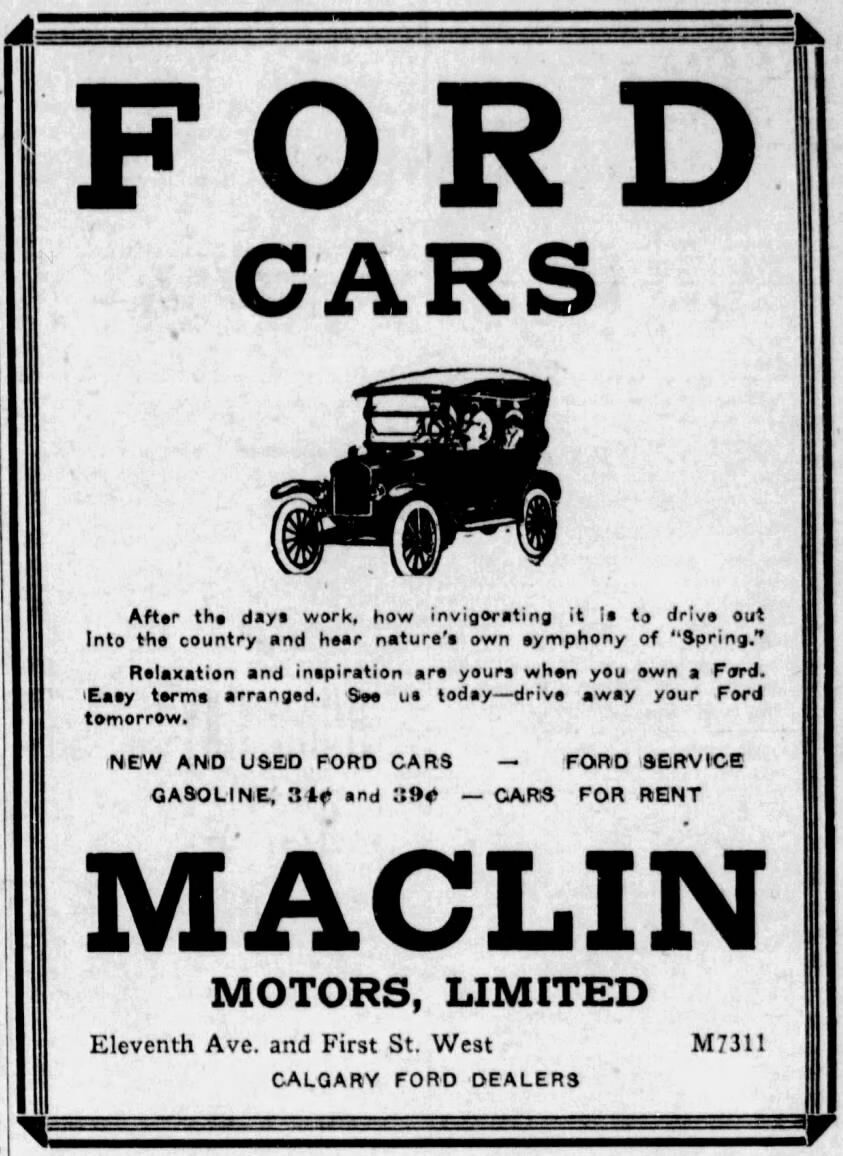
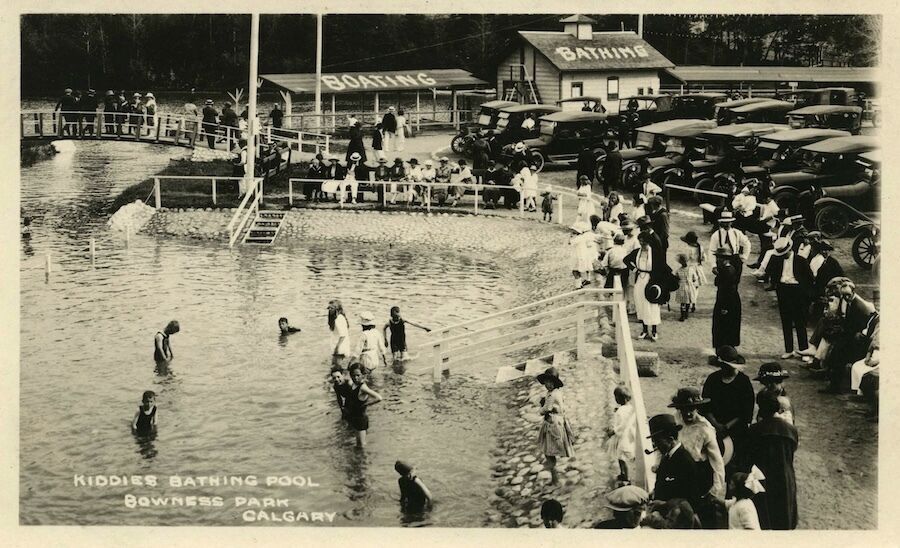
As the wealthiest Calgarians got cars, they were driving to Bowness Park instead of taking the streetcar. In 1918, the Calgary Municipal Railway sought to make motorists pay an entrance fee to get in—which sparked controversy.
“It is a street railway park,” railway superintendent Thomas McCauley told the Albertan. “Automobiles traveling over the roads only decrease the street railway traffic and the dust is a nuisance to the people who come out for picnics.”
He added: “I do not think it fair that people who ride on the street railways should pay for the upkeep of a park for those who have automobiles.”
In 1919, McCauley said revenue from the automobile fees would be used for building roads and driveways in the park. “Elaborate preparations,” he said, “are being made for the accommodation of automobile owners. A district will be set aside for the parking of cars...”
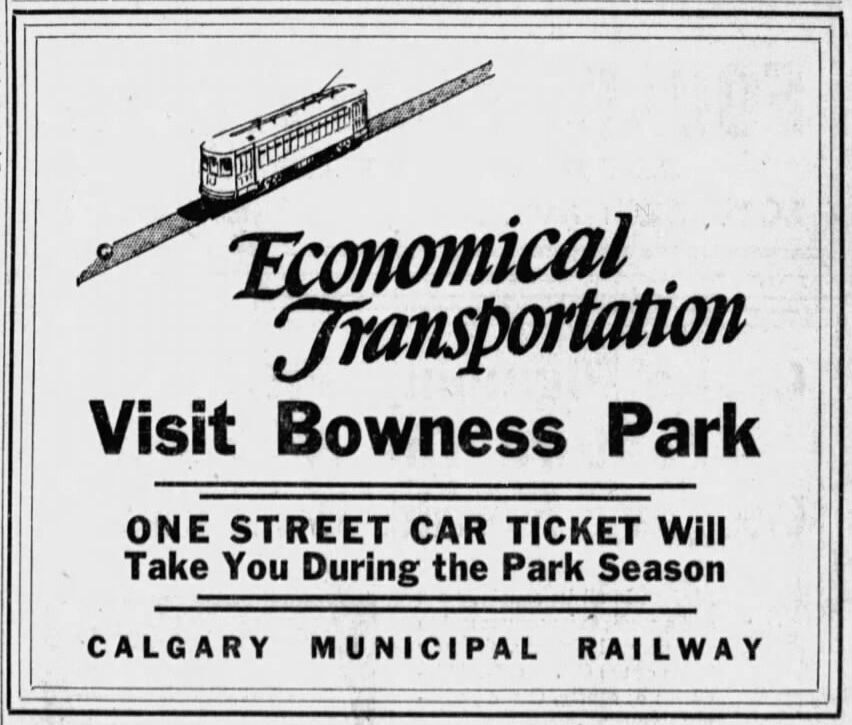
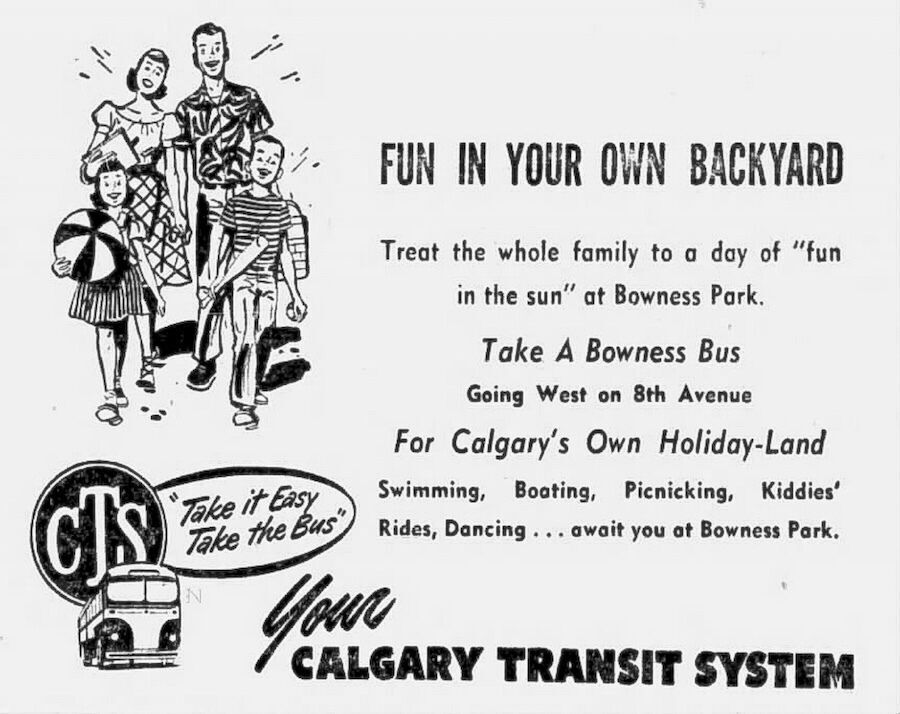
Car ownership in Calgary continued to grow in the 1920s. In response, the railway emphasized that the streetcar was the most affordable way to get to Bowness Park from the city, with cars leaving every 15 minutes from 8th Avenue downtown on weekends.
“COME BY STREET CAR—IT COSTS LESS,” stated one 1928 ad in the Albertan.
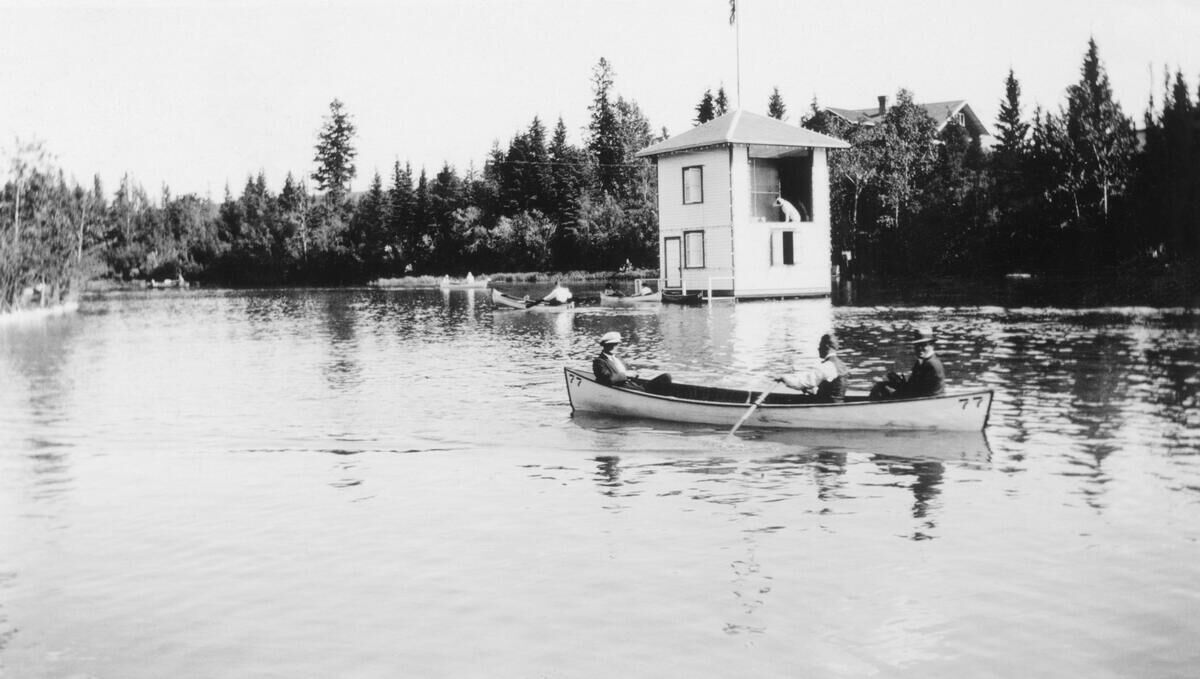
For Bowness, the streetcar was a link to the wider world
Meanwhile, at the Bowness end of the line, the streetcar was an integral part of local life.
“Bowness developed in fits and starts,” writes Valentine Urie in the 2005 local history book Bowness: Our Village in the Valley. “First came the wealthy and the middle class to be joined and later outnumbered by those pushed out of the city by high taxes and expensive housing. They squatted on the open prairie, building huts, shacks and small dwellings often with their own two hands.”
“All melded together on the streetcar—squatters and businessmen, professionals and tradesmen, stock brokers and the unemployed. All rode the streetcar. It was the ultimate leveller—a club where no one was excluded.”
“Even those wealthy enough to own a car often used the streetcar. Two car families were a thing of the future and although a driver's license was yours for the asking, few women bothered to obtain one. If their driver husband was unavailable, they rode the streetcar.”
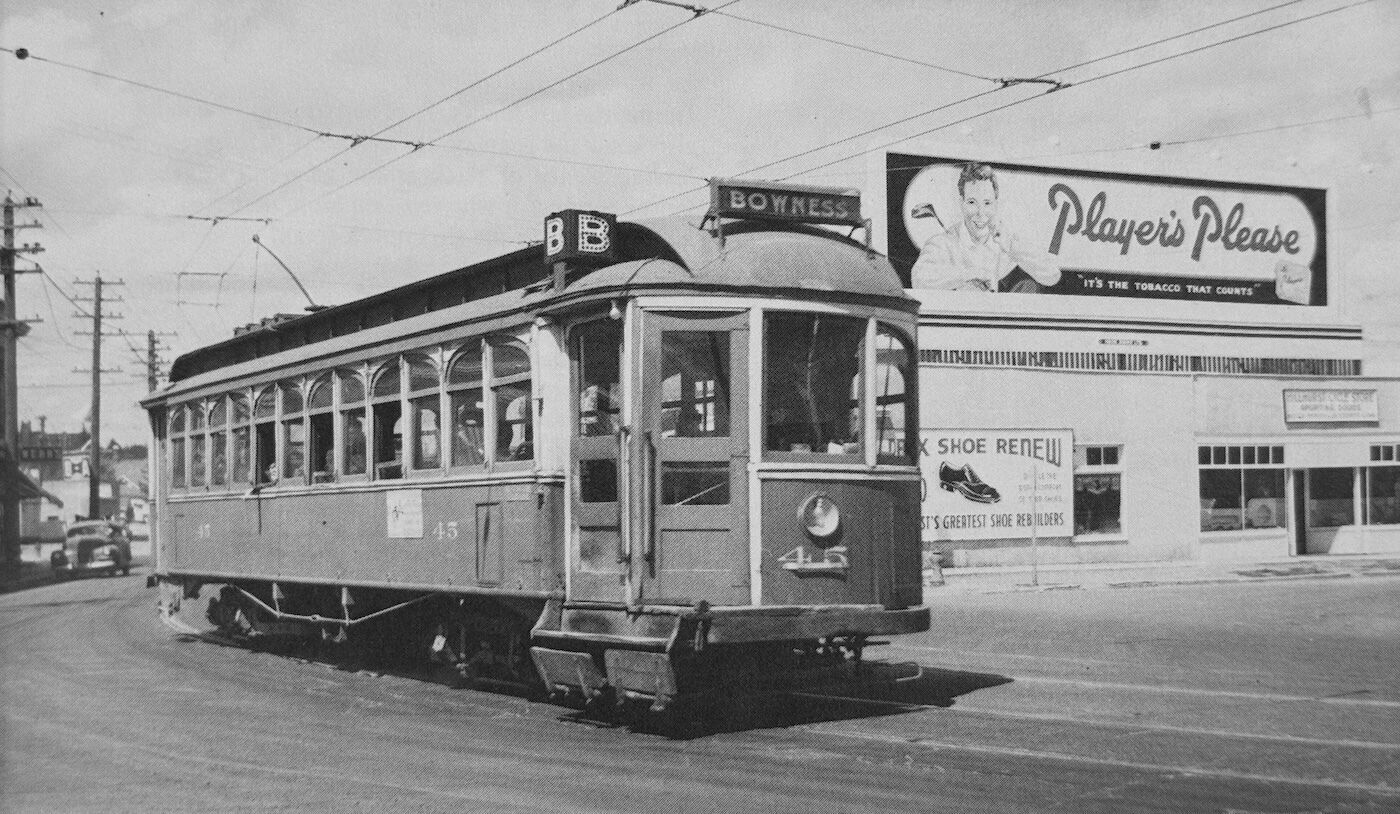
All melded together on the streetcar — squatters and businessmen, professionals and tradesmen, stock brokers and the unemployed.
Auto companies push city hall to scrap the streetcar
In the 1940s, Calgary’s streetcar equipment languished while auto companies lobbied city hall to scrap it and replace streetcars with motor buses.
“The system is beyond repair and it would be economically unsound to replace or reconstruct it,” stated a 1945 report on the Calgary Municipal Railway commissioned by the Ford Motor Company of Canada, which was trying to sell its gas buses to the city. “From the standpoint of beautification of the City alone, street car tracks, overhead wires and a multiplicity of poles should be done with.”
During World War II, streetcars were full beyond capacity and the street railway posted budget surpluses. But the auto lobbyists warned that it would not last.
“In normal times a public transportation system carries only what we term ‘necessity riders’ (those who cannot provide their own transportation privately),” stated the Ford report. “The only exception to this is in cities where transportation systems modernize their equipment and operation and operate on schedules sufficiently frequent to offer real competition with the private automobile.”
“In other words, the present system in Calgary could never compete with the post war private automobile. A modern system can, to at least a reasonable extent.”
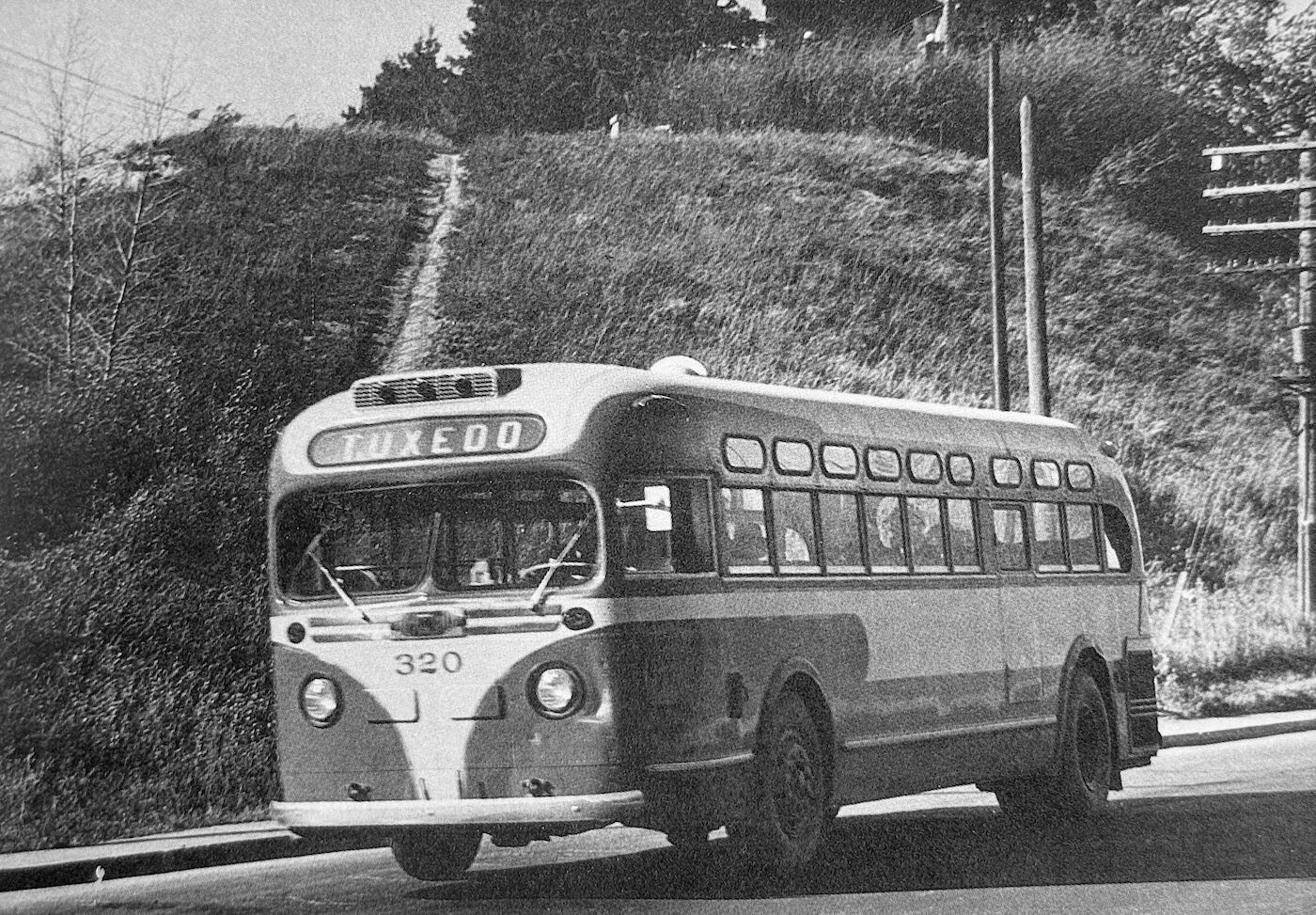
Meanwhile, the transit department, renamed the Calgary Transit System in 1946 as the city started switching to electric trolley buses and motor buses, kept running Bowness Park—a situation that, by 1949, perplexed one consultant reviewing transit in the city.
“While forty years ago it was usual for a street railway to operate an amusement park, for the past twenty years, since the motor vehicle opened up the whole countryside for picnic and outing purposes, few transit systems have interested themselves in recreation parks,” wrote Norman D. Wilson.
He noted that “the ownership of automobiles in Calgary has increased spectacularly in the last two years since motor cars have been more readily available. The extensive area of the city, its scattered development and the relatively high standard of living of its people all point to a fairly high density of automobile ownership.”
The last streetcar ran in 1950.
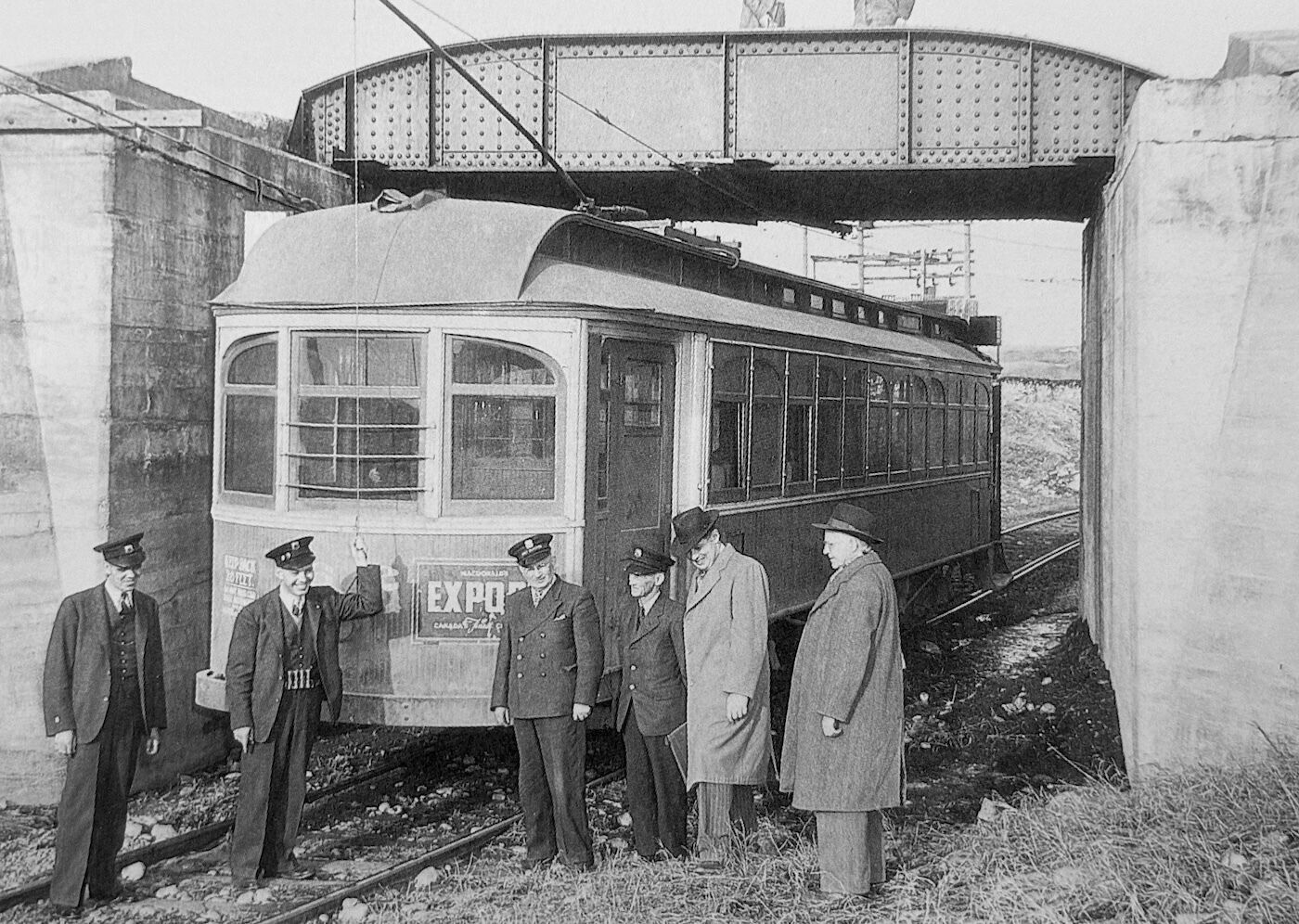
The Bowness line, now a bus route, was losing money. In response, Calgary city council doubled the fares to Bowness in 1951 during the summer park season from one to two tickets. It had already cost two tickets in the off-season—an early example of zone-based fares, which Calgary Transit is again contemplating in 2026.
“The fact of the matter is that the Bowness line has been a deadweight about the neck of the Calgary Transit System for a long time,” the Herald editorialized on April 19, 1951, after city council approved the fare boost. “The extra charge should have been instituted before this.”
The present system in Calgary could never compete with the post war private automobile. A modern system can, to at least a reasonable extent.
“There seems to be no earthly reason why the Transit System should continue to run Bowness Park in this day and age,” the Herald added. While the park wasn't losing money, it wasn't making much either and was “just another administrative headache for the already overburdened transit officials.” It made sense “when cars were a novelty,” but no longer.
In the 1950s, with car ownership surging still further, Calgary's population nearly doubled—but transit ridership plummeted.
The Calgary Transit System turned Bowness Park over to the city parks department in 1961.
And in 1964, Bowness was annexed by Calgary.
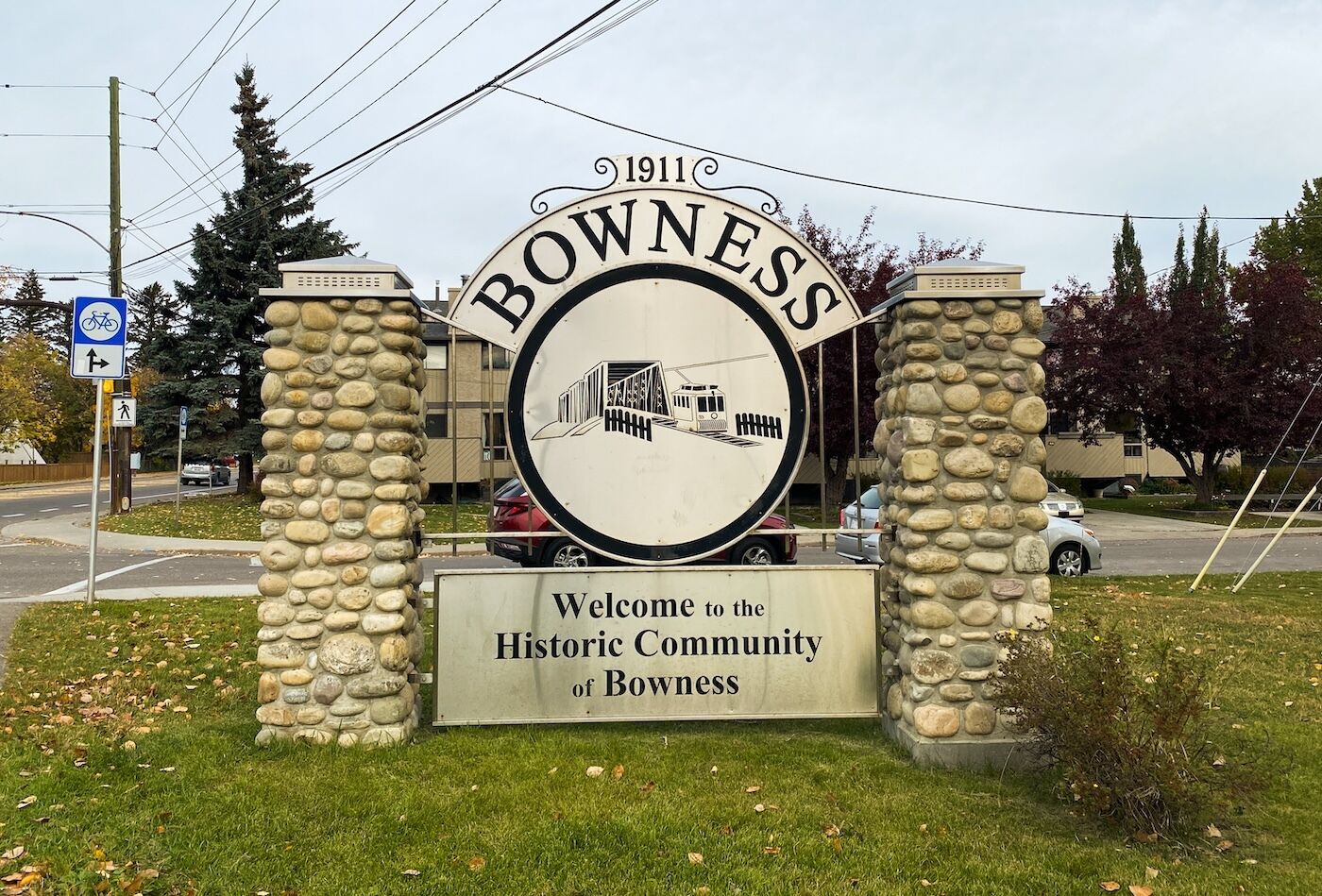
That's all a long time ago now. But there is a strong local pride in Bowness to this day, and the streetcar remains part of that local memory and pride, a symbol that you can still see throughout the community.
At Bowness Park, you can still find a tea house, boat rentals and a wading pool. A mini-train also runs during the summer—a reminder of the amusement park that once was, and the streetcar that took Calgarians there on the rails.
Jeremy Klaszus is founder and editor of The Sprawl. If you value our local journalism, support our work—and we'll send you a transit pack (with stickers and a CTrain zine) in the mail!
Support independent journalism—help us get 90 new members!
Sign Me Up!To celebrate The Sprawl’s 9th anniversary, we’re aiming to get 90 new members by the end of September. If you value in-depth, curiosity-driven journalism, support our work so we can keep digging into municipal issues in Calgary!