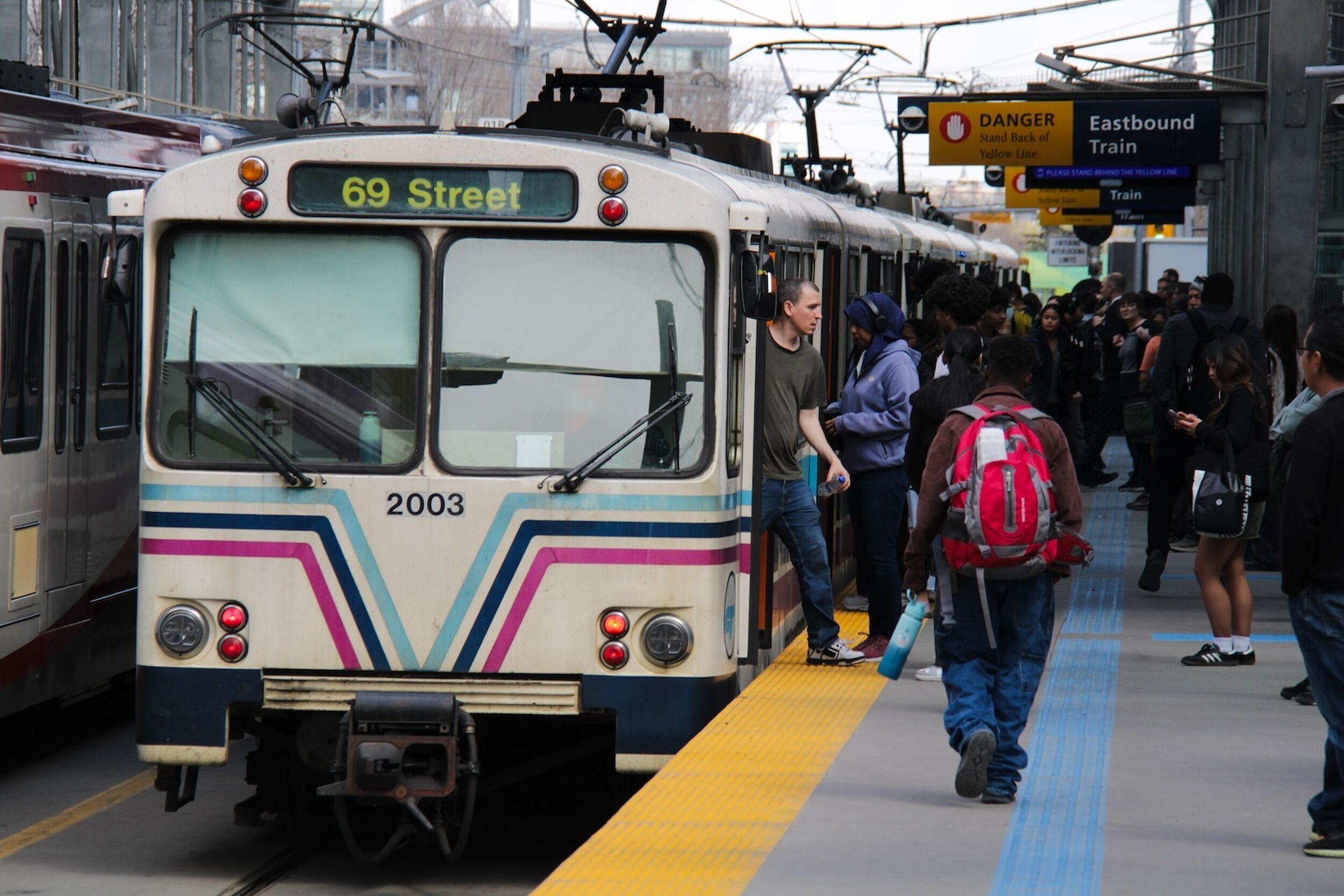
City Hall CTrain station on May 7, 2026. Photo: Jeremy Klaszus
On the CTrain free fare zone, Calgary city hall is having a memory failure
It’s not a half-century ‘pilot project.’

Calgary city hall has no memory.
Perhaps that is unfair. Let me revise that: City hall has a poor memory.
On May 7, Calgary Transit recommended to city council’s infrastructure and planning committee that the CTrain free fare zone be eliminated on August 1 “to reduce disorderly behaviour and improve perceptions of safety.”
Committee voted 7 - 4 in favour of the elimination, which will go to council May 26 for a decision. (For: Councillors Andre Chabot, Mike Jamieson, Landon Johnston, Dan McLean, John Pantazopoulos, Rob Ward and Jennifer Wyness. Against: Councillors Myke Atkinson, Raj Dhaliwal, Nathaniel Schmidt and Andrew Yule.)
But in making its case for nixing the free fare zone, which we’ve had for 45 years, Calgary Transit obscured why we have it in the first place.
In its 31-page report to council, the origins of the zone are described in a single sentence: “The Free Fare Zone is a legacy service that was introduced in 1981 as a pilot project to encourage early adoption of the new CTrain service.”
That’s it for how the free fare zone came to be, although the report does acknowledge that it “has become a staple of Calgary’s downtown for many residents and businesses in the area.”
“I think it’s a pilot project that has served well since 1981,” said Councillor Pantazopoulos, who represents Ward 6, at committee. “A pilot by design needs to end and try something new.”
But the CTrain free fare zone isn’t—and wasn’t—a pilot project.
As The Sprawl reported in March (The Forgotten Story Behind Calgary’s CTrain Free Fare Zone), a pilot did happen in 1979, two years before the CTrain opened, when city council took a downtown shuttle bus and made it free for six months—and then kept it free.
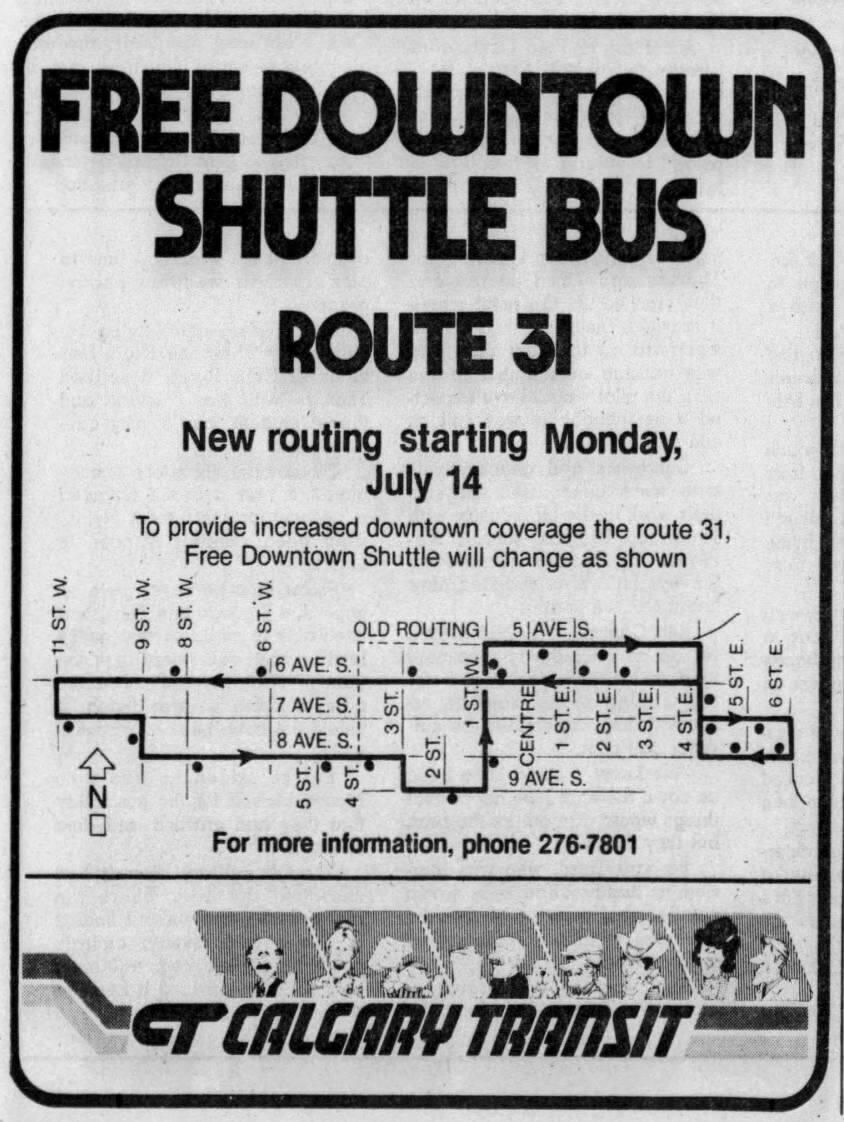
But even before that, city hall was planning for the CTrain to be free downtown as a central feature of the new LRT system.
A way to reduce car dependency and boost ridership
Part of the rationale was to entice riders onto Calgary’s new “streetcar of modern design,” as city hall called it then. But it was more than that.
“The free zone would be an important feature of the downtown making it more convenient and accessible and would provide a significant contribution to the achievement of Council’s objectives for the downtown,” states a 1979 transportation department report to council.
“The free zone would reduce the auto dependency of those working, shopping, or doing business in the downtown; this should tend to increase ridership and help alleviate some parking problems.”
In 1979, city hall expected that the free fare zone would “actually save money” as ticket machines wouldn't be needed downtown (people could pay outside downtown when they got on or off). That has obviously changed.
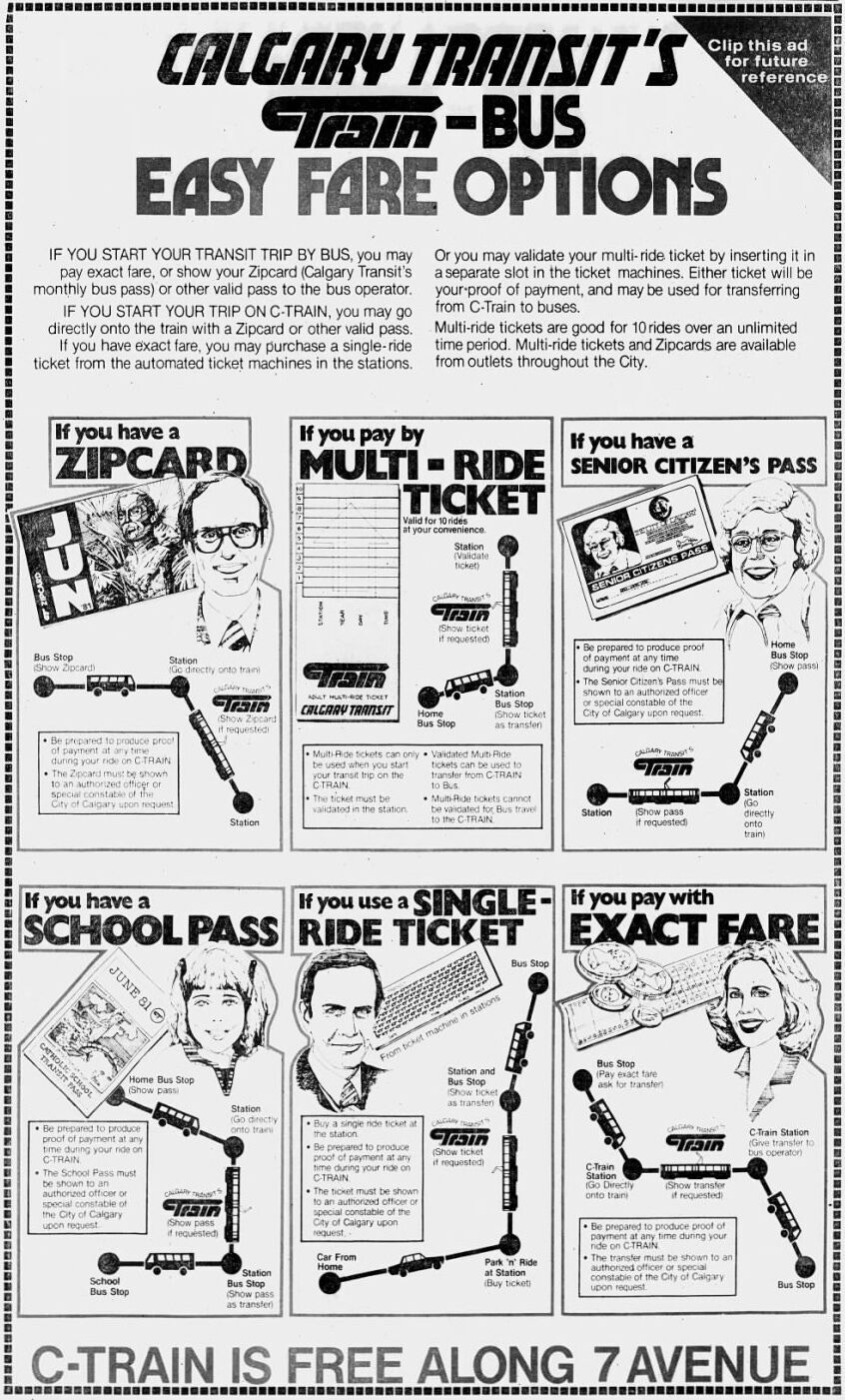
The free fare zone was baked in from the get-go when the CTrain opened in 1981. There was a brief experiment to extend it to the Stampede later that year, but that lasted less than a month. Similar expansions have been proposed over the years (including by Alderman Ric McIver, now a UCP MLA, in 2006).
Calgary Transit did a fare system review a decade after the CTrain opened. “The fare-free use of LRT downtown is still beneficial in reducing downtown traffic and encouraging use of downtown businesses,” stated the 1991 report.
Calgarians and business groups made similar arguments to councillors this week.
The free zone would be an important feature of the downtown making it more convenient and accessible.
So why is the zone now summed up by Calgary Transit as a “legacy service”? And why didn’t Calgary Transit more fully explain the history of why we have it in the first place? I put this question to Calgary Transit director Sharon Fleming.
“Part of the reason is you did a great job documenting that for us already and the research has already been done,” said Fleming. “We talked a little bit about how originally it was designed to incentivize people to come downtown, and what we're finding now is less and less people are willing to take transit downtown.”
“It no longer serves the purpose that it was intended to serve.”
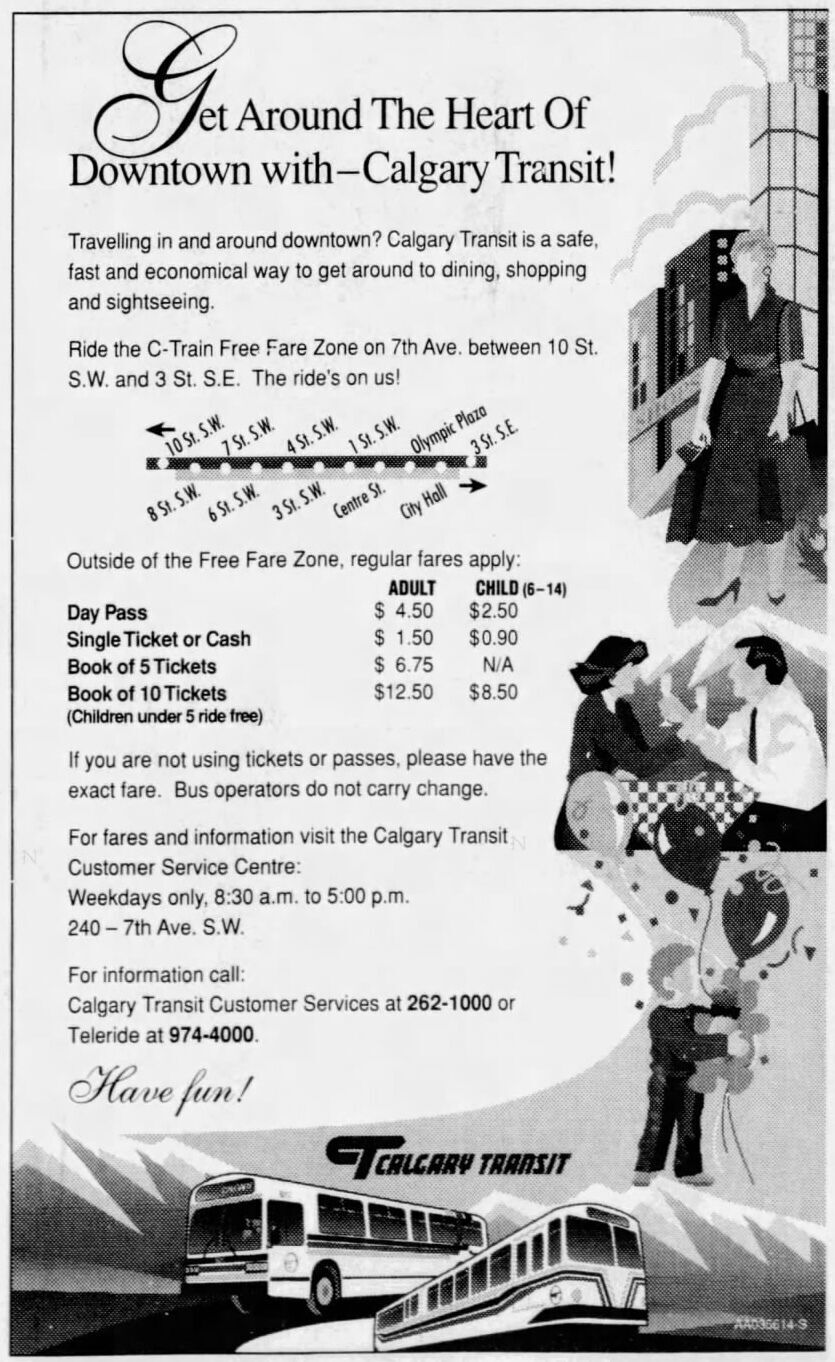
(I am glad to hear they are reading The Sprawl over at Calgary Transit—but make sure to support our journalism! This ain't some journalistic free fare zone! But I digress.)
Free fare zone trips account for 11% of all CTrain boardings. City hall estimates that axing the free fare zone would boost fare revenue by $5 million annually and expects that a third of current free fare zone users would find non-LRT alternatives, including walking or driving.
City hall surveyed nearly 11,000 Calgarians on the issue. “Most transit users surveyed support keeping or expanding the free fare zone, with frequent and occasional riders preferring expansion,” states the report. “Non-users were more likely to support making it a paid zone.”
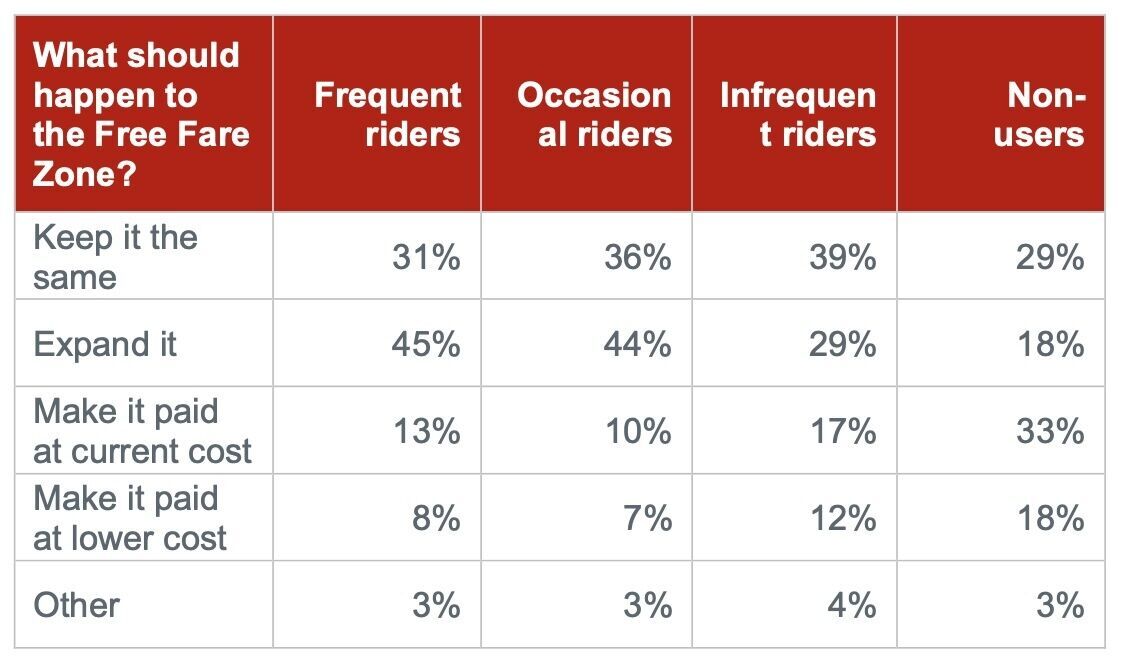
It no longer serves the purpose that it was intended to serve.
‘An important aspect of Calgary’s culture’: Councillors get an earful
Calgary Transit believes that nixing free transit downtown, as some other cities have done, will pay off in the long run.
“While there would be an immediate dip in short transit trips downtown... addressing safety concerns should increase overall public transit use in the long term,” states the report.
At committee, 24 Calgarians spoke. All 24 opposed cutting the free fare zone.
“I think wholly removing the free fare zone would take away an important aspect of Calgary's culture and really have a negative impact on the people and all the businesses that call this place home—without necessarily improving safety,” said Kira-Anne Ouellete.
Carson Ackroyd, a VP of Tourism Calgary, told committee the free fare zone is “one of Calgary's highest performing economic assets.” Removing it, he said, is not a solution to safety issues downtown.
The expected improvement in overall perceptions of safety on transit is the key driver for the recommendation to remove the free fare zone.
“The city’s own report makes it clear removing that free fare zone does not eliminate social disorder, it simply relocates it,” said Ackroyd, adding that 7th Avenue could worsen if former free fare zone users bail on taking the CTrain.
“That would mean fewer regular riders on the platform, fewer eyes in public spaces, less natural surveillance.”
Others also raised concerns about the social impacts.
“Destroying the free fare zone is another chapter in a long history of sending in police to move the homeless to another part of town—and then another, and then another, because moving them along doesn’t work,” said Rowan Wiebe. “What does work is opening day shelters and a housing-first program.”
Ackroyd emphasized the benefits for Calgary as a destination for conventions, as did Dan Kohse of the Chamber of Commerce.
“At a time when Calgary is investing heavily in downtown revitalization and tourism infrastructure, removing one of the most effective tools for moving people efficiently and supporting local businesses would be deeply counterproductive,” said Kohse.
“The Calgary Chamber of Commerce would strongly support the continuation and eventual strategic expansion of the free fare zone.”
Mayor Jeromy Farkas, who was not at the committee meeting and opposes cutting the free fare zone, has also said he’s interested in expanding it.
Removing one of the most effective tools for moving people efficiently and supporting local businesses would be deeply counterproductive.
A question of fairness: Why free transit for some but not others?
Councillors were split. “Disorder starts on the free platform downtown, but it doesn't stay downtown,” said Ward 12 Councillor Mike Jamieson. “It rides trains into communities and across the city.”
Jamieson said he also supports eliminating the free fare zone on grounds of fairness.
“Why should downtown riders get free trips when Ward 12 and Ward 3 commuters pay full fare every time they step on a bus?” he said. “Low-income transit passes and Fair Entry already exist for Calgarians who genuinely need the support.”
This echoes another Calgary Transit rationale for eliminating the zone.
“Partial free fare zones can disproportionately benefit certain neighbourhoods and riders over others,” states the report.
Eliminating it would create “consistency across the system, regardless of geography—downtown riders who can afford to pay have to pay, as in other parts of the city.”
But Calgary Transit acknowledges this “would negatively impact individuals who cannot afford a ticket and face barriers to getting a low-income transit pass.”
Why should downtown riders get free trips when Ward 12 and Ward 3 commuters pay full fare every time they step on a bus?
Ward 7 Councillor Myke Atkinson had an alternate suggestion on the fairness question: make transit free citywide.
“We don't have someone have a fire in their house and then send them a bill from the fire department,” said Atkinson. “You don't have someone come from the police to help you with some theft at your property, and then get a bill from the police.”
“Why are we charging user fares for transit? We don't charge for using our roads. We don't have tolls on our roads. Transit is something that we want to encourage.”
In the 1990s, city hall envisioned having a user pay system in place—with road tolls and fuel taxes under consideration—“as a significant funding source for our transportation system” by 2024.
“Whether we drive our cars or take public transit, we pay more equitably and directly for our choice of travel,” says the GoPlan vision approved by council in 1994.
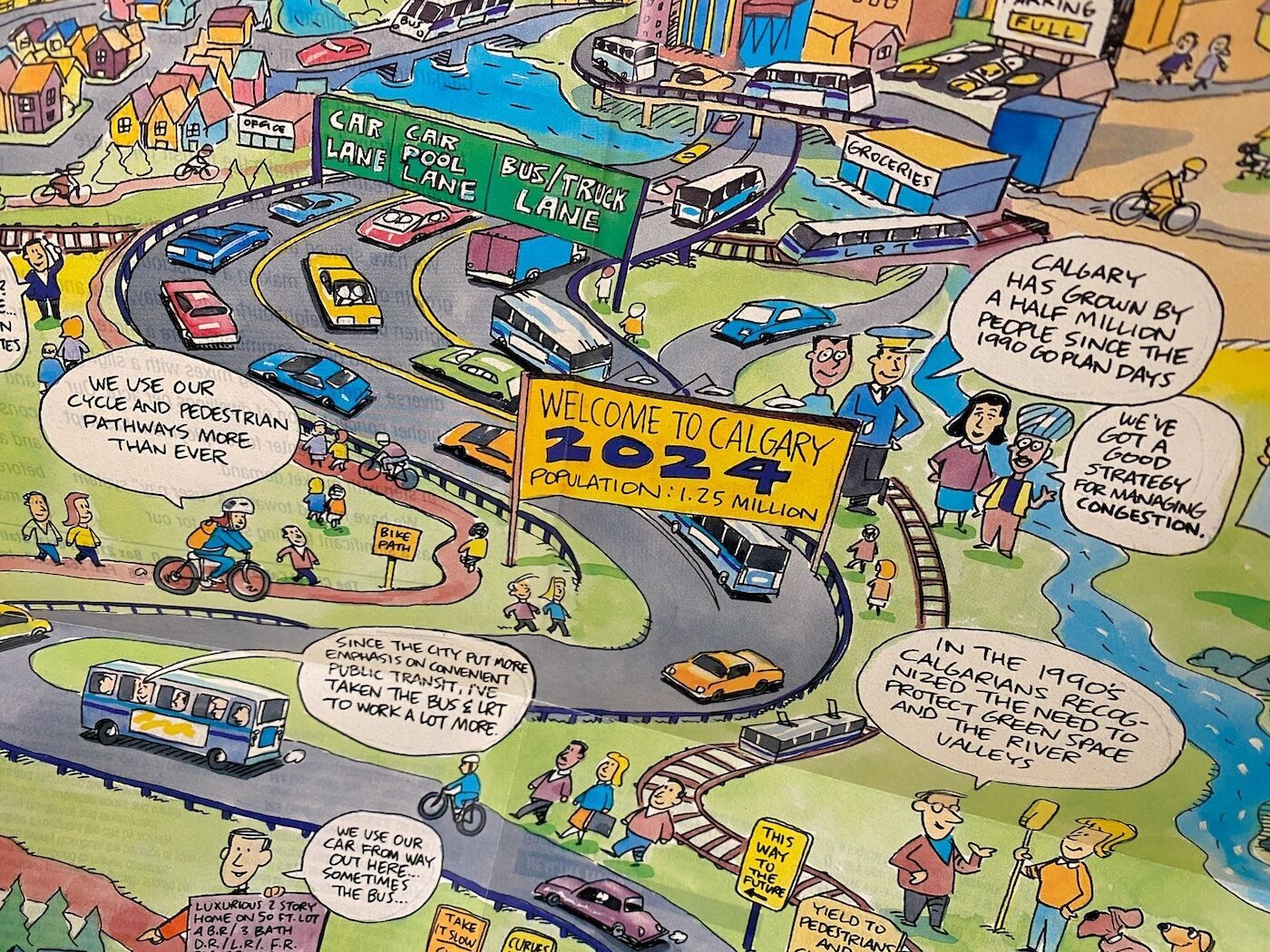
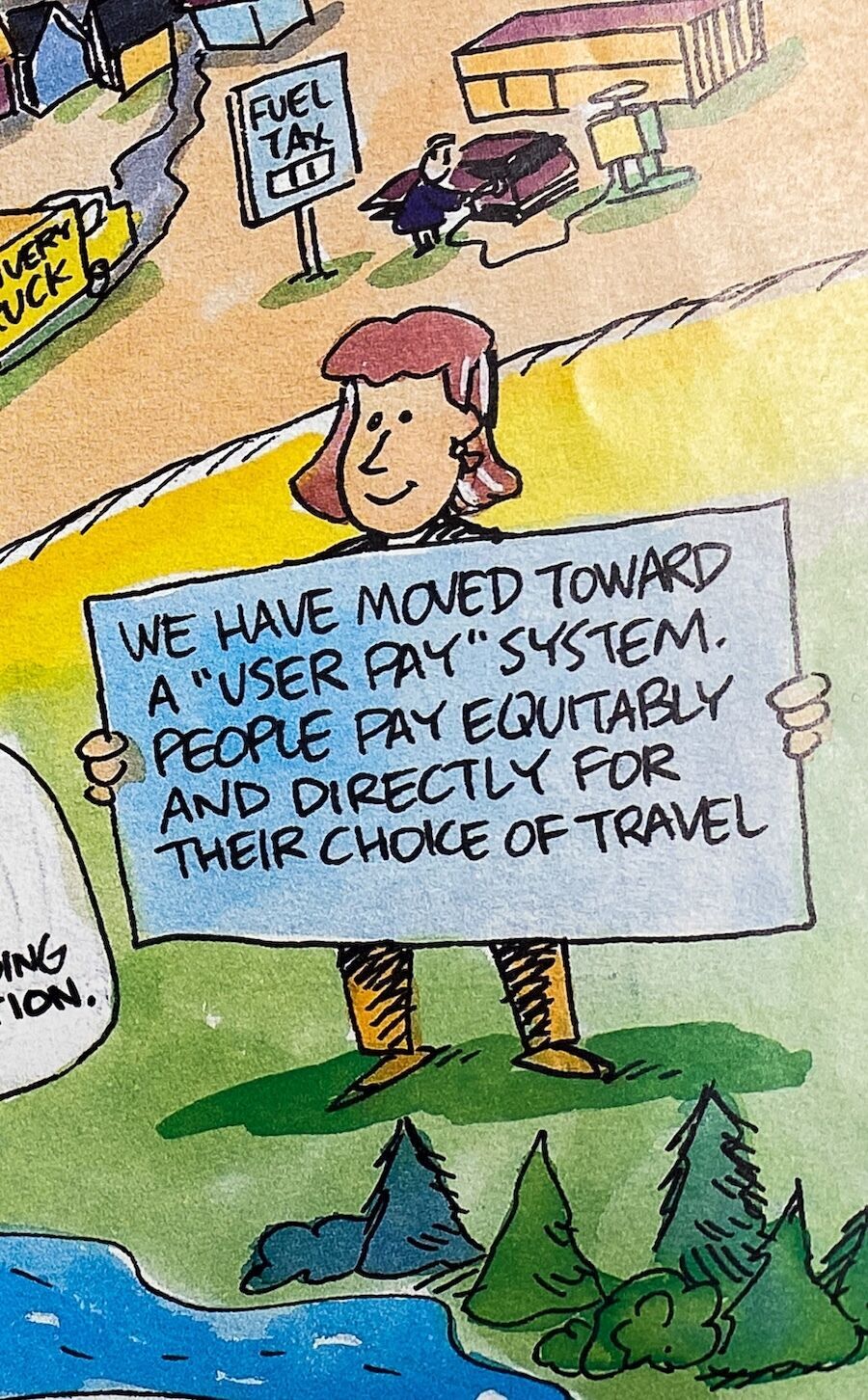
But the GoPlan and subsequent plans have largely been shelved without being enacted.
Calgary Transit ridership has stagnated, despite population growth
The debate over the free fare zone is happening against the backdrop of declining transit ridership. Calgary Transit is also looking to update its fare strategy and is considering new options including zone-based fares and different rates for different times of day.
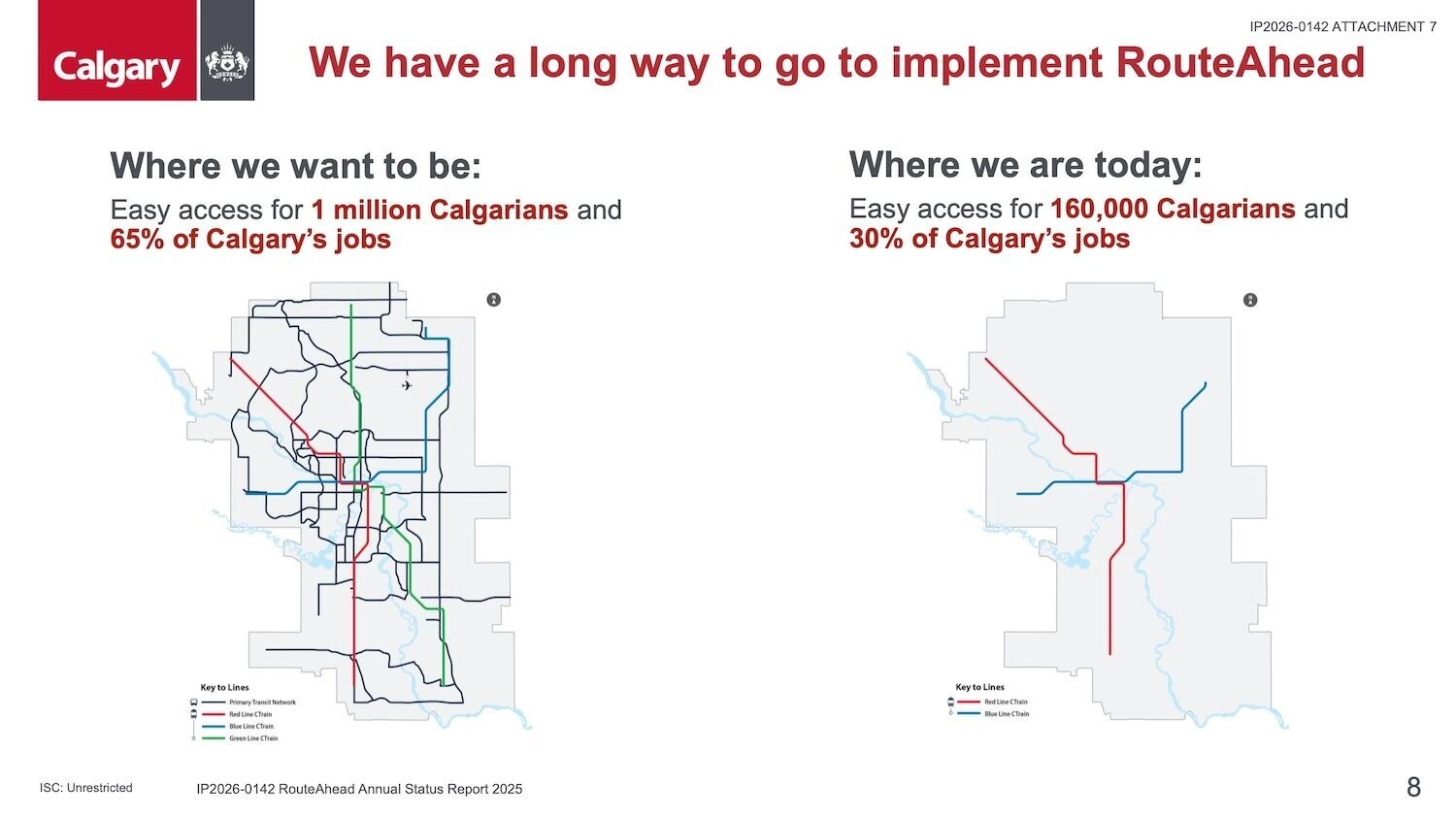
Calgary Transit's 2025 RouteAhead update, delivered to council this week, shows the total number of transit riders declined slightly in 2025 from 2024. This 0.6% drop was due in part to the teachers’ strike, Fleming said.
The RouteAhead transit plan, approved by council in 2013, sought to improve transit so that two-thirds of Calgarians live within 400 metres of the “primary transit network”—fast, frequent service that comes every 10 minutes, 15 hours a day, seven days a week.
But Calgary is going backwards on this and other goals.
In 2018, 15% of Calgarians lived by primary transit service, which at the time included the CTrain lines and the Route 3 Sandstone/Elbow Dr. bus corridor.
That has since dropped to 10%, as previous cuts made it so only the CTrain lines have frequent enough service to qualify as “primary transit.” (See the 2022 Sprawlcast: How Calgary Killed Its Primary Transit Network.)
Transit service hours per capita also continue their downward slide, from 1.88 in 2024 to 1.87 in 2025. Calgary Transit lists the target for that metric as TBD. In fact, city hall has previously set targets. But they have long since been scrubbed as Calgary Transit is nowhere close to meeting them.
Part of the issue is that Calgary’s growth has far outpaced predictions, especially in recent years.
With transit service hours per capita at 1.86 in 1991, the GoPlan aspired to “provide a level of service competitive with auto travel.” The target was about 2.5 service hours per capita by 2024.
In 2009, city council approved a 60-year goal of 3.7 hours per capita.
But service hours per capita peaked at 2.36 in 2011 and have declined since as the city has grown and transit is stretched ever thinner. (See the 2025 Sprawlcast: How Urban Sprawl Is Stretching Calgary Transit To The Max.)
On transit service hours per capita, we are back where we were in 1991.
“Calgary has grown quickly,” said Fleming. “We haven't seen the investment keep up with the level of our population and with the growth of our geography.”
Committee voted 10 - 4 to prioritize implementation of the RouteAhead transit plan in the upcoming four-year budget cycle, with Councillors Chabot, Jamieson, Johnston and McLean voting against. This will go to council for a vote later this month.
Another public speaker at committee, Heather Campbell, challenged city politicians to better understand Calgary Transit by riding it regularly.
“Every single city councillor and the mayor should be required to take transit from their residences and their ward to work once per week... I’d put senior leaders at the city in that bucket too,” Campbell said.
Jeremy Klaszus is founder and editor of The Sprawl. If you appreciated this story, support our work!
Support independent journalism—help us get 90 new members!
Sign Me Up!To celebrate The Sprawl’s 9th anniversary, we’re aiming to get 90 new members by the end of September. If you value in-depth, curiosity-driven journalism, support our work so we can keep digging into municipal issues in Calgary!