Photo illustration by The Sprawl (iStock/jewhyte)
Paying for it: Calgary suburban developers face new scrutiny from councillors
After decades of sprawl, the costs are staggering.

Sprawlcast is Calgary’s in-depth municipal podcast. Made in collaboration with CJSW 90.9 FM, it’s a show for curious Calgarians who want a deeper understanding of the city they call home.
A lightly-edited transcript of this episode is below, for those who would rather read than listen. You can hear this episode wherever you listen to podcasts. Make sure to subscribe so you get new episodes as soon as they drop!
If you value The Sprawl’s independent journalism, support our work so we can do more stories like this one.
The short version:
- On March 11, 2026, Calgary city council’s infrastructure and planning committee saw four applications for new communities on the city’s outskirts, with five more suburban applications coming soon.
- The largest application, for Providence in the southwest, is expected to add about 9,600 homes outside the ring road. This would cost city hall $582M for infrastructure (though not all at once), with about 42% of this being eligible for developer levies.
- City hall is recommending that council approve these applications at budget time in November. The Providence development is expected to bring in $28M annually in property tax revenue. Construction wouldn’t begin until 2029.
- Also on March 11, council heard from city admin that catching up on Calgary’s infrastructure needs will cost about $49B over the next decade.
- To curb the financial and environmental costs of sprawl, city hall approved a plan in 2009 to shift 50% of population growth into established areas over the next 60 years. But by 2021, only 12% of cumulative population growth was in established neighbourhoods.
- About $18B worth of city assets are in poor to very poor condition, including $1.7B of critical assets. Assets at risk of catastrophic failure include water mains, bridges and wastewater river crossings.
The full version:
MICHELLE REMPEL GARNER: NIMBY cannot be how we build houses. NIMBY can't be our housing policy anymore.
SIEGFRIED KIEFER: Accommodating growth has been done by, in effect, robbing monies from some of the sustainment work that should have been ongoing.
COUNCILLOR NATHANIEL SCHMIDT: Times have changed since this was first approved.
COUNCILLOR JOHN PANTAZOPOULOS: When we make a decision on a new neighbourhood, we have to realize there's unintended consequences.
JEREMY KLASZUS (HOST): Calgary city councillors recently got their first look at a batch of developer applications for new suburban neighbourhoods. This batch had four applications. And five more are on the way in the coming months.
DALE CALKINS (CITY OF CALGARY): These applications represent potential for over 22,000 homes that would move to construction in several years from now, but are important for meeting Calgary's need for increased housing supply.
KLASZUS: This was at council’s infrastructure and planning committee in February—a sort of Growth 101 session from admin for this city council.
REID HENDRY (CITY OF CALGARY): Calgary has been leading the country on housing starts. We are Canada's housing engine, with close to 28,000 housing units delivered last year.
KLASZUS: That meeting, and the following one in March, showed how this city council might grapple with an issue that has bedevilled many previous ones: Where should growth go?
For many decades, the easiest answer has been to put it out there, on the city’s edges, where there’s lots of space. That’s been city hall’s MO. But now the bill for those past decisions is coming up for payment in ways that can’t be ignored.
TERI FIKOWSKI (CTV NEWS): Calgarians are entering the new year with a renewed round of water restrictions in place following a catastrophic water main break in the city's northwest. It's an unwelcome deja vu...
KLASZUS: This is the context in which council is seeing these new growth applications in 2026. And if developers thought these would be quickly rubber-stamped by councillors, they were wrong.
COUNCILLOR NATHANIEL SCHMIDT: We treat public hearings for established area development much differently than these growth applications. There seems to be a fear around scrutinizing these.
KLASZUS: A lot has happened since the 2025 election. In December, council voted 13-2 to revisit blanket rezoning. City hall is also trying to catch up on infrastructure—which admin says will require $49 billion over the next decade. And then there’s the question of whether to keep approving new communities on the outskirts like councils of the past, or slow it down.
Let’s get into it.
A plan to curb Calgary's urban sprawl
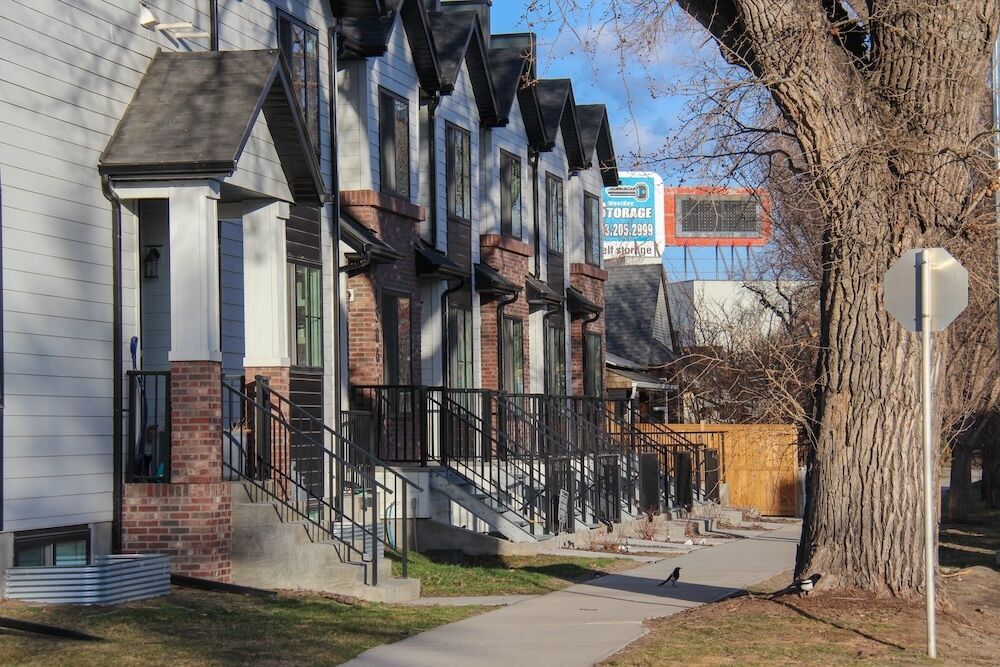
In 2009, city council approved a new blueprint for how and where the city grows. The goal was to shift 50% of new growth into established neighbourhoods over the next 60 years, with the rest in new neighbourhoods. But nine years after this plan was approved, things weren’t looking so good.
Most of the growth—by far—continued to happen on the edge rather than established neighbourhoods.
MAYOR NAHEED NENSHI (2018): And if you read this report well, you'll notice that there's a couple of very key areas where we're never going to get there on the current path. So we've set a goal, but we're never actually going to get there. That includes the 50/50 population split between developed and developing areas.
COUNCILLOR DRUH FARRELL (2018): Climate change and our greenhouse gas emissions are going in the wrong direction. We will never meet our targets.
KLASZUS: By 2021, only 12% of population growth was going to established neighbourhoods, with 88% going to the outskirts. After 2021 it gets murkier from a lack of census data. Don't get me started on that.
Our greenhouse gas emissions are going in the wrong direction. We will never meet our targets.
In any case, when you’re falling short of reaching a goal, one way to deal with it is to move the goalposts. And in February, Councillor Andre Chabot told council it’s time to do that with the 50/50 target.
COUNCILLOR ANDRE CHABOT: The question is, is that target realistic? Because the longer we don't achieve that 50/50 split, the greater the differential will have to be in the future to make up that difference. So if we are only at at 60/40 for 10 years, that means that that will have to be at 70/30 for the next 10 to make up that loss or that differential for that 10 years.
Personally, I think we should be revisiting that target. Bring it back into reality.
KLASZUS: After Jyoti Gondek was elected mayor in 2021, Calgary experienced unprecedented population growth and a major housing shortage. Here’s Matthew Sheldrake, the city’s manager of growth and change strategy.
MATTHEW SHELDRAKE: It's been a tough 10 years for population forecasting. In the latter half of the 2010s, the price of oil collapsed. Then there was COVID. Then there was the the boom of the past three years. And I don't think anybody foresaw 80,000 to 90,000 people in a single year after we'd never seen more than than 30,000.
KLASZUS: In the summer of 2023, as Calgary’s population exploded, city council initially voted down a set of recommendations from a housing task force, which included making it easier to build housing across the city.
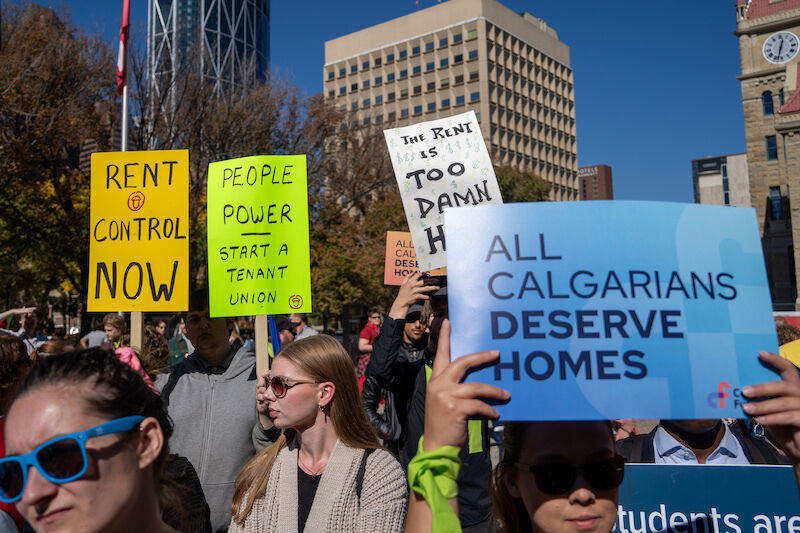
TARA NELSON (CTV): Calgary city council has had a change of heart after facing immense backlash for rejecting affordable housing recommendations yesterday. Today, most of council agreed to reconsider their vote and go back to the drawing board...
KLASZUS: One of those recommendations was to prepare bylaws to make the base residential district in Calgary residential-grade oriented (R-CG). And this became a sticking point in city hall's housing strategy—and still very much is. You might know it better as “blanket rezoning.” It allows townhouses and rowhouses to be built alongside single family homes and duplexes throughout the city—without having to go before council for a public hearing like they did previously.
And in 2023, the backlash council faced for voting down those recommendations wasn’t just from the usual subjects.
MICHELLE REMPEL GARNER (2023): I also want to implore to my colleagues in my own city that they also have a responsibility to look beyond pandering for NIMBY votes—and do the right thing to change policies in order so we can actually build housing.
KLASZUS: This is Calgary Conservative MP Michelle Rempel Garner, speaking in the House of Commons in June 2023.
REMPEL GARNER: It is pandering to votes, to people who only have the privilege of getting into the housing market at a time when housing was affordable. And guess what? That is rapidly changing.
In Alberta, we don't have rent control. So what that means is people who are renting from people who maybe bought an investment property on spec, on a variable rate mortgage—they can't afford to pay that mortgage on the rent that they were charging people. And that's why we're seeing 23%, 24%, 30% increases.
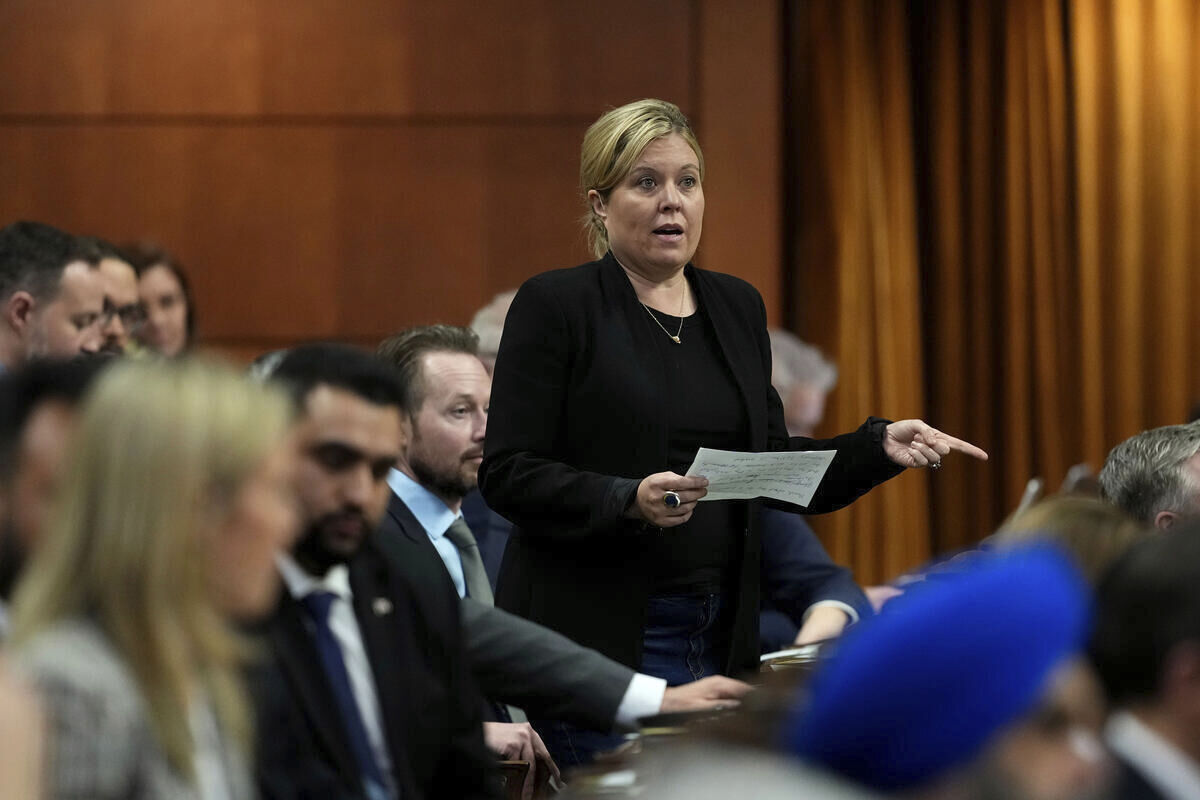
REMPEL GARNER: Do you know what it means to have a 30% increase in your rent in a year? It means you're homeless. That's what it means. So I'm sorry—at this point an esoteric debate about parking when we can't house our families is ridiculous. I'm saying this as a Conservative. Everybody needs to wake up!
And the federal government has an onus of responsibility to ensure that they are not funding the bad behaviour of municipalities that can't figure this out, because when the federal government does that, they're actually incenting and empowering NIMBYs.
And I know, and I believe firmly in my heart the compassion and caring of the people in my community. That even though they may have concerns about building townhomes, that when leaders stand up and ask them, hey, please come along with us, because there's so much at stake for us not to do that, that they will come along.
But leaders have to stand up and do that first.
I’m sorry — at this point an esoteric debate about parking when we can’t house our families is ridiculous.
'I'm hoping we don't make councils of the future pay'
KLASZUS: In 2024, city council approved blanket rezoning after an epic 15-day public hearing. A hearing in which 736 Calgarians spoke, with most opposed to the change.
RICHARD LOTZ: This proposal is just proposing a developer free-for-all of densification.
CHLOE CHAN: We cannot continue acting as if nothing in the past 30 years has changed. Our population is growing, and we must build on the land we already inhabit.
DAVE FRYETT: I am for the densification of the city. However, it should be evolutionary not revolutionary.
MAYOR JYOTI GONDEK: If we had acted eight years ago when the public, private and social sector said that rezoning was an important tool to make sure that we had housing in our city, I don't know that we would be in quite the crisis that we're in today. But looking back is not something that will be helpful to us.
What I can say is that I'm hoping we don't make councils of the future pay for actions that we are not willing to take today. This decision is important for ensuring that Calgarians can live in our city, not only with choice, but with dignity.
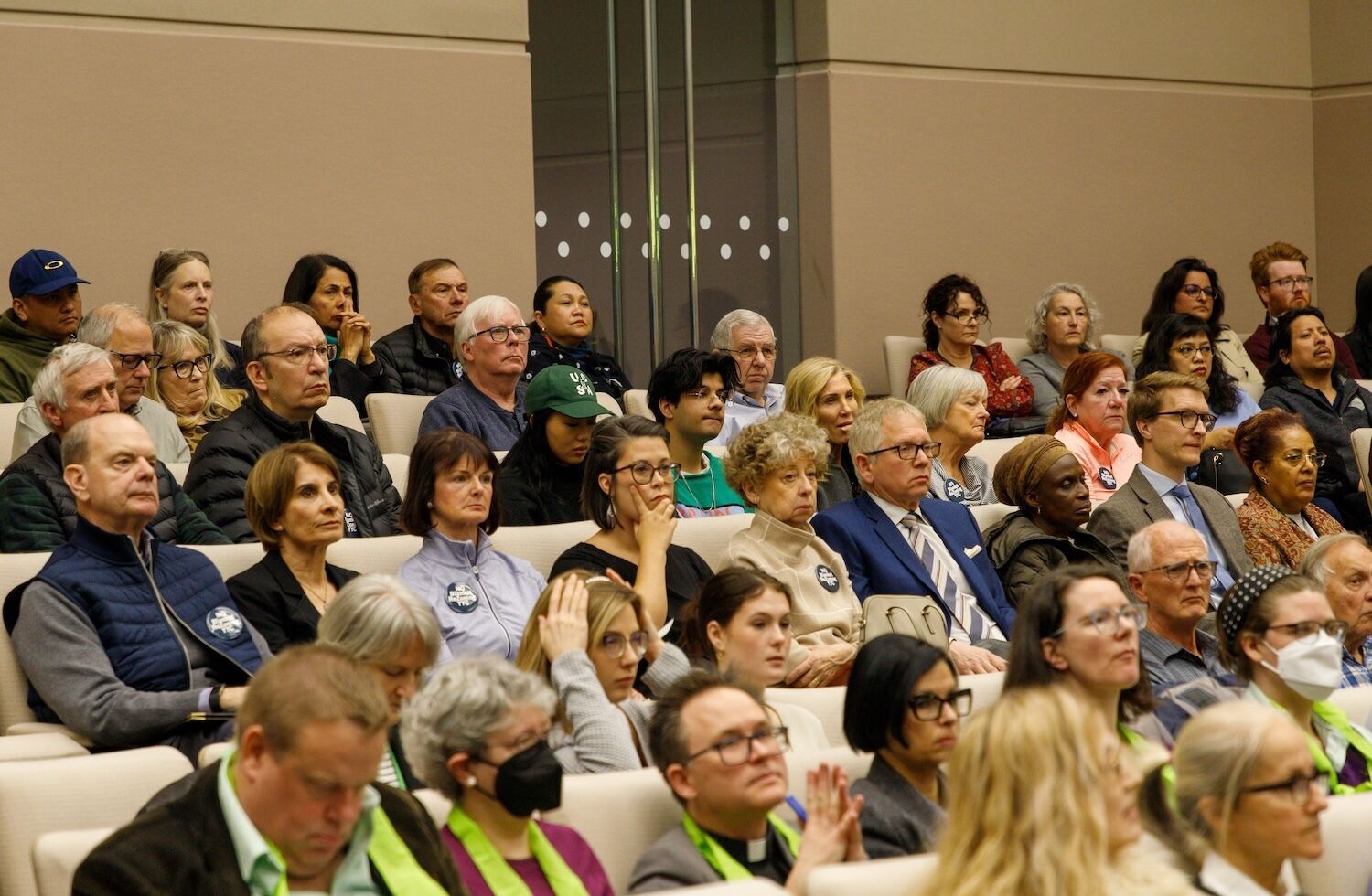
KLASZUS: Blanket rezoning was a big election issue in the fall of 2025. And in December, council voted 13 - 2 to lay the groundwork for repealing it, triggering another public hearing.
MAYOR JEROMY FARKAS: Calgarians told us clearly, repeatedly and across every single part of the city that they felt unheard—that a decision had been made of enormous consequence. A decision of enormous consequence was made about their communities and not with them. And many voted for us around the table here because we promised to make city hall listen.
KLASZUS: Then at the end of December, the Bearspaw South Feeder Main exploded—for the second time. An independent panel found that Calgary’s water infrastructure has been stretched to the breaking point by growth. The panel noted that Calgary remains “a low-density municipality, resulting in more kilometres of pipe per resident than any other large Canadian peer city.”
Here’s what panel chair Siegfried Kiefer told council in January.
SIEGFRIED KIEFER: Accommodating growth has been done by, in effect, robbing monies from some of the sustainment work that should have been ongoing.
Calgarians told us clearly, repeatedly and across every single part of the city that they felt unheard.
KLASZUS: Since then city hall has been tallying up Calgary’s infrastructure problems—and what will be needed to fix them. Council heard in February that about $18 billion dollars worth of city assets are in poor to very poor condition, including $1.7 billion of critical assets.
STEVE WYTON: We have about 120 kilometres of feeder mains that do lack redundancy.
KLASZUS: This is Steve Wyton, the city’s manager of asset management. And some of what he told council members was quite dire.
WYTON: What we're talking about with severe-consequence-of-failure assets as well, too, includes potential loss of life, as well as a significant impact to the entire region of Calgary.
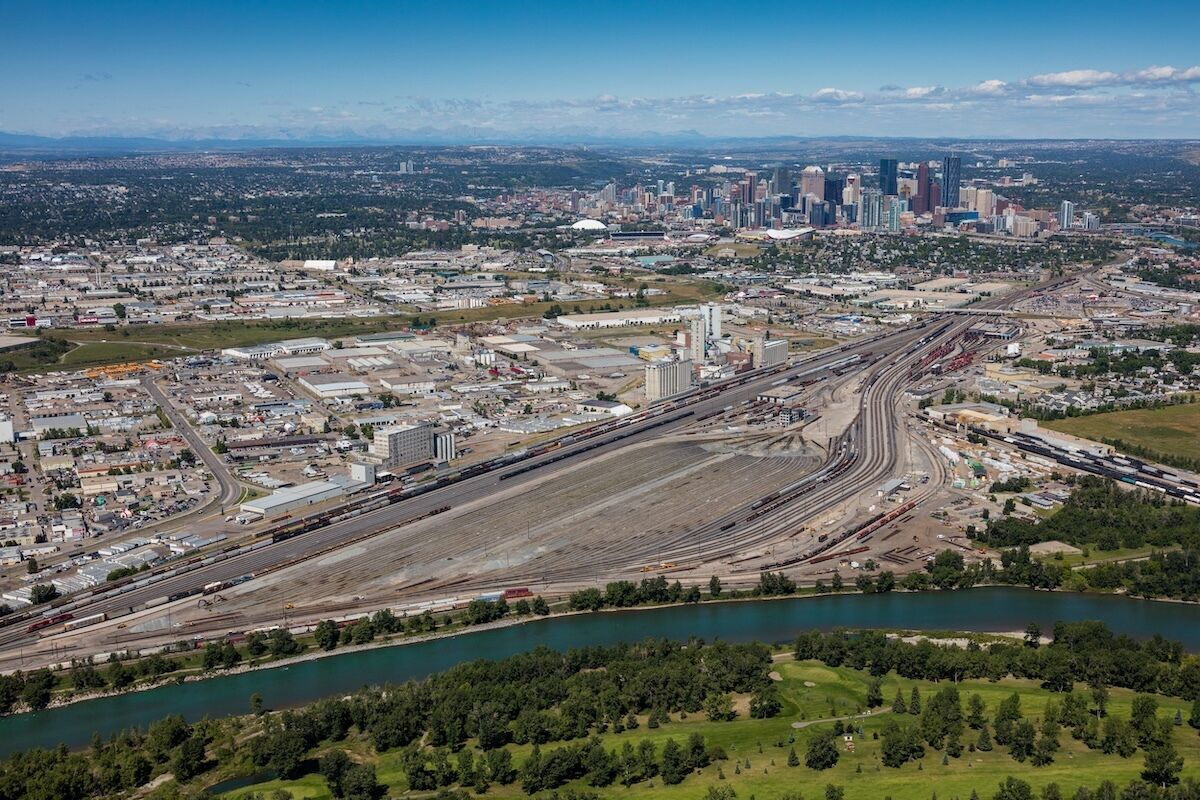
So perhaps I can give you an example. So you talk about, say, the river crossings. I'm aware of one particular river crossing that actually drains sewerage from all of north Calgary. So let's call it from Marlborough Park, my old grow up, my old place, all the way to Valley Ridge. So it drains into this one particular crossing across the river. It has no redundancy and no way to shut off the flow. If it were to blow, it would go underneath the river, and it would actually most likely take out Aylith Yard.
KLASZUS: Aylith Yard south of Inglewood is one of the biggest freight train yards in Western Canada.
WYTON: So you would actually be, as well, severing the east-west connection to Canada. So we're talking this kind of consequence of failure where it's significant—not just the City of Calgary or a portion of Calgary, but economically that kind of regional, geographic impact.
If it were to blow, it would go underneath the river, and it would actually most likely take out Aylith Yard.
Infrastructure needs and new growth: 'How can Calgarians reconcile that?'
So city hall is scrambling to catch up after falling so behind for so long. And on March 17, council approved $630 million dollars for beefing up Calgary’s water infrastructure—namely, the Bearspaw South Feeder Main replacement and a north Calgary feeder main, two crucial pipelines.
But these aren’t the only pipelines city hall attends to. There’s also a metaphorical pipeline of new suburban development.
COUNCILLOR JOHN PANTAZOPOULOS: We just heard our administration team come up and talk about our existing assets and maybe it's not dying, but as the mayor said, it's very sick, deathbed sort of thing...
How can Calgarians reconcile that $250 million for a new community total versus fixing a water main or fixing a sewer pump?
KLASZUS: Here is Joel Armitage of BILD Calgary. BILD is the Building Industry and Land Development Association, which represents local developers.
JOEL ARMITAGE: Yeah, I think the question comes back to that certainty. So providing certainty of infrastructure—we're really encouraged with the 10-year capital plan coming forward to really identify with long lead time what infrastructure projects are being invested in and committed to by city council and by other levels of government and how those are paid for. So having that line of sight really does send messages to market investment around the likelihood and certainty of projects moving forward.
How can Calgarians reconcile that $250 million for a new community total versus fixing a water main?
ARMITAGE: I think it's really important within that pipeline of land supply that there aren't any stops in supply that go forward because you will feel that. Not this year, but you will feel it three years, five years from now. And those are the kind of things that you you can't accelerate to catch up on. So I would suggest it would be devastating on an ongoing basis of development and land supply going forward if there's to be any pauses.
KLASZUS: While population growth in Calgary has slowed, city hall is still expecting more than 20,000 people a year. And currently there are 40 new communities in progress on Calgary’s outskirts—at various stages of development. Here’s Dale Calkins, coordinator of growth strategy for the city.
DALE CALKINS: Across 40 new communities and all four quadrants, we currently have land that is serviced to support building 84,000 new homes. This is equivalent to seven to 10 years of supply.
I think it’s really important within that pipeline of land supply that there aren’t any stops.
KLASZUS: The way this works is these new growth applications come to committee, where council members decide if they should be put into the next budget in November. And 2026 is particularly important since council will be setting the next four-year budget. Council will make a decision at budget time in November on whether or not these communities proceed.
So approving these growth applications at committee doesn’t yet give them a green light—but it is an approval along the way.
And these growth applications vary dramatically in size. The smallest of the four that council saw was less than 250 homes, while the largest was nearly 10,000, plus commercial space. That big one is in Ward 13, in the Providence area of the southwest. It’s on the outside of the ring road, west of Evergreen and Bridlewood.
And to enable new communities like this, city hall has to pay for infrastructure—water, sewer and so on—some of which gets repaid by developers in levies.
A large new SW community outside the ring road
For the Providence application, admin says the infrastructure costs to the city would be $236 million in the coming budget cycle, with more costs to come later.
GRAYSON RATHWELL (CITY OF CALGARY): This growth application requires an unfunded capital investment of $582.7 million over several budget cycles, with approximately 42% of this total being levy eligible.
KLASZUS: And then there are operating costs on top of that—nearly $12 million a year at full buildout. There are also other city costs that aren’t directly factored into these applications.
CALKINS: So let's say I'm going to live here in Providence, in my new home, and I'm going to drive into work at Chinook Centre on Macleod Trail. I create an additional cost to the City of Calgary. And we're talking small percentage numbers, but it is cumulatively relatively large when we have all of the travel demand from new communities that use the existing road network, that create and increase maintenance costs.
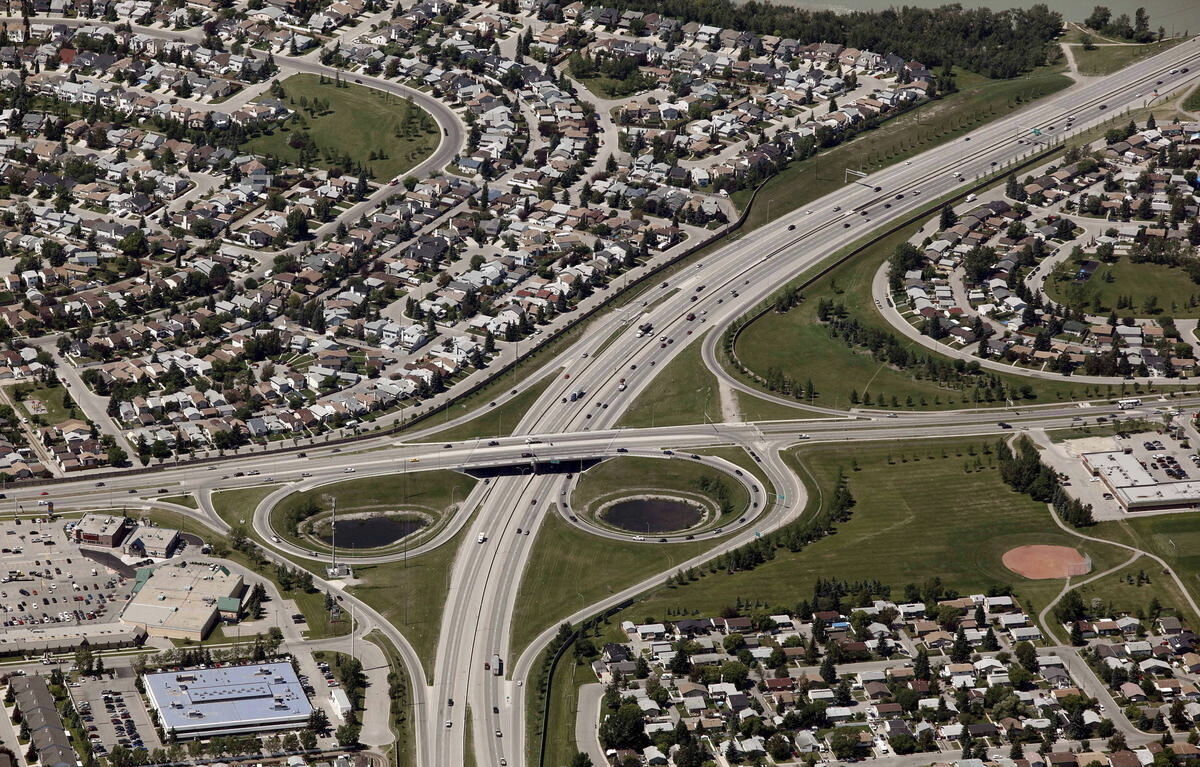
KLASZUS: But costs aren’t the only factor in this calculation. The city gets tens of millions of dollars in property taxes from neighbourhoods like this after people move in. This neighbourhood is expected to bring in $28 million a year once it’s fully built out. And so, admin is recommending that it proceed.
Suburban developers showed up at city hall on March 11 to make their case. There are five developers for this application: Dream, Qualico, Hopewell, Ronmor and Jayman. And leaders from these companies gathered around the podium, seven people in all.
Here’s Kathy Oberg of B&A, who presented on behalf of the developer group.
OBERG: The completion of the $2-billion southwest ring road has strengthened the west edge of the city as a key growth corridor, improving regional connectivity and reinforcing strong market momentum.
KLASZUS: And a question came up: What if council didn’t approve this? Here’s Ward 6 Councillor John Pantazopoulos.
PANTAZOPOULOS: Maybe speak to if it rejects—and from a business perspective, that messaging to your investor group, your faith in city hall Calgary, recognizing the constraints. Absolute rejection, saying—come back in four years. What does that do? And again, just from a business perspective, we need to understand what that means, and if that occurs, what would you need from city hall the next four-year cycle to give confidence to make sure that capital flows back?
OBERG: I might give a perspective, then ask one of our developers to answer that question. Certainly it will create a big gap. The houses that are there right now—we've got some school sites that are sitting. They'll be turned over. We'll have amenities lingering. We'll have a high school site that there's desire to have. It'll stop. The momentum of it will have kind of a—I won't say a stranded area, but we'll have an area that will will not advance any further on the things that maybe the local residents would look for.
BEN MERCER: Good morning everybody. My name is Ben Mercer. I'm with Qualico Communities. I think, from the Qualico perspective, at a general level, it's important to recognize that this isn't a new community. There's several years of work and effort and over $100 million just on behalf of Qualico that's been invested in this project so far. That includes land acquisition and development costs.
KLASZUS: Since starting development in the Providence area in 2021, Mercer said, Qualico is now on its final phase of building the first quarter section.
MERCER: It's urgent for us to keep moving. It was mentioned that there'd be a gap in supply, and so for us, that's a gap in production as well. And because, as mentioned, it takes two to three years once you've got planning approvals before homes can be occupied, that gap—it's a domino effect. You see that right through for the next several years.
So just to summarize, it would be a strong message that the city is isn't as committed to seeing this community build out as it was several years ago. And it's difficult for our investor groups to grapple with that.
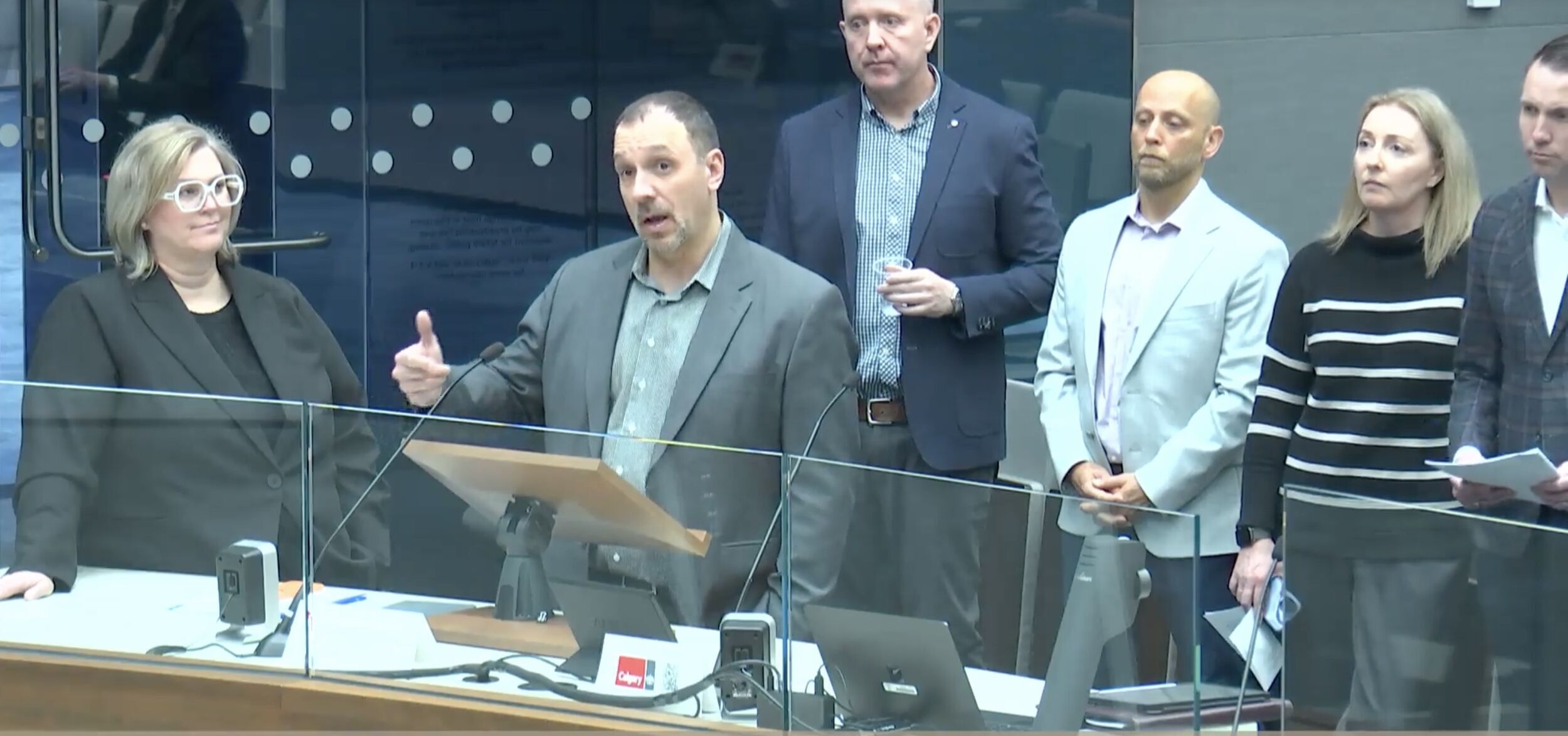
'We are being told we're kind of locked in': Councillor Schmidt
KLASZUS: And now some councillors started to push back.
COUNCILLOR NATHANIEL SCHMIDT: Times have changed since this was first approved, right? We are sitting here or standing here as a council who put in over $500 million to get this pipeline approved. We have a budget coming up, and we have all these competing priorities.
So Councillor Pantazopoulos asked you about what would happen if we didn't approve this, and I'm wondering—we reject established area applications all the time at public hearings, much further along in the process with concurrent [development permits] and they're much smaller companies. And granted, you're dealing with an entire subdivision here that has had some work done. But those smaller companies get up and they come back to us with other applications.
So what's different for you when you come to us here than when we reject established area applications on smaller projects?
KATHY OBERG: That's a very good question... The last couple growth application cycles, administration has felt we weren't quite ready, knowing what the costs would be. And so we worked through those. So we have gone through that similar feeling. If not approved, we would continue to come back.
KLASZUS: Oberg emphasized the benefits of building out this area, which ties into adjacent development.
OBERG: We’re here on behalf of the residents that are there, the residents that have bought in, the residents that are are loving their community. And we've seen that in the uptake for them and their future investments in an area that council was on that was on that path, with the previous approvals.
COUNCILLOR SCHMIDT: One thing that I'm stuck on is that we are being told we're kind of locked in at this stage because the work that's been done. But then, all we're asking for right now is the $236 million. But that $236 million locks us in even more into a future $231-plus of $500 million or more. So the other part of this that I'm curious to see how you consider is all we're talking about is capital investment and operating funding to get the site built. And levies do play a huge role in covering that.
But once the levies are done, it's on our books—lifecycle operating costs, lifecycle maintenance costs. Which is exactly what the Bearspaw feeder main identified as the problem that we've created for ourselves and our ability to maintain the infrastructure that we already have. So can you reassure us somehow, in making this decision, that we are not continuing what the Bearspaw feeder main has told us we've been doing wrong?
CHRIS ANDREW (B&A): So I think in this example, it's been mentioned already that it's a significant operating surplus. So from day one, operating cost surplus—and then on full buildout, I think $12 million in a net surplus. I think that's something that can reassure you that this community is optimized. It's efficient. It is higher density than new communities have been in the past.
Once the levies are done, it’s on our books — lifecycle operating costs, lifecycle maintenance costs.
COUNCILLOR SCHMIDT: And then final question for me. Qualico, you're not a mom and pop shop. Certainly, you have contingencies built in, because you play in the political arena across the country, especially here in Alberta. So certainly you've built in contingencies. This is something that factors into your risk in the same way that we factor in risk, correct?
MERCER: Thanks for the question. When you mentioned Qualico is not a mom and pop shop—I get the intent there, but it is, in fact, a privately family-owned company. Regardless, though, investment decisions are inherently tied together with risks, right? So we can't predict how long some of our approvals will take or what forks we'll encounter in the road. That being said, it's kind of difficult to predict something when you know the green light is already on, let's say for the whole community. That's what gave us the confidence to make our initial investments and start the community.
And I think I would, just to conclude, reiterate something that Kathy just said—this isn't just a business that we're operating here. We're building a community with people, and we're trying to create a great place. And that happens over time through a critical mass of population and ongoing investments.
And so yes, there's risk and bumps in the road and we can certainly weather those storms—but that's, I guess, not the key point from our perspective here.
Councillors debate the new Providence application
Watching this meeting, one could see council members trying to grasp and clarify the long-term impacts of their decisions on growth.
COUNCILLOR SCHMIDT: I think, Mr. Calkins, you made a comment about getting us closer to 50/50 with the blended growth in the city. If we keep making decisions like the ones that are up here today, are we ever going to get there?
CALKINS: Spicy question. There are two pieces. There are the decisions you make in the new communities, and there's the decisions you make in the established areas. We have to grow in both areas to be able to accommodate the number of Calgarians who are coming here.
It is more difficult to do development in the established areas. As you all see every public hearing, there's people who come, they express their opinions. There is the existing infrastructure we have to make sure that we evaluate. There's also very difficult pieces about doing development in the new communities. All of this infrastructure is required. It's a big price tag, and there's a long-term commitment.
Currently, based on our current projections, the way that we are growing, we are not going to hit that 50/50 target. And that's something that you can read in the risk attachment. There's a significant cost associated with that.
It will be more expensive to build a city where we don't reach the 50/50 target between established and new communities. Continuing to approve new community growth applications will make it more difficult for us to reach that 50/50.
Based on our current projections, the way that we are growing, we are not going to hit that 50/50 target.
CALKINS: But then there's also the question that you as members of council need to ask yourselves about how you do want to grow in the established areas. That's something that is a very major input into whether or not we're going to hit that 50/50. And I'm not going to get into any debate about any of the questions and discussions you're going to be having coming up here in the month, but that is something that you should consider while you're having those debates.
KLASZUS: Let’s listen in to some of the debate about this Providence application.
COUNCILLOR MIKE JAMIESON: I'm not sure if all councillors here realize the density that takes place in these new master communities. I feel that they would probably be a lot more proud of the amount of units that Calgarians are being offered.
I'm the councillor of arguably one of the most newly-dense communities for growth, which is Seton. I know it gets brought up a lot. But if you haven't been down there, I would love you to to go down there sometime. It's incredibly dense. It's medium-dense. It's high-dense. It has thousands and thousands of people that have moved down there. And so my point is—these new communities, I feel, give the product type that you're discussing, that a lot of councillors probably are supporting now.
KLASZUS: Here’s the local Ward 13 councillor, Dan McLean. This application is in his ward.
COUNCILLOR DAN MCLEAN: Thank you all. Administration for all the work you've done. For all of the folks here in the gallery, for your presentation. We've got a large contingent of city builders here, and that's what I call them. They help build this city. We do want to make it to our two millionth Calgarian, which we talk about. We need to build homes. I don't care if it's in greenfield. I don't care if it's in the inner city. I don't care if they're mom or pop shops—that was a uncalled for shot.
I don't care if they're the big companies. They're investing hundreds of millions, billions to grow the city. So I appreciate you folks for all being here.
As far as the administration, I support your recommendations. Sometimes I may disagree, but it's usually on the other side, because I think they're not being accelerated enough. But you're the experts. At the end of the day, these folks, administration, they're the experts on planning and development. They recommend this. We could debate it. We can ask zillion questions. We could try amending all the policies, but they're the experts.
At the end of the day, these folks, administration, they’re the experts on planning and development.
COUNCILLOR SCHMIDT: Again, we treat public hearings for established area development much differently than these growth applications. There seems to be a fear around scrutinizing these when it comes to the way we talk about it. And I think it's important that we eject ourselves from treating these things as a certainty because they were approved at an earlier stage.
We don't treat established area development as a certainty. In fact, a lot of the same people who are telling us here today that this is a great idea treat established area development as a negative. In fact, if we get an established area development that has not enough parking spots—we've got a war on cars. And certainly the debate and the questions here were far less inflammatory than that today.
We shouldn't be scared of scrutiny. That's our job, and some of us just came up here and scrutinized today, and so I think that's what we all need to do.
COUNCILLOR MYKE ATKINSON: I think going into this conversation, we need to be thinking about the totality of what's going on. You can't just isolate this one. If we do that on a one by one by one vote, and not taking in the full picture and the full spectrum of what we understand the city growth patterns and whatever to be, you can vote every single one through. Because you can always make the justification that, oh, on this, if we do the math in this way, then it maths out.
But when you start looking at what we're talking about—even just looking at what we're looking at later in this meeting in terms of other growth applications that already have servicing, already have capital infrastructure invested, that are coming to the table and being asked to proceed. And then you're looking even further down on this agenda in terms of the capital investments that we're going to be making over the coming budget, I do not support this application...
Yes, we are building better than we used to. Yes, thankfully, the [Municipal Development Plan] did sort of solve and we're no longer building the truly financially unsustainable communities that we did in the past. Are we there yet? Have we gone the whole way to a point at which we can pass these through and sort of feel good about the end result? I don't think so. And I definitely don't think so when you're asking me to put this capital ahead of other capital.
KLASZUS: Committee voted 10-3 on including the Providence application in the upcoming budget, with Councillors Atkinson, Schmidt and Clark voting against.
'There has to be some cut off': A protest vote
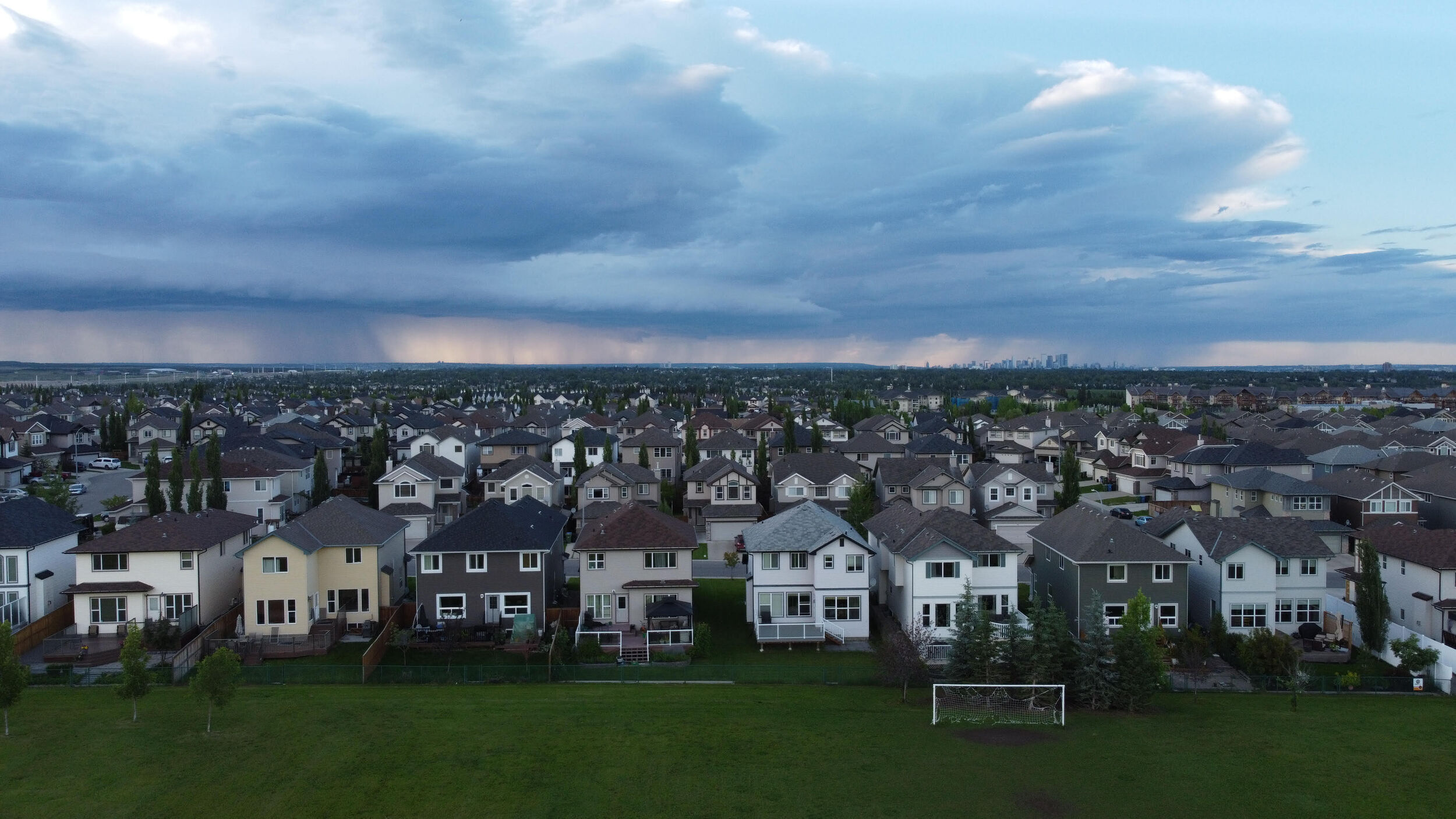
So that was the big application. The smallest one was for 225 homes in Moraine, on the northern edge of the city. While this one required no immediate capital costs from city hall, the Glacier Ridge area in and around this parcel will require $373 million of capital funding in future budgets. It’s filling in a gap between existing developments—something that is normal with these new growth applications.
Here’s the local councillor, Ward 2’s Jennifer Wyness, with her opening on the item.
WYNESS: I think for new councillors—this has been years in the making. It's taken an entire term to get to where we are today, working with administration. And I think when you look at the recommendations, it's to provide direction, continuity through councils and through council turnover. And you may not like it, but it's part of our job in this. Every decision council makes has a cost, and we are just making sure that we are approving this because you don't want stranded assets. And while inner-city and established area, there may be vacant lots—that's ownership rights for you. And here we have owners that are ready to build and develop...
So when administration says to approve it, it's taken a lot of work to get it to that stage, and it's very rare. And if you would have been watching last council, you would have seen the work that went into it to get it to the stage where they're like, yes, please support this. So I'm asking council to approve this.
When we make a decision on a new neighbourhood, we have to realize there’s unintended consequences.
COUNCILLOR ATKINSON: I actually was going to vote for this. I'm not actually now because of the open and I'll say why. I believe in this. We've built out capital. We should fill it in—absolutely. That all makes sense.
KLASZUS: So why not vote for it? Atkinson made a protest vote of sorts.
COUNCILLOR ATKINSON: We're just going to continue to snowball. So every time that we vote something through, there's a new asset that gets built. We're on the on on the rope for something else. We just keep putting it on. And there's always going to be justifications about, well, we've already made the investment here. So now we have to do this piece. Now we have to do this. And so there has to be some cut off.
So I actually think this is a fine application. I'm just voting against it—just to sort of say why I'm voting against it—because we have to stop this idea that we have gone down the path, we've made investments, and therefore we can no longer take a critical eye and a lens.
COUNCILLOR PANTAZOPOULOS: Councillor Atkinson and I don't vote the same on many items, but you raise the same point... When we make a decision on a new neighbourhood, we have to realize there's unintended consequences going forward. And that's why it's so important to think about that. And to come back and say, just because some other council did it, or the newbies don't know what we're doing, I think, is not fair.
So I'm voting for this—because, hey, you're filling it in. You're getting those 200 people. More tax base, which is great. But point well taken. I'm going to put a post-it on my computer as every single time we do this, we have to think about that. What's that long-term? Because once you start get going, you have to fill in. And I think this is the doughnut hole we have to fill in. And that's what expressed by administration—thank you for that, 200 people—but I agree, the open gave a moment's pause.
COUNCILLOR SCHMIDT: I just want us to know at some point when we stop being new councillors and start becoming councillors. So in any event, I will be supporting this one.
KLASZUS: Committee approved this one 8 to 1, with only Atkinson voting against. And now it will be up to all of council in November to decide if this and other growth applications get the green light.
Jeremy Klaszus is founder and editor of The Sprawl.
Support independent journalism—help us get 90 new members!
Sign Me Up!To celebrate The Sprawl’s 9th anniversary, we’re aiming to get 90 new members by the end of September. If you value in-depth, curiosity-driven journalism, support our work so we can keep digging into municipal issues in Calgary!