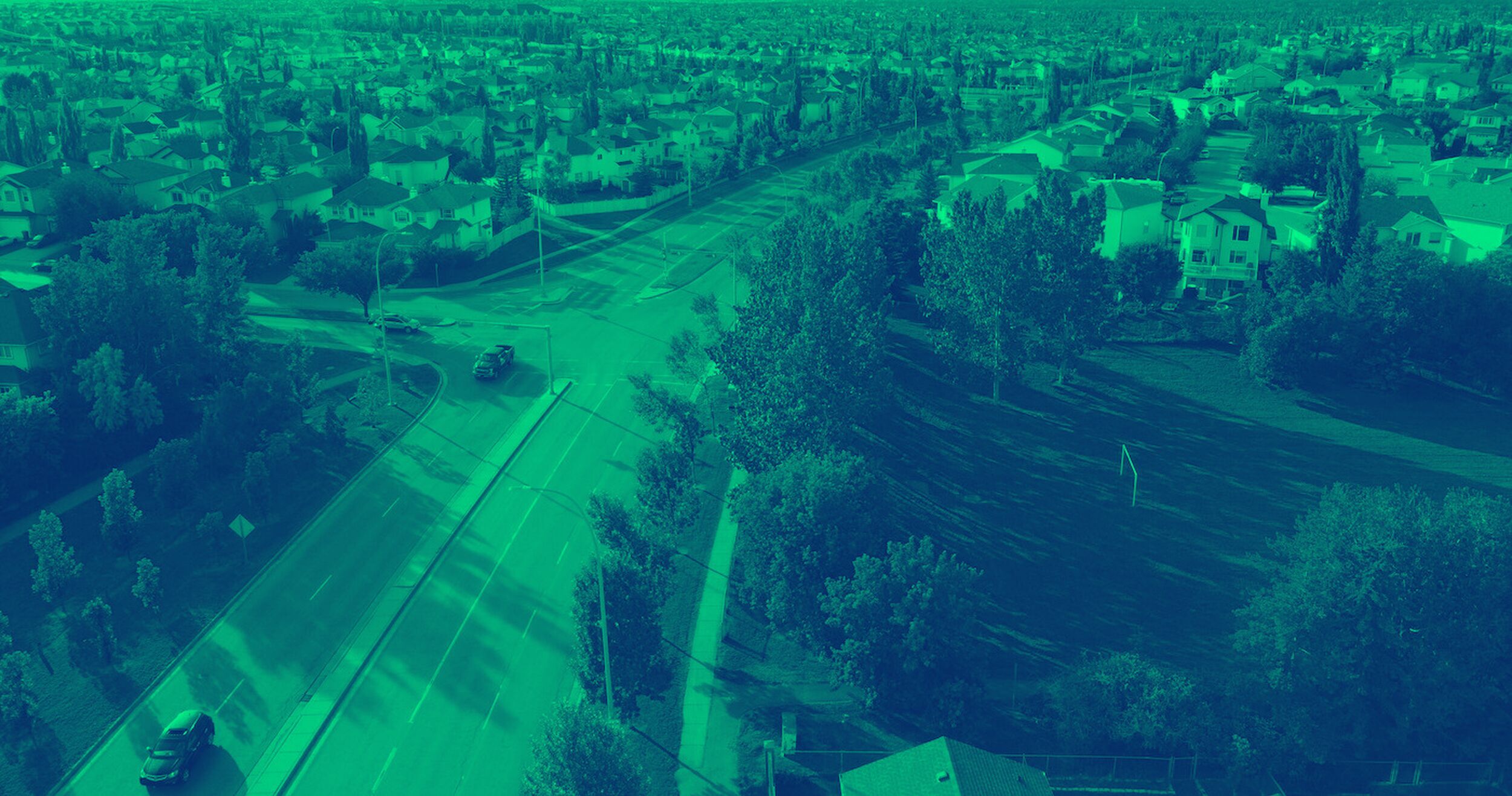
Aerial view of Bridlewood in Calgary's far southwest. Photo: Farkhod Fayzullaev
What is Calgary’s population, really?
A surprisingly vexing question.

Support independent Calgary journalism!
Sign Me Up!The Sprawl connects Calgarians with their city through in-depth, curiosity-driven journalism. But we can't do it alone. If you value our work, support The Sprawl so we can keep digging into municipal issues in Calgary!
Think of it as Opening Day at city hall: the swearing-in of the new city council.
As in baseball, the field is, for now, unblemished and perfectly adorned. No errors. No strikeouts. The long season stretches ahead, untainted by loss. And if things go well at the outset, you’re batting a thousand, at least for a moment. Anything can happen!
There’s something pure about it all.
When the politicians say they are optimistic about this council, as they did on Wednesday evening after taking their oaths of office, they can say it with confidence. Nothing on the scoresheet indicates they shouldn’t be. It’s a clean start.
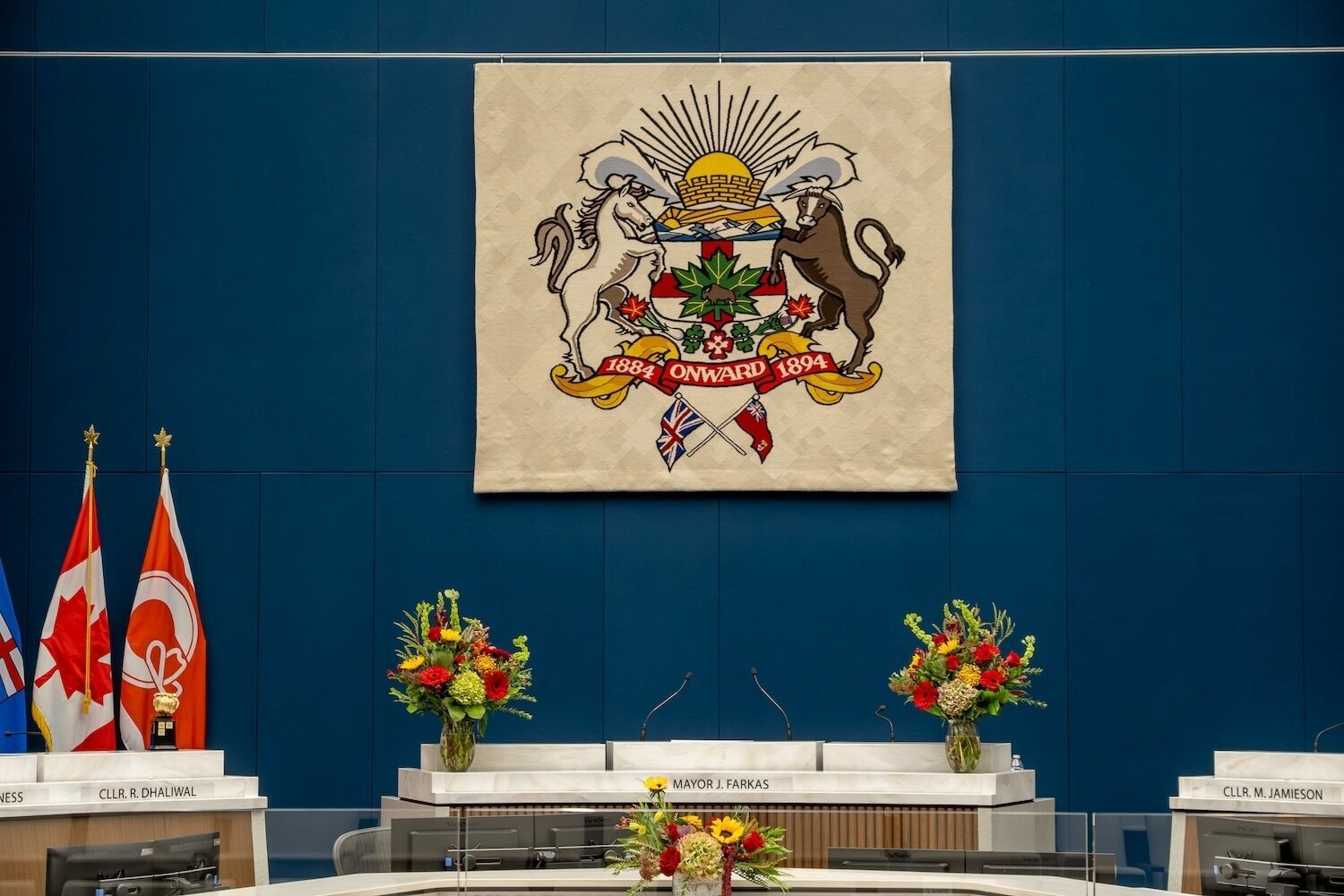
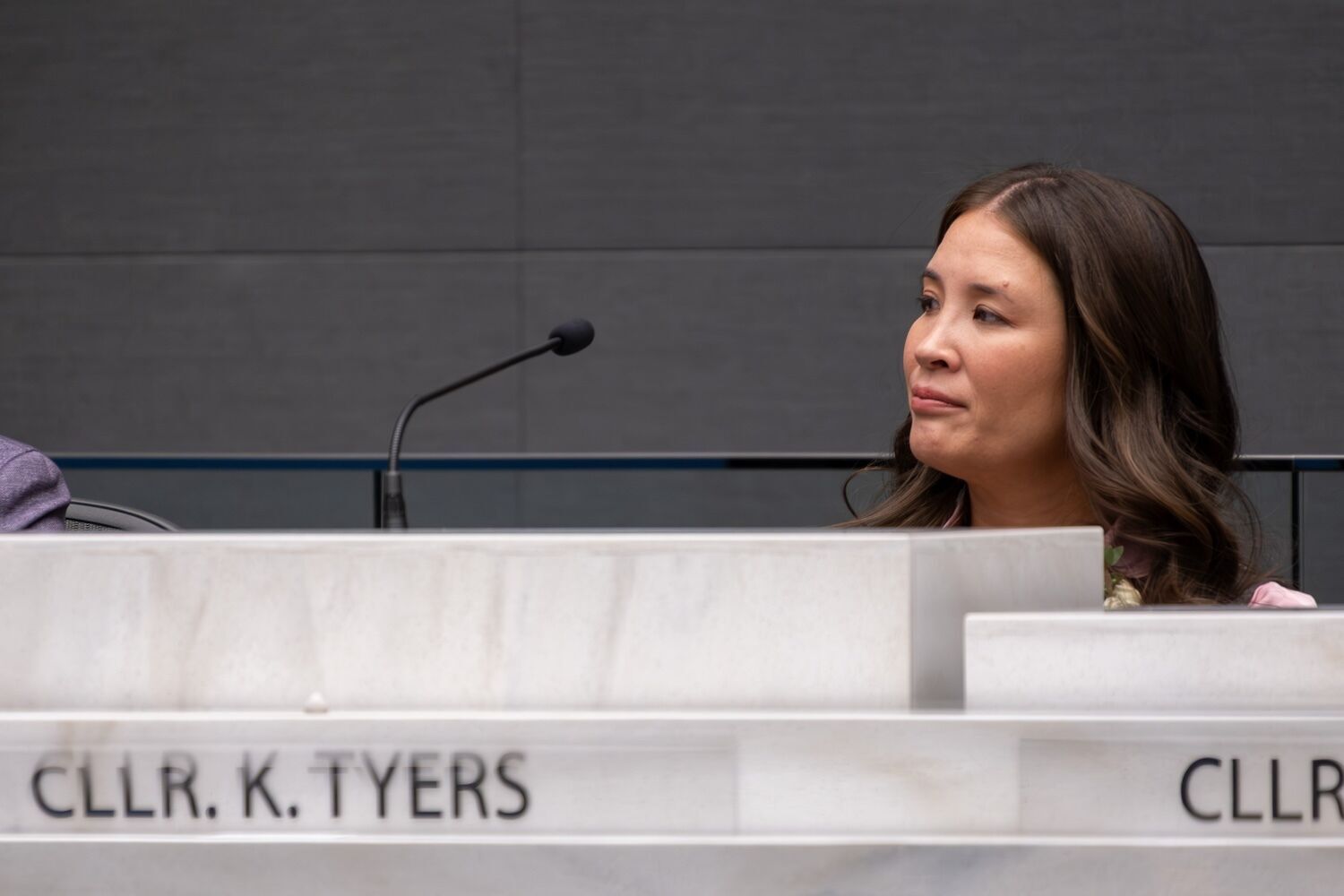


But something was bugging me as I watched the ceremony. Maybe it is the nature of the journalist to find some little thing to fixate on and frown about. But there was a reference, early on, to Calgary as a city “of 1.8 million.”
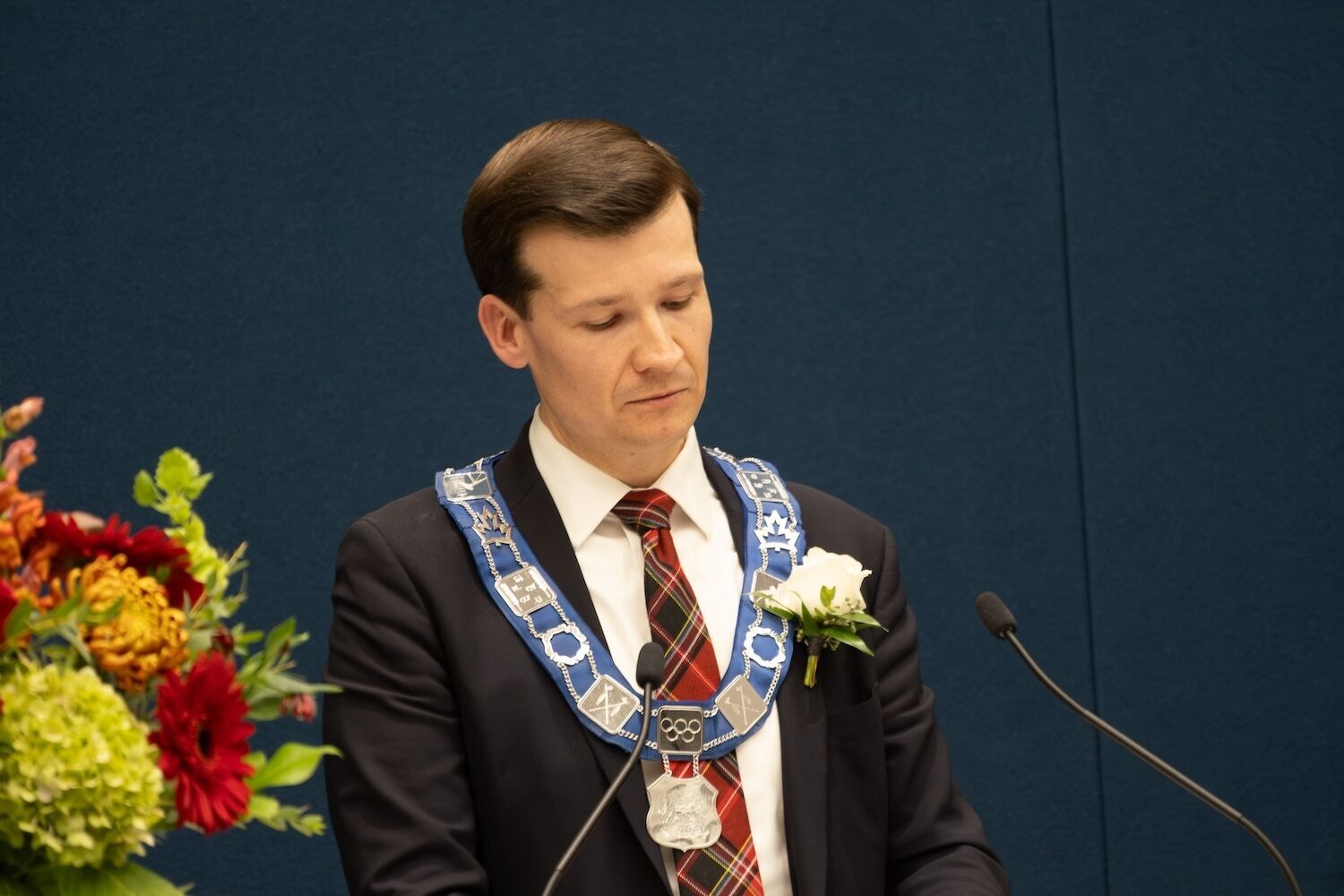
Then, in his first speech as mayor, Jeromy Farkas said that “in the next few years, something remarkable is about to happen. We will welcome our two millionth Calgarian.”
Say what?!
This is at odds with city hall’s forecasts for population in the city limits but in keeping with the numbers Farkas used throughout his campaign. He’s said we’ll hit two million in 2029. Farkas also said that “in the next decade, Calgary will be home to three million people.”
The question of Calgary’s population has bewildered me for awhile now. Anytime I need to say how many people live here, I never know exactly which number to use, as there are different numbers flying around from Statistics Canada and the City of Calgary. “How many people live in Calgary?” is a basic question but a surprisingly vexing one.
Let’s take a closer look.
In 2020, to cut costs, city council eliminated Calgary’s annual civic census, which provided frequent demographic data on people living within the city limits. This left city hall flying blind right before a period of unprecedented population growth—the highest level of growth in the country, in large part because of a surge in non-permanent residents from outside Canada (including those with study or work permits).
In 2020, when he was mayor, Naheed Nenshi articulated the value of the civic census. “We need good data,” he told the Calgary Herald. “We need the data to plan our city, to think about when we make decisions around new communities. We need to know where and how people are living.”
Statistics Canada does a federal census but it only happens every five years—“not frequent enough to provide the required information needed to inform delivering municipal services,” as city admin put it in a 2024 report.
The last StatsCan census was in 2021. The next one is in 2026. The data doesn’t start rolling out until 2027. Our most recent census data, in other words, is four years old and not very useful.
What we have in the meantime are estimates and forecasts. This can make the matter of Calgary’s population rather murky.
Our most recent census data, in other words, is four years old and not very useful.
Statistics Canada and city hall both do their own modeling for population estimates, drawing from census data and factoring in births, deaths, migration and so on. “As you add those things up, you’re basically able to build your population past the census until the new one arrives,” said Sébastien Lavoie, a senior analyst with Statistics Canada.
StatsCan estimated Calgary’s 2024 population at 1,569,133, an increase of more than 90,000 residents from 2023.
The City of Calgary, meanwhile, had a lower estimate for Calgary’s 2024 population: 1,509,800. That's nearly 60,000 people less than Statistics Canada’s estimate for the same year.
Why the discrepancy? Chris Jacyk, city hall’s long-range financial planning manager, says they have slightly different methodologies and also estimate the population for different times of the year—city hall for April 1, when the civic census was traditionally done, and Statistics Canada for July 1. They also count a little differently.
“We have based our population counts on who’s actually in the city at a period of time,” said Jacyk. “Whereas StatsCan includes people who would who normally live in the municipality, but may be out for whatever reason—whether it's a temporary work assignment or studying somewhere else. And so that creates some of that difference.”
Which brings us back to Mayor Farkas’s numbers: two million Calgarians in 2029.
That seems massively exaggerated when you’re looking at who lives within the city limits. City hall pegs Calgary's 2025 population at 1,562,600 and forecasts the 2029 population as 1,660,100—nowhere near two million.
“We are definitely looking at at a slowdown,” said Jacyk. “A good part of our our population growth—the spike, especially, in the population growth—has been due to the international migration. And with the federal government’s policy that that is ratcheting those numbers down, we do expect that to to slow.”
Population projection is difficult. There’s no crystal ball. It could be 40,000 Calgarians, it could be 100,000 Calgarians who arrive next year.
But when you zoom out and look at what Statistics Canada calls the Calgary census metropolitan area (CMA), which extends north past Crossfield, Farkas’s two million stat checks out. City hall pegs the Calgary CMA population at 1,839,000 in 2025 and forecasts it will surpass two million in 2029.
“That census metropolitan number is the number we need to be looking at,” Farkas told The Sprawl in an interview. “Because folks who live in Okotoks or Chestermere or Cochrane, they’re coming to Calgary to use our services. So the level of infrastructure services that we need in place is to be able to serve that region.”
“Population projection is difficult. There’s no crystal ball. It could be 40,000 Calgarians, it could be 100,000 Calgarians who arrive next year. But regardless, the point is the same. Every single Calgarian deserves access to a safe, affordable life.”
As for three million in the next decade—that is extremely unlikely, even if you’re looking at the metropolitan area population.
On a side note, the Calgary census metropolitan area includes places like Airdrie and Beiseker but, confusingly, not Okotoks (which is a lot closer to Calgary than Beiseker!). Why? It has to do with how much of the population commutes to Calgary. “It starts from a core that’s densely populated, and then it looks at, using census data, is there a lot of economic movement of people?” said Lavoie.
So there you have it—more than you probably wanted to know about why it’s so difficult to pinpoint Calgary’s population. Long story short, if you say Calgary has over a million and a half people, you’re close enough.
Oh, and the civic census? In 2024, city council voted to reinstate it, recognizing the cut as a mistake. The new civic census is slated to roll out in 2027 and will happen every two years instead of annually. This will, according to city hall, “fill the federal census five-year time gap” with timely data once again.
The reinstatement was best summed up by Calgary planning commissioner Nathan Hawryluk: “Council comes to its census.”
Jeremy Klaszus is founder and editor of The Sprawl.
Support independent Calgary journalism!
Sign Me Up!The Sprawl connects Calgarians with their city through in-depth, curiosity-driven journalism. But we can't do it alone. If you value our work, support The Sprawl so we can keep digging into municipal issues in Calgary!