Photo illustration by The Sprawl
Remembering the life and work of Harry Sanders
He made Calgary history come alive.

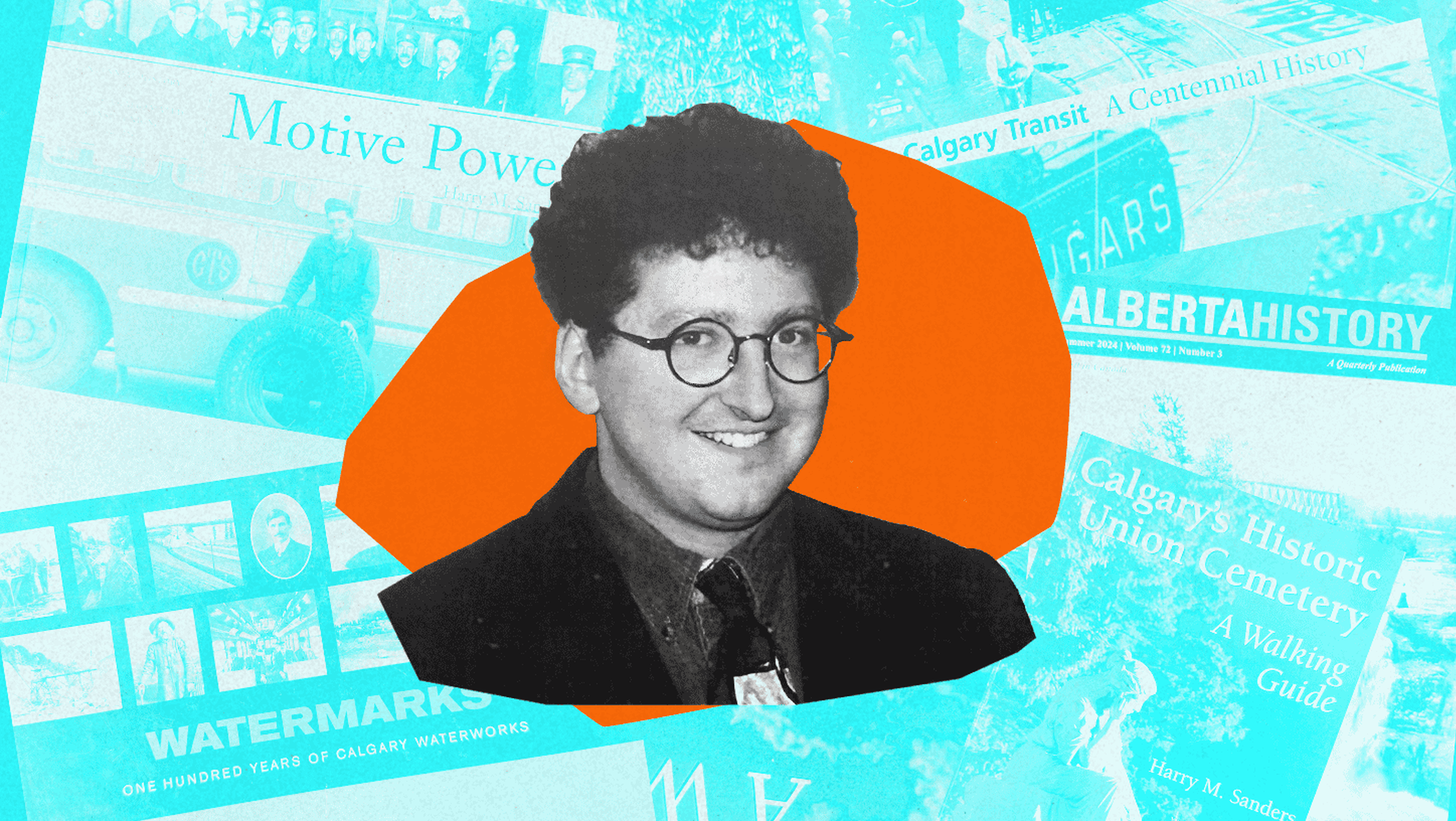
This week I’ve been reflecting on the legacy of Calgary historian Harry Sanders, who died on September 6 at the age of 59.
Sanders, the author of numerous books and the editor of Alberta History, chronicled the loss of many Calgary buildings that have been torn down in the name of progress. In 2019, I wondered if he might want to eulogize one of them for The Sprawl.
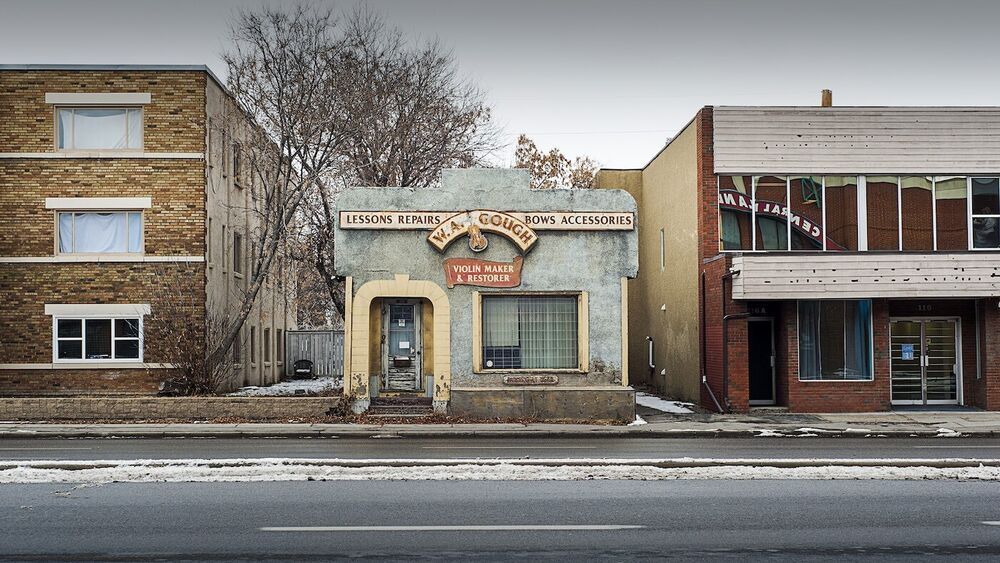
We landed on the W.A. Gough building, a small violin shop on the Trans-Canada Highway just off Centre Street that had sat empty for a few years before being demolished that year. It was the kind of disappearance that happens all the time in this city—and who cares?
Not many do. But Harry did.
“I can personalize it and find the right angle to make it meaningful,” he assured me.
And that’s exactly what he did, digging into the archives to tell the century-long story of the various characters who ran businesses out of this single building. (We republished it this week: Elegy for a little violin shop on 16th Avenue.)
“Harry was really all about the stories and the people behind what was there, behind what you were seeing,” said Cynthia Klaassen, a local heritage consultant and a longtime friend of Sanders. “Why is this building here? ‘Well, it’s because so-and-so came to town.’”
“He always had a story about the people that made the place.”
Among his books are Motive Power, which is a history of the city’s transit union, and Calgary Transit: A Centennial History.
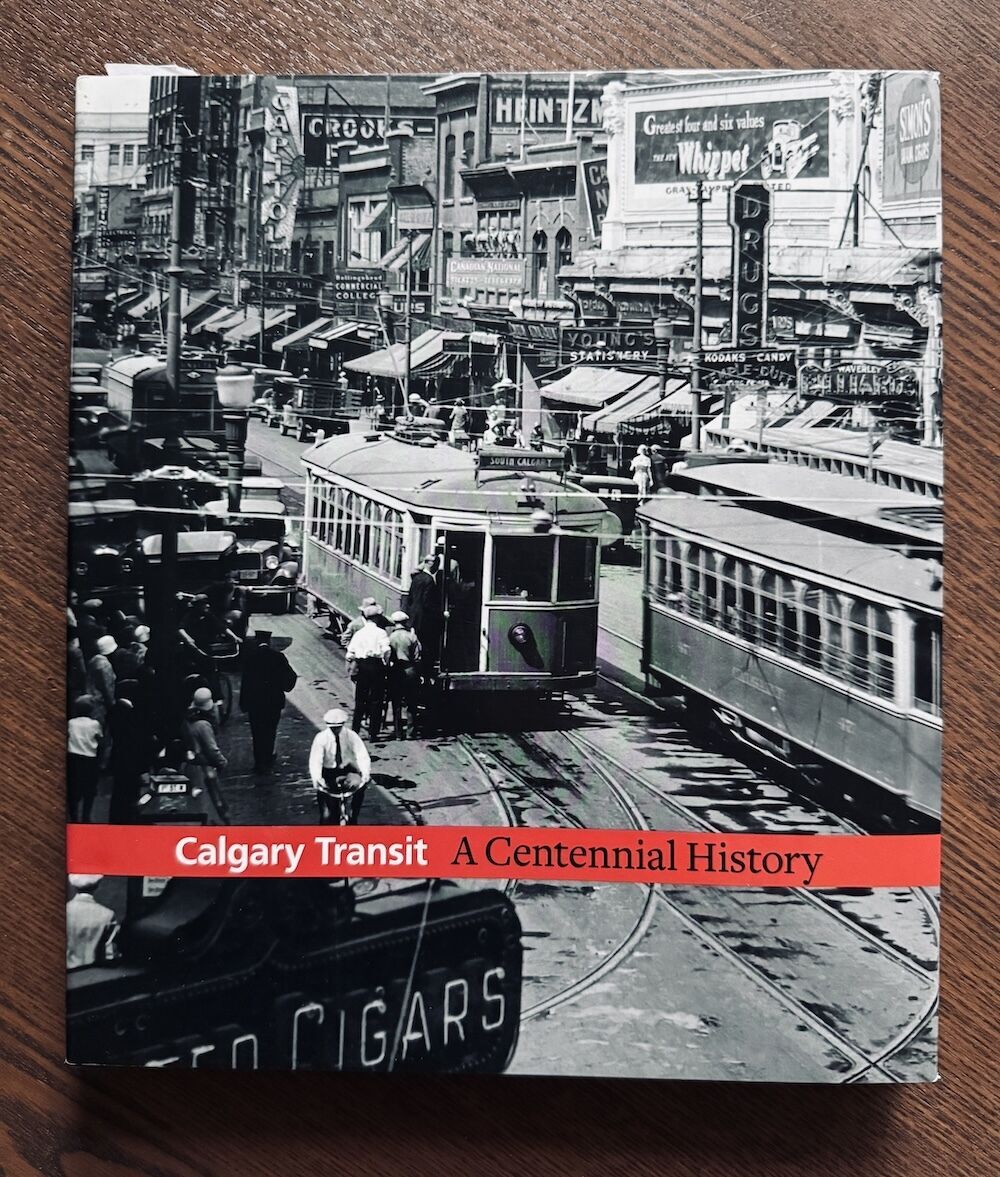
Want to know the history of the city’s water system? Harry wrote the book on that, too (Watermarks: One Hundred Years of Calgary Waterworks).
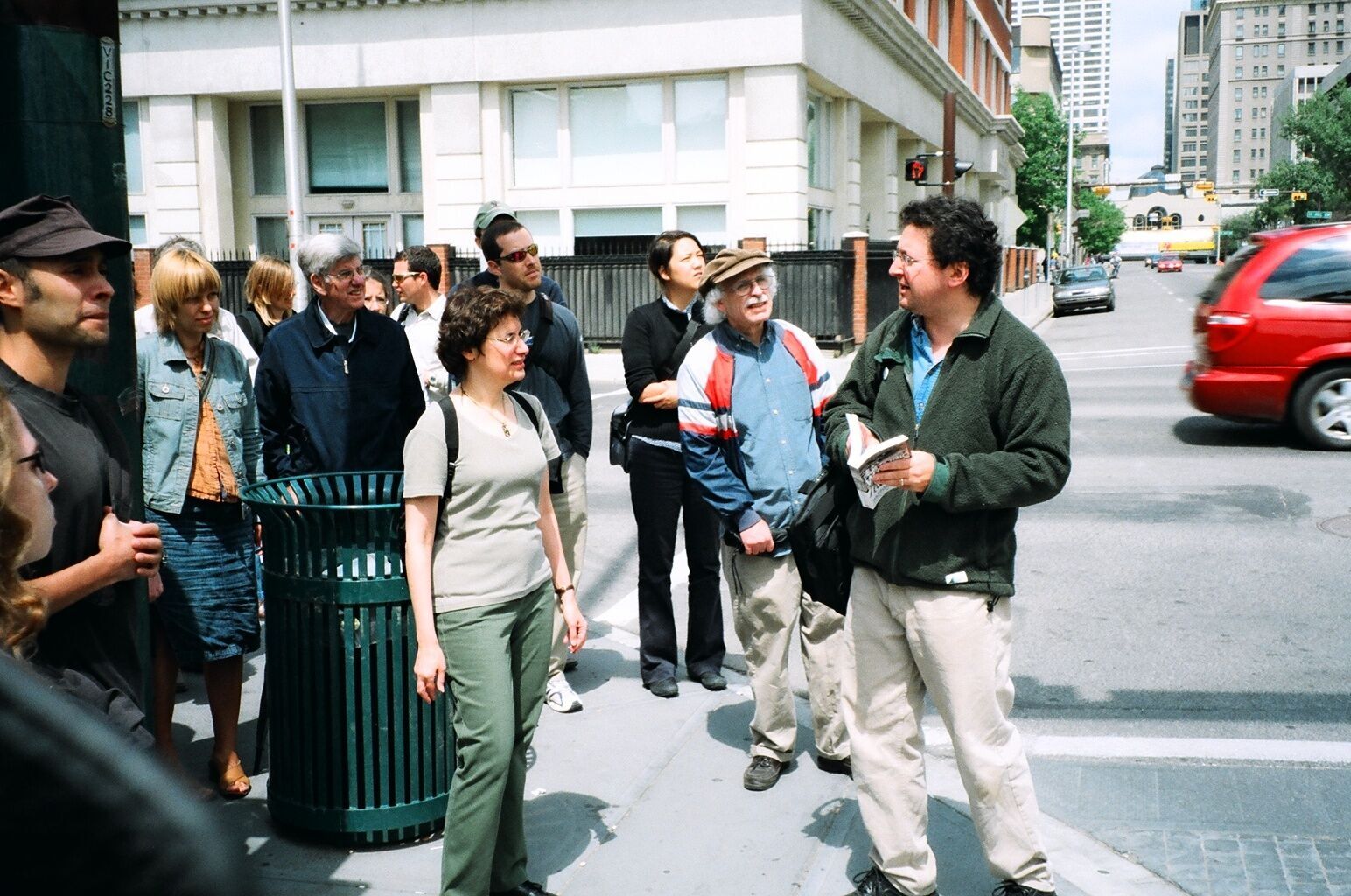
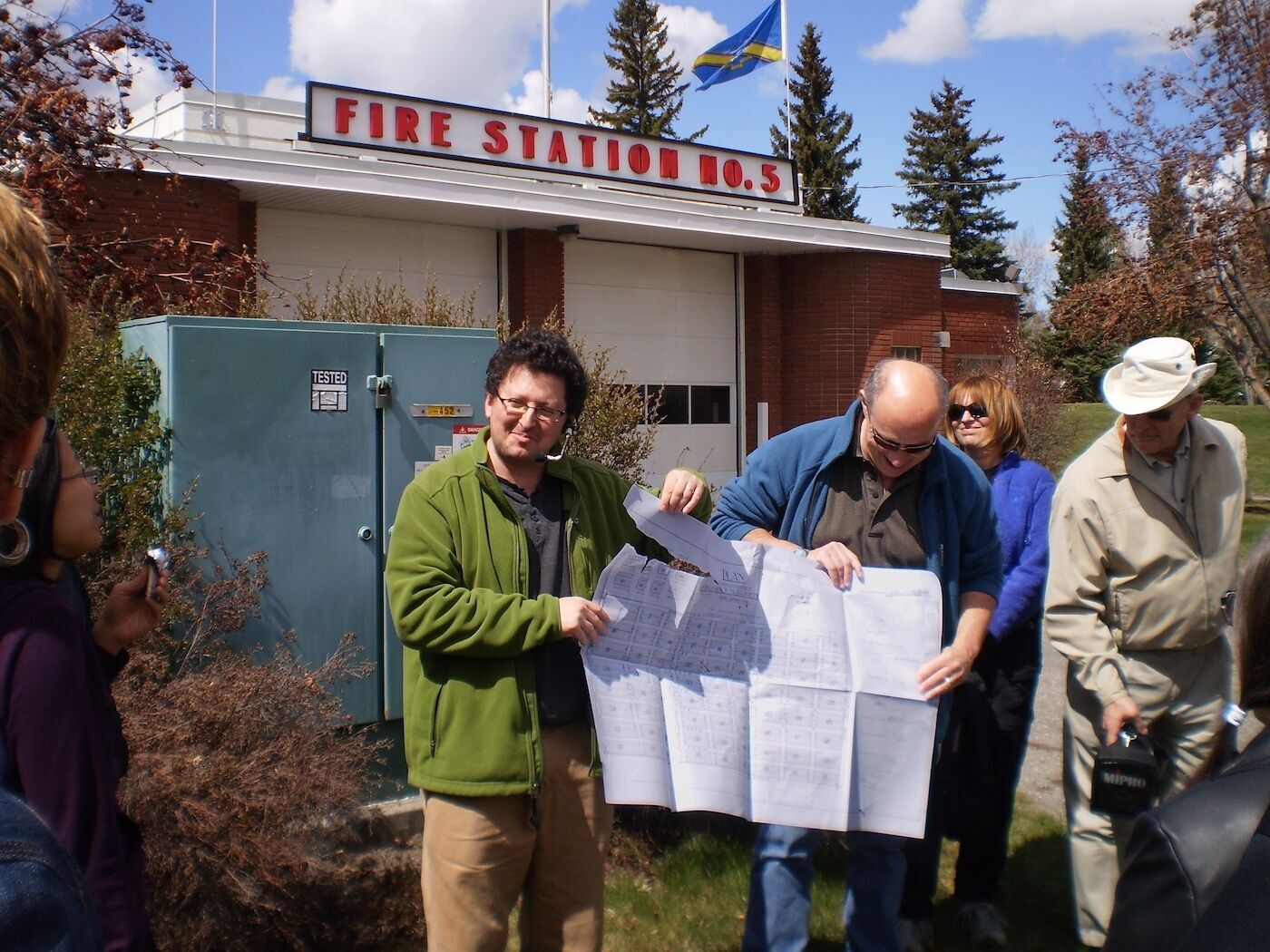
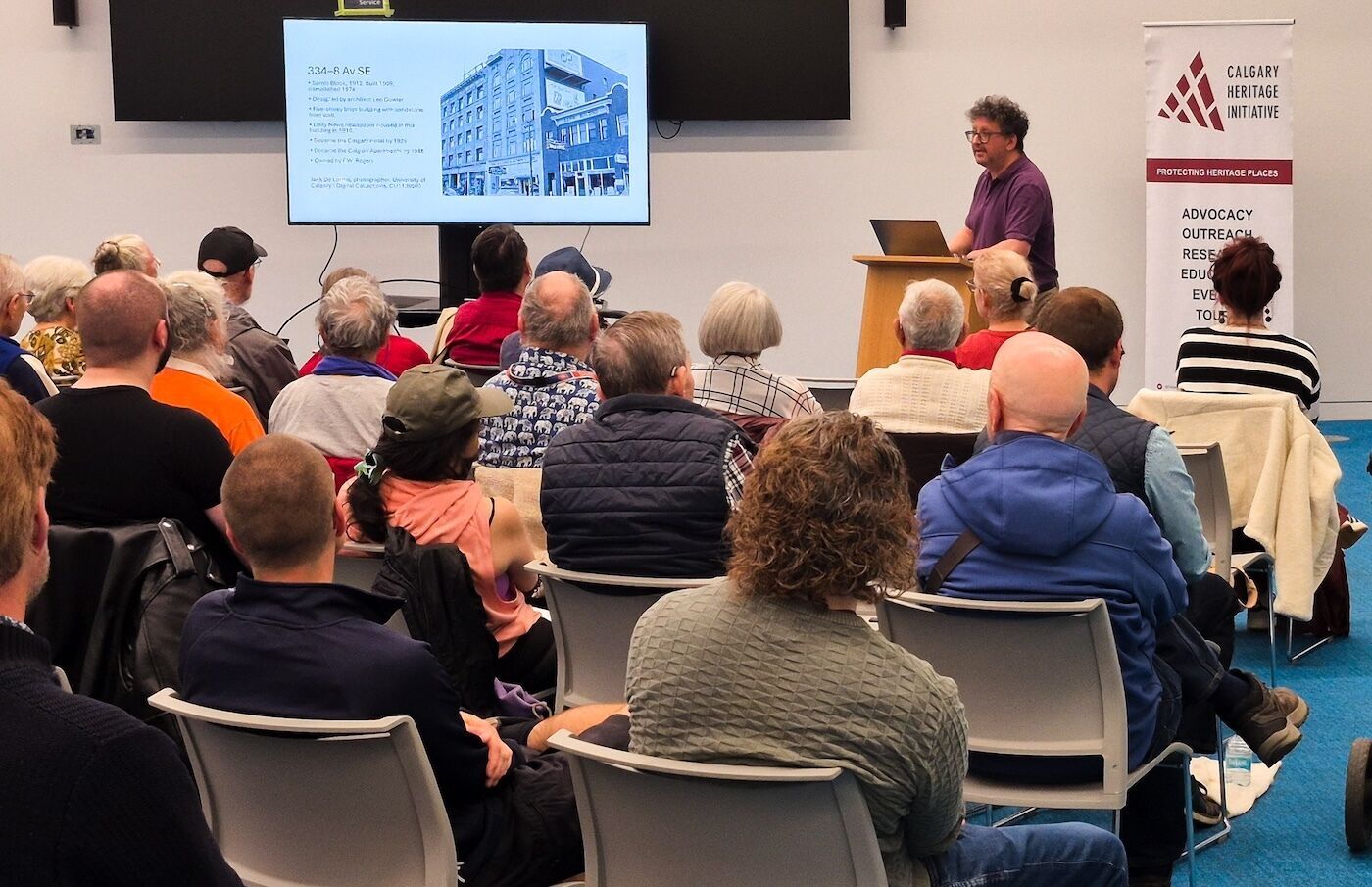
For Harry, whose family moved to Calgary from Drumheller when he was three, researching the city’s heritage was a joy—and sharing it with Calgarians even more so, whether he was leading walking tours or giving presentations or telling stories on the radio.
“That was Harry,” said Klaassen. “He wasn’t just going to do research and keep it under his hat. This is for people to know... He was always looking for ways to share his knowledge.”
And there was always more to unearth. “He never lost his sense of wonder and fascination with the world,” said Rabbi Leonard Cohen at Harry’s funeral.
Cohen recalled that at one point, someone suggested to Harry that he start outsourcing his research to make his life easier. Harry’s response?
“Why would I do that?”
He was in it for the hunt, for “uncovering unexpected connections,” as his obituary puts it. For Harry, such archival surprises were “moments of light,” Cohen said.
He never lost his sense of wonder and fascination with the world.
Anyone who knew Harry can tell you about their own “moments of light” with him—when they would ask about some aspect of local history and he would respond with enthusiasm and helpful information.
Mine involved Jaffe’s Book and Music Exchange on 8 Avenue S.E. downtown, which closed in 1980 and was demolished to make room for Arts Commons.
I was picking away on a story about used bookshops (The paper chase: How 4 Calgarians made their cities better with bookstores). Don Stewart, the owner of Macleod’s Books in Vancouver, grew up in Calgary and had described the basement of Jaffe’s as being these long tunnels, stuffed with old books, that ran beneath the block—“like a magic cave of books.” I was rapt.
When I asked Harry if he knew anything about Jaffe’s and if I could interview him about it, he lit up.
“I remember Jaffe’s well!” he wrote me. “Do write about it and the other bookshops. I have material to send you about Jaffe's as well as recommendations for people to talk to.”
This was classic Harry, generous and encouraging.
“There was no Harry paywall or anything like that,” said Klaassen. “If you wanted to know something, it didn’t matter who you were. He would find it out for you, and he would share that information with you.”
When I ran into him at the Glenbow Archives at the U of C, I’d again bring up Jaffe’s. But between our respective projects, we never ended up doing that interview. Now, of course, I wish we had.
He was always looking for ways to share his knowledge.
On a side note, I had another Sanders-esque “moment of light” recently, researching Jaffe’s at the Central Library and coming across a Calgary Herald article about the retirement of the original owner, Shaie Jaffe, in 1957.
Jaffe, who was born in Lithuania, came to the city in 1912 and, in addition to starting the bookstore, helped launch the Calgary Hebrew School, which Harry attended as a child. (It’s since become the Calgary Jewish Academy.)
The writer of that 1957 article? A cub reporter named Joe Clark, then 18 years old, who worked summer jobs at the Herald before going into politics and briefly becoming Canada’s prime minister in 1979. “The downstairs of Jaffe’s book store is a potpourri of print,” wrote Clark.
Here, in my hands, was an article by a future PM about one of Calgary’s original booksellers and Jewish community leaders.
It was the kind of thrilling archival discovery that Harry loved.
Harry was really all about the stories and the people behind what was there, behind what you were seeing.
“You find all these really interesting little weird connections that nobody’s ever found before,” said Klaassen. “And I think because he knew so much about Calgary’s history to begin with... even if he came across a little advert in a newspaper from 1914, and maybe it mentioned somebody’s name—all of a sudden he’s like, ‘Aha! I know that name.’”
“He was able, because of the vast knowledge he had, to make those connections and to build a bigger picture beyond a little advertisement or one little article that he might have found.”
Harry was also a keen supporter of local journalism, having contributed stories to publications including the Calgary Herald, the Calgary Sun and Avenue throughout his career, along with CBC, where he was memorably dubbed “Harry the Historian.”
He eagerly supported The Sprawl, too. In 2022, when he visited the Watergate complex in Washington D.C.—an important site in the history of American journalism—he wore his Sprawl t-shirt and sent me a photo.
This was followed immediately by another snapshot of him in front of the Star Trek USS Enterprise model at the Smithsonian; he was a lifelong sci-fi nut.
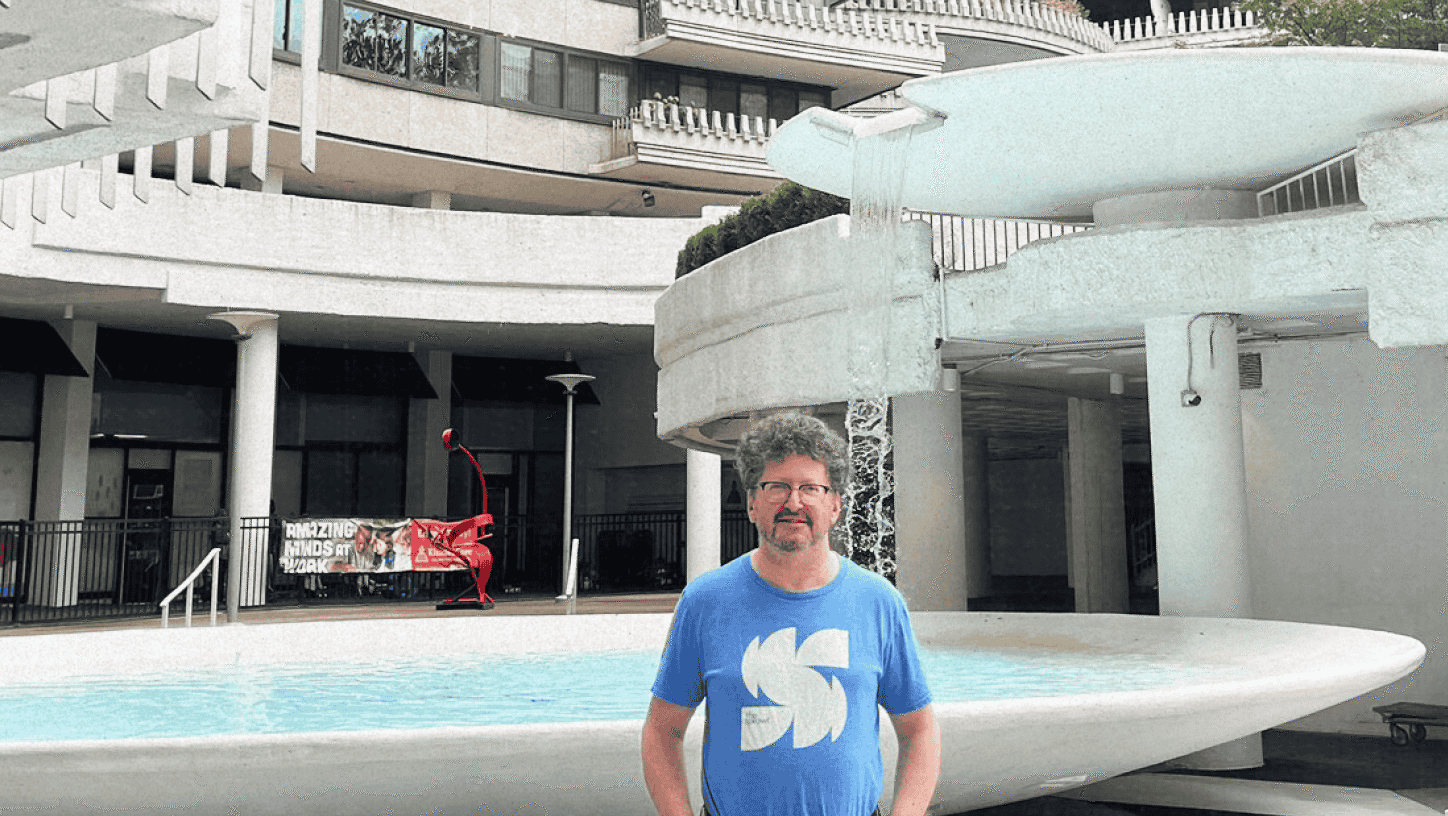
And when, in a season of uncertainty, I wondered aloud whether it was time to end this project, he was quick to reply with a note of encouragement. “Whether The Sprawl lasts a lifetime or ends today, it’s done a world of good for its readers,” he wrote.
He was, in other words, a true mensch.
Harry leaves behind his wife, Kirsten, and two children, Jonas and Anna. “This is a huge loss for Calgary, but it’s a huge loss for his family too,” said Klaassen. “He loved his family. He was so proud of his kids.”
At Harry’s funeral, Cohen talked about how history is “not a mere collection of dates and facts.” Rather, it underpins our understanding of who we are and where we’re going. Harry understood this.
An interview he gave in 2005 is one example.
Writing for the Jewish Free Press, Irena Karshenbaum spoke with Harry about his book Historic Walks of Calgary, which had just come out.
“It makes life richer if you can walk down the block and see a place that’s always been there, that previous generations have walked by, that future generations walk by.... You know the place is rooted, and we need roots,” he told Karshenbaum.
They had this conversation at Kaffa, a coffeeshop in an old house in Marda Loop. (Sanders recently wrote a detailed history of the area.) Karshenbaum noted this week that the house has since been torn down.
“We have a past,” Harry said in that interview. “Why do we want to get rid of it in every generation? Why is it always a struggle to keep that past?”
These are good questions that we can ask ourselves, and each other, in his memory.
Jeremy Klaszus is founder and editor of The Sprawl.
Support independent Calgary journalism!
Sign Me Up!The Sprawl connects Calgarians with their city through in-depth, curiosity-driven journalism. But we can't do it alone. If you value our work, support The Sprawl so we can keep digging into municipal issues in Calgary!