Why Calgary is reverting to a hand-count election
Expect a long wait for results.

First up, a few announcements. On October 1, I'll be co-moderating a mayoral candidate forum at the Central Library with Mount Royal University political scientist Lori Williams. It's filling up fast so make sure to register (it's free) to snag a seat! The Sprawl will also livestream it.
On Sunday, September 21, we'll be livestreaming candidate forums in Ward 6 and Ward 7, and there's another forum in Ward 5. More details at our forum tracker.
AND! We're in the midst of a fundraising blitz. To mark eight years of serving Calgarians with our independent journalism, we're aiming to get 80 new monthly members in September—and we need your help!
We're a third of the way there, with 27 so far. I'm hoping we hit 50 today. But I can't make that happen. Only you can! Help us out—support our journalism today! You can donate monthly, yearly or one time, as you prefer.
For decades, it's been normal for Calgarians to know, on the night of the municipal election, who the next mayor and most of the city councillors will be. As is typical in Canadian elections.
Not this time.
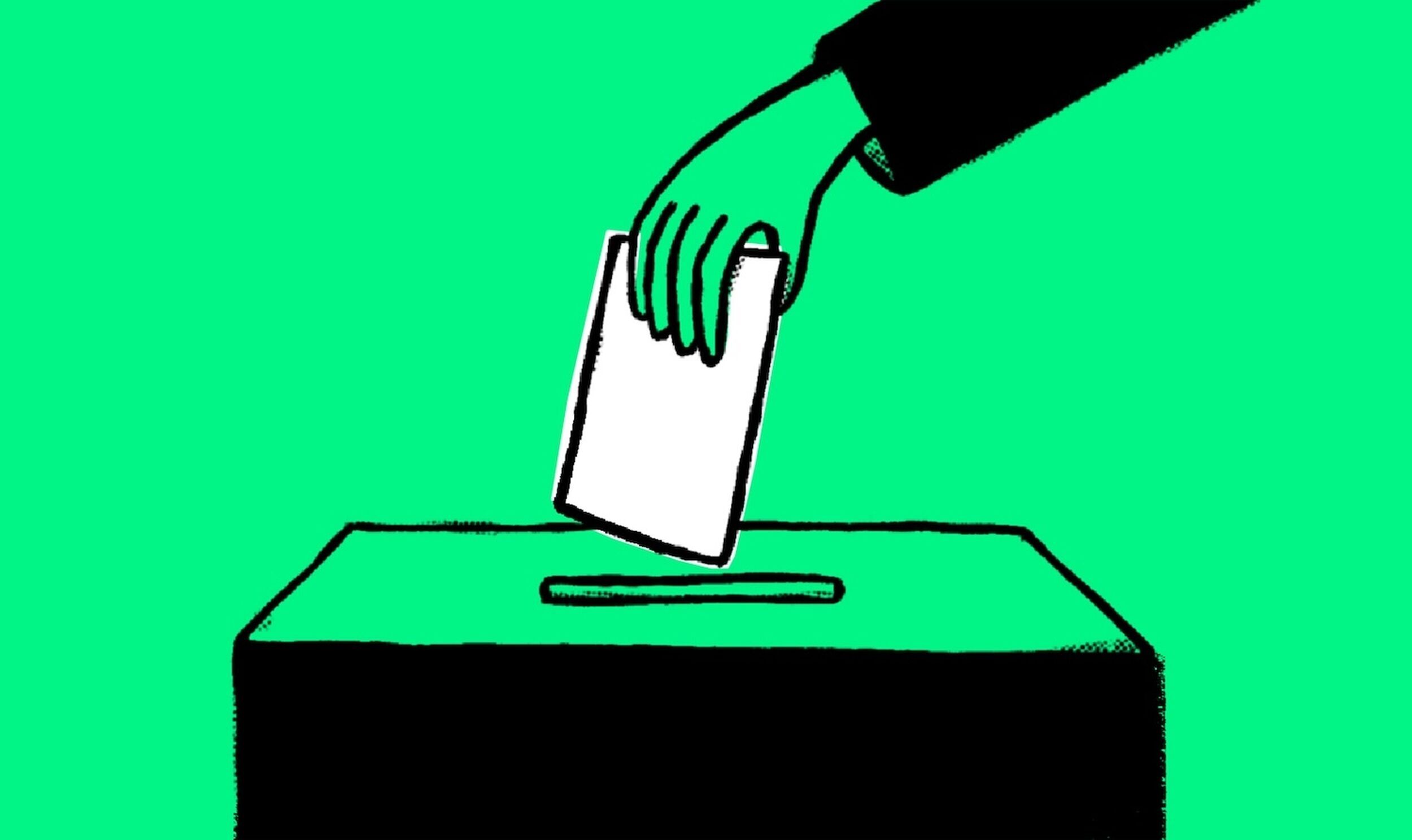
Elections Calgary is warning Calgarians to brace for a two-day—and possibly longer—vote count, as ballots will be tallied by hand instead of electronically in October. And one mayoral candidate, Brian Thiessen of The Calgary Party, is blasting Elections Calgary's multiday counting plan as "irresponsible and unacceptable.”
Let's unpack this.
The hand count is due to the UCP's sweeping 2024 reforms to municipal elections in Alberta which, in addition to introducing city political parties in Calgary and Edmonton, banned vote tabulators despite municipalities wanting to keep them.
In 2024, city hall pegged the costs of complying with the provincial legislation at $1.3 million. That estimate has now ballooned to $3.3 million.
"Those costs are really to account for the hand counting of the ballots," said city returning officer Kate Martin on Friday. "With the prohibition of the vote tabulators—moving to a hand count—that is going to cost us more in terms of the number of voting stations, the number of election workers that we're hiring and, of course, all the supplies."
The province is not covering the extra costs.
So why do this?
It's out of the MAGA playbook in the U.S., where Republicans have been urging a return to hand counted ballots as President Donald Trump has hammered away at the legitimacy of the 2020 election results in recent years.
Those costs are really to account for the hand counting of the ballots.
As I reported in a Sprawlcast last year (How the UCP is rejigging Calgary’s next election), when the UCP board approved a draft bill of rights in 2024, the right to elect legislators through “manually hand counted” ballots was listed alongside other rights like “freedom to keep and bear arms” and “freedom from excessive taxation.”
Ric McIver, Alberta's municipal affairs minister at the time, acknowledged the government is reverting to hand-counted ballots not because any evidence suggests it's necessary, but because there is a minority of Albertans who don't trust tabulators (which, it should be noted, are different from electronic voting machines).
"I myself don’t feel that way," McIver told reporters in October 2024. "But the fact is I don’t want one out of three Albertans walking around feeling like they can disrespect their local municipal council because they think that they weren’t legitimately elected."
Calgary has an interesting history on this. Long after every other major Canadian city had switched to electronic tabulators, Calgary clung to a manual count. "I like it," said former Mayor Naheed Nenshi before the 2017 election. Calgary had always hand counted ballots and the thinking at city hall seemed to be: If it ain't broke, don't fix it.
But then, in 2017, it broke.
That year's election was marred by a shortage of ballots at polling stations, which led to long lines and delays, which led to a late hand count. (On top of all that, Elections Calgary's website crashed.) Calgarians went to bed not knowing the election results. The hand count didn't wrap up until around 6 a.m. the day after the election. City hall apologized and pledged to review everything that went wrong.
For the 2021 election, Elections Calgary switched to electronic tabulators (which were leased, not purchased). Results were tallied and reported swiftly.
Calgary had always hand counted ballots and the thinking at city hall seemed to be: If it ain’t broke, don’t fix it. But in 2017, it broke.
Now it's back to a hand-count election. On election night, we should get results from the 261 voting stations that were open that day. The snag is the advance votes, which accounted for 36% of total votes in the 2021 election and will be tallied at a "counting centre."
Counting of advance votes doesn't start until 7:30 p.m. on Election Day and Elections Calgary only plans to count the mayoral advance ballots that night, not advance ballots for councillor. Then the counting centre will shut down at 1 a.m. and, in part for union reasons, won't resume counting until 10:30 a.m. for the councillor ballots, according to Elections Calgary.
And then! It's still not done. You still have school trustee votes, which are expected to be counted that afternoon—the afternoon after Election Day.
In 2021, all of these votes (mayor, councillor and trustee) were on a single composite ballot that was fed into the tabulator and instantly tallied. Now they're all separate ballots to be counted manually.
So what makes 2025 so different from Calgary's many pre-tabulator elections?
"What I can say is that I was not the returning officer during that time period," said Martin. "Our city has grown tremendously, which means we will be conducting the count across a much larger geographical area. We have significant population growth. So if we just look at those two factors right there, we know that it will be more volume of voters."
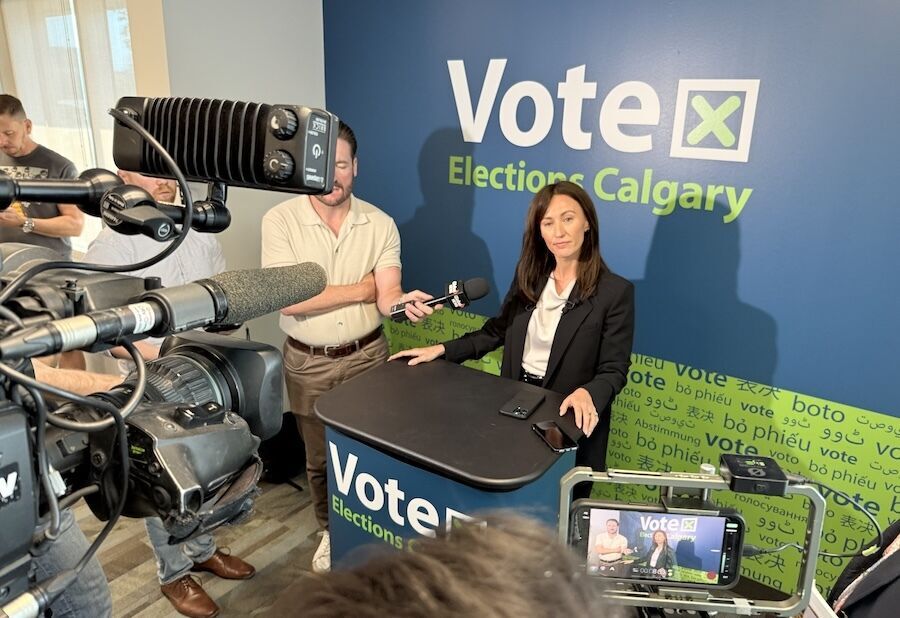
Brian Thiessen, who is running for mayor with the Calgary Party, says Elections Calgary's plan to shut down the counting centre late Monday night, and re-open Tuesday morning to tally the advance councillor votes, is inexcusable.
"I have not heard a good explanation why we're closing down for nine hours," said Thiessen.
"It means candidates might look like winners on election night and then not on Tuesday. And we've kind of seen in elections around the world how that plays out, right? It undermines confidence in the public in the results."
To demonstrate the time-consuming nature of a hand count, Elections Calgary had media do a mock exercise yesterday. I was sitting with Calgary Herald reporter Scott Strasser and we counted 20 ballots. Of the mock candidates, I can report that Cal Garian (styled "Garian, Cal" on the pretend ballot) won with seven votes. He couldn't lose, with that kind of name recognition!
It took us 12 minutes to set up our station and count and verify 20 ballots.
Granted, journalists are not known for being particularly swift with numbers. But the point stands: It's going to be a long night on October 20—and then some.
Don't forget to pitch in and support The Sprawl!
Your support means we can keep doing deep-dive reporting like our story this week on trustee candidates—in addition to tracking election candidates and forums, which has made The Sprawl the go-to source for Calgarians who want to know who's running and what they're about. We're livestreaming candidate forums on YouTube too. And we've got more in the hopper.
So if you value all that The Sprawl does for Calgary, pitch in today!
Jeremy Klaszus is founder and editor of The Sprawl.
Support independent Calgary journalism!
Sign Me Up!The Sprawl connects Calgarians with their city through in-depth, curiosity-driven journalism. But we can't do it alone. If you value our work, support The Sprawl so we can keep digging into municipal issues in Calgary!