A new public middle school under construction in Evanston in May 2025. Photo: Jeremy Klaszus
UCP to make public land available to charter schools with Bill 28
Developers will also pay less in off-site levies.

In the previous Sprawlcast, I reported that Calgary city council will be deciding on whether to approve nine new communities in 2026, including a big one in the Providence area—nearly 10,000 homes to be built on the west edge of the city, outside the ring road.
That area includes potential sites for future schools. But what type of schools will they be?
This week, the Alberta government announced that as part of Bill 28, charter schools will have access to reserve and municipal land in developing communities, the same as public, separate (i.e. Catholic) and Francophone school boards do.
“While charter schools are part of Alberta's publicly-funded education system, they [haven't] yet been treated consistently when it comes to access to reserve land and infrastructure in our centres,” said Municipal Affairs Minister Dan Williams. “This change will create a more even playing field and allow for equal and fair choice in education.”
This won't affect current school allocations but future ones, Williams said.
After years of lobbying from the development industry, the government also announced that as part of Bill 28, developers won’t have to pay as much to municipalities in off-site levies as they do currently. Charter and private schools will also be exempt from paying off-site levies provincewide.
Off-site levies are the payments by which developers reimburse the city for infrastructure such as water and sewer pipes needed for new neighbourhoods. Public and separate school boards are already exempt from paying off-site levies on construction projects for new schools.
The announcement comes as city council continues to grapple with Calgary's massive infrastructure deficit, weighing if current off-site levies are enough to warrant proceeding with the costs of new suburban communities in Alberta's largest city.
For a large new community like the one in Providence, for example, city admin has said it will ultimately cost city hall $582 million for infrastructure, spread over multiple four-year budget cycles. About 42% of this would be eligible for off-site levies as they exist today.
City admin has recommended that the Providence growth application proceed, a recommendation largely based on current levies. Construction wouldn't start until 2029 and the community is expected to generate $28 million annually in property tax revenue on full buildout.
The Providence item went before council on Tuesday. “There's several different stations along the way—gates, if you will—where you can decide yes or no on a project like this,” Ward 4 Councillor DJ Kelly said. “And the question is, really, when do you get off that bus? You're on the bus. When do you get off it?”
“I think I'm there right now for this one.... At this point, I prefer to be committing our dollars towards maintaining the infrastructure that we currently have, rather than building additional infrastructure.”
Council voted 11-4 to include the Providence growth application in the upcoming four-year budget for a final decision in November. Councillors Kelly, Myke Atkinson, Nathaniel Schmidt and Harrison Clark voted against.
“I'm happy to support this at this time,” said Mayor Jeromy Farkas. “I will be as skeptical as possible when it comes to proper budget time, comparing this to other opportunities.”
I prefer to be committing our dollars towards maintaining the infrastructure that we currently have, rather than building additional infrastructure.
That was Tuesday.
On Thursday at noon before the long weekend, the Alberta government announced Bill 28—sprawling new legislation that will affect property taxes, development approvals, vacancy taxes for second homeowners in Canmore, a code of conduct for municipal politicians, and access to “sexually explicit visual materials” in public libraries, among other things.
Scott Fash, CEO of the Building Industry and Land Development Association of Alberta (BILD Alberta), announced some of the housing changes at the government press conference alongside Minister Williams. BILD has been lobbying the government on off-site levies and other development matters.
Bill 28 includes a new “automatic yes” permitting system for “low-risk” development permits. More homes will get built faster because of Bill 28, Fash and Williams said.
“These reforms will further protect housing affordability across the province, while cementing Alberta's role as a leader in modern housing policy,” said Fash.
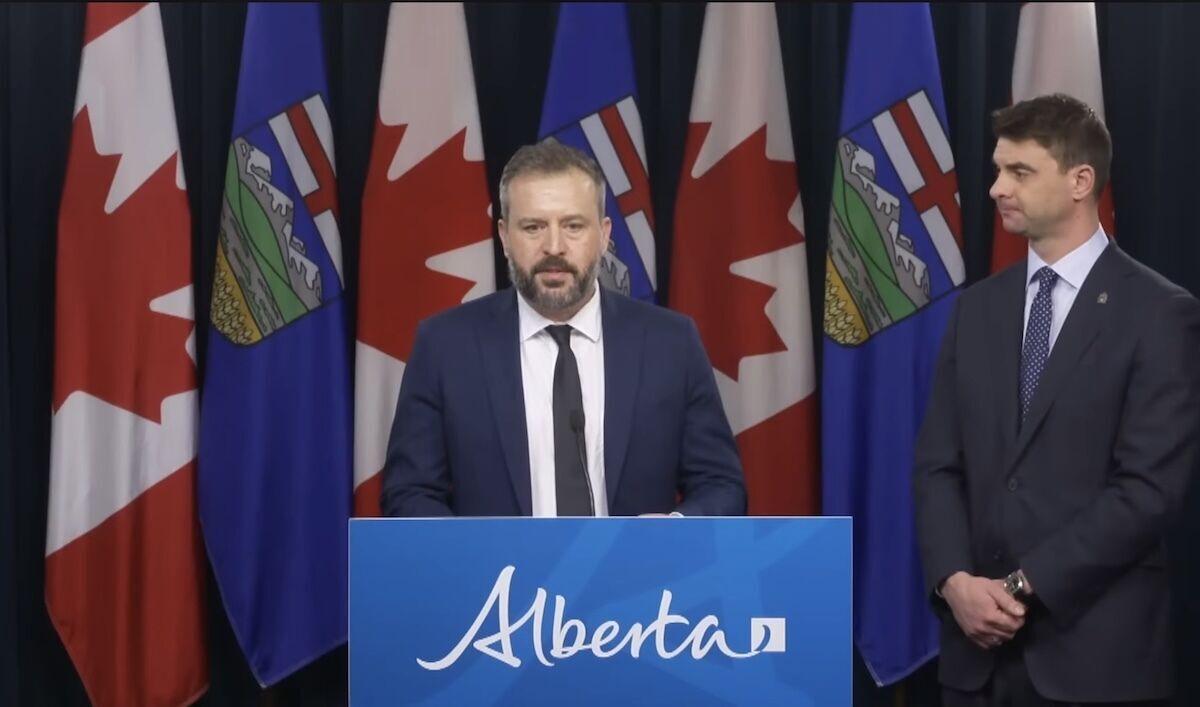
New exemptions from off-site levies, said Fash, will include “rolling stock” (a.k.a. vehicles such as buses and fire trucks) and “enhanced architectural or energy-efficiency features that go beyond building code and infrastructure needs.”
BILD has repeatedly raised concerns about fire halls in some municipalities being too extravagant, arguing developers shouldn't have to foot the bill, which gets passed on to homebuyers in the form of higher house prices.
It will take time to unpack the details and implications of all this (another Sprawlcast is in order!).
But if the “rolling stock” excluded from levies does end up including transit buses, this will be a significant change for Calgary. Suburban developers currently pay city hall a transit bus levy and Calgary Transit already struggles to reach outlying communities with bare-bones service.
When it comes to school land, the Alberta government has been continually expanding its powers. In 2025, the UCP passed Bill 51, which gives the province power to remove property ownership of new schools from municipalities and school boards with 45 days notice.
The changes for charter schools, which Williams says will give “greater parental choice,” extend that power further.
“We definitely need more sites for charter schools,” said Councillor Kelly, who previously sat on the board of Connect Charter School, in an interview. “Absolutely that is needed.”
But he questioned having them at the city's edges, where there is a need for community-based schools for local students, instead of established neighbourhoods where changing demographics can leave school buildings underused.
“Putting a charter school out on the outskirts of the city in a new neighbourhood... doesn't make a whole lot of sense to me,” Kelly said, noting that charter schools typically draw students from a wide area.
These reforms will further protect housing affordability across the province, while cementing Alberta’s role as a leader in modern housing policy.
In related news, Calgary is looking to annex more land from Foothills County. Things got testy at council this week after Councillor Landon Johnston nominated an inner city councillor, Ward 7's Myke Atkinson, for that annexation's negotiation committee.
“I think we want a balanced conversation on this,” said Atkinson. “Obviously, I have not been a big proponent, we'll say, of this file. But I think that that level of scrutiny that I can maybe bring to this file is something that would be quite beneficial in the overall makeup of this.”
Ward 13 Councillor Dan McLean was not impressed.
“This pertains to the south,” said McLean. “We have the three southern councillors that know the area well. I wouldn't go on a committee or something in Ward 7 just to try to mess it up. I just think that's kind of silly.”
Councillors McLean, Atkinson and Ward 12's Mike Jamieson are now on the committee, with Johnston as the alternate, or backup, member.
Thank you so much to everyone who has stepped up to support The Sprawl's journalism in recent weeks! If you're on the fence and you value stories like this one, please sign up—we'd love to have you on board.
Here's why people have signed up, in their own words:
- “I always learn something new when reading or listening to your content. Thanks Jeremy and team!”
- “Balanced, insightful, local and real.”
- “I don’t always agree with your coverage (nor should I), but I value the quality of your work. Life happens at the municipal level and we need more quality reporting like this.”
You can sign up here. Thanks so much!
Jeremy Klaszus is founder and editor of The Sprawl.
Support independent Calgary journalism!
Sign Me Up!The Sprawl connects Calgarians with their city through in-depth, curiosity-driven journalism. But we can't do it alone. If you value our work, support The Sprawl so we can keep digging into municipal issues in Calgary!